Human Rights Now Human Rights Now
The Amnesty International USA Web LogVisit us
  Subscribe

Archive for the ‘Business & Human Rights’ Category

Nearly 100 Days of Pressure: Will Shell’s New CEO Come Clean on Niger Delta?

Wednesday, October 7th, 2009

By Anna Phelan, Amnesty International USA’s Business and Economic Relations Group

Since the release of Amnesty International’s report Petroleum, Pollution and Poverty in the Niger Delta (30 June 2009), our global membership has acted to get Shell’s new CEO Peter Voser to come clean on the impacts of its operations in the Niger Delta, during his first 100 days on the job. Here’s one of my favorite actions:

Parisian AI-ers show Shell how to clean up

AI’s report looks at the impact of pollution and environmental damage caused by the oil industry on the human rights of the people living in the oil producing areas of Niger Delta. Some of the key concerns highlighted in the report focus on health and livelihood — the lack of access to potable water and damage to fisheries and local farming.

Shell was quick to challenge AI’s report, claiming that Amnesty International made no attempt at open dialogue with Shell and that the report contained no new insights. We set the record straight providing dates and evidence. Shell should not think its recent $15.5 million settlement in the landmark Wiwa v. Shell case remedies more than 30 years of environmental contamination and inadequate clean-up.

When will Shell do more? AI-France says that over 2,000 cards and 20,000 electronic postcards have been distributed, but the company has not heard appeals by Amnesty International. AI-UK’s Protect the Human blog says Shell has not responded to their 3500+ emails. AIUSA members can lend their support to this global action. Very simply, we’re asking Voser to clean up oil pollution in the Niger Delta, clean up Shell’s practices, and come clean on the information Shell holds on pollution in the region, but hasn’t made public.

:: Take Action Now. Tell Voser to come clean in the Niger Delta. ::

The reality is that Shell’s pollution and exploitation in the Niger Delta has created a hell on earth for the 31 million people who live in a region that’s home to one of the top 10 most important wetland and coastal marine ecosystems in the world. Voser’s 100th day as CEO of Royal Dutch Shell is October 8th. Remind him that we’re watching. Tell him to come clean on Shell’s pollution in the Niger Delta.

U.S. appeals court sets dangerous precedent against victims of torture

Sunday, September 20th, 2009

by Lillian Tan, Corporate Action Network Intern

On September 11th, 2009, the U.S. Court of Appeals of the D.C. District ruled 2 to 1 to dismiss Saleh v. Titan, a lawsuit brought against CACI International, a private military and security company (PMSC), which alleged that CACI personnel participated in torture and abuse of detainees at Abu Ghraib. CACI was awarded a Department of Interior (DOI) contract to provide translation services at Abu Ghraib.

Judge Silberman, in his majority opinion, concluded that the plaintiffs’ state law tort claims under the Alien Tort Statute (ATS) were preempted by the Federal Tort Claims Act (FTCA). According to his interpretation of the FTCA, contractors operate under the same sovereign immunity as U.S. military forces since they share a “common mission” with the military. Susan Burke, one of the attorneys for the plaintiffs, stated in the September 12th, 2009 Washington Post article that the legal team will file for an en banc review of the decision by all nine judges of the Court.

If the Court’s ruling is not reversed, a dangerous precedent would be set in the U.S. judicial system that would make it extremely difficult for victims of human rights violations, like Saleh, to find relief. As things currently stand, federal criminal laws (18 U.S.C.) are not sufficient enough to hold contractors accountable for their actions.

The U.S. military greatly depends on PMSCs to support their operations in the “war on terror”, with the use of contractors in Afghanistan reaching a record high. In the Iraqi theater, contractors have been allegedly involved in a number of human rights violations, almost none of which have been prosecuted in Federal criminal courts. While there is a glimmer of hope now that the Department of Justice is finally spurring to action by appointing a special prosecutor to reexamine almost two dozen cases of detainee abuse that were transferred to the Eastern District of Virginia—some of which include abuses committed by contractors—this fact does not change that federal prosecutors would still have substantial hurdles to clear before obtaining a prosecution.

One of the hurdles is the paucity of legislation that would effectively allow for a criminal prosecution of contractors. Another is evidence; and yet another is the statute of limitations on cases of torture under federal criminal law, which are fast approaching expiration. Now with the decision from Saleh v. Titan, victims of torture and abuse are denied the option of civil litigation.

Judge Silberman writes that the plaintiffs will not be bereft of all remedies since under the Foreign Claims Act” (10 U.S.C. §2734) they can file claims to a commission composed of officers and employees of the U.S. Armed Forces.However, is that even an appropriate “remedy” for Saleh and the other plaintiffs who have brought grievous allegations of torture and abuse by contractors who “acted unlawfully and without military authorization”, as noted in the dissenting view of Judge Garland? Should such a precedent be set where plaintiffs such as Saleh are denied a civil law remedy, in effect barring them from a chance of vindicating their human rights with a speedy trial in U.S. courts of justice?

Private military and security companies wanted for hire by CIA as “hitmen”?

Saturday, August 22nd, 2009

by Lillian Tan, Corporate Action Network Intern

September 16, 2009 will be the second anniversary of the Nisour Square shootings, in which six Blackwater (now Xe) personnel shot and killed 17 Iraqi civilians outside Baghdad’s green zone. The bad media which surrounded the incident galvanized the U.S. Government to take some steps towards ensuring that the Department of Defense (DOD) and Department of State (DOS) better regulate PMSC operations in Iraq. But was it enough?

The six Blackwater guards who allegedly indiscriminately opened fire in Nisour Square on September 16, 2007 were finally indicted late last year. The trial hasn’t even started but Blackwater/XE personnel are already implicated in another incident. On May 5, 2009, four Blackwater/Xe personnel reportedly shot and killed two Afghan civilians in Kabul. So much for lessons learned in Iraq; so much for regulation, oversight, and accountability.

However, the U.S. government should not keep pushing aside the questions of how to effectively regulate and where to set the limits on using PMSCs — especially with the increased number of contractors flooding into Afghanistan in the wake of the planned surge in troops. The longer it takes for the U.S. government to finally take a position and answer these questions, the longer PMSCs operate in a legal limbo, in which they may commit human rights abuses with impunity.

Just recently, it has been reported that the CIA contracted Blackwater/Xe to assist in a secret assassination program of which the Congress was not even aware. According to the August 20, 2009 New York Times, “it is unclear if the CIA planned to use Blackwater/Xe to actually capture and kill Qaeda operatives, or just to help with training and surveillance in the program.”

The article also mentions that government officials are concerned about serious issues of accountability when contractors are brought into covert and lethal operations. Where there is no transparency, accountability will be near impossible if a crime were committed during those operations. The past administration has been quick to invoke several legal reasons to withhold sensitive information from the public — from the Glomar response to claiming that releasing detainee abuse photos would be against the Geneva Conventions. When the same photos were about to be released in May 2009, the Obama administration sought to block their release arguing that the images could further inflame anti-American opinion. If it is already this difficult to get information out of government agencies, then imagine the difficulty of obtaining information for the purpose of accountability when there’s a private contract involved in a sensitive national operation.

Another area of great concern that the New York Times article briefly touches upon is whether, aside from the concerns about accountability for PMSCs in such a program, PMSCs should be involved in the first place? As Senator Diane Feinstein (CA) aptly states, “It is too easy to contract out work that you don’t want to accept responsibility for”. In the debate about the use of PMSCs in modern warfare, there is the pressing question of what functions a government can and cannot outsource. In U.S. statute and policy, inherently governmental functions are loosely defined as “a function so intimately related to the public interest” that it must be performed by Federal employees. The list of functions that fall under “inherently governmental” is also extremely inconsistent, varying from agency to agency. Because of this lack of a clear and consistent definition, PMSCs are contracted to perform duties in highly sensitive areas such as intelligence and now, even assassinations.

To better regulate the industry, Congress also needs to pass legislation that will close the legal vacuum in which PMSCs are operating and appropriate more resources to regulation and oversight. The U.S. government currently does not adequately regulate the industry and its statutes to hold PMSCs accountable for crimes overseas are few. In its June 2009 Interim Report, the Commission on Wartime Contracting finds that U.S. government oversight of PMSCs is inadequate. Because they mostly operate transnationally, jurisdiction can become a problem. While PMSCs contracted by the DOD can be held accountable under the Military Extraterritorial Jurisdiction Act (MEJA) and the Uniform Code of Military Justice (UCMJ), contractors hired by other agencies such as the DOS often fall through legal gaps.

The foundation to improve regulation, oversight and accountability of PMSCs has already been set. To close legal gaps such as the one in MEJA, legislation has been proposed in the past and we look forward to similar legislation in the 111th Session of Congress. As for clarifying definitions of “inherently governmental functions”, a bipartisan Commission on Wartime Contracting was established in Public Law 110-181 to recommend among other things improvements in its Final Report on the “process for determining which functions are inherently governmental and which functions are appropriate for performance by contractors in a contingency operation, especially whether providing security in an area of combat operations is inherently governmental.” On an international level, the UN Working Group on Mercenaries (UNWGM) completed its two-week visit to the U.S. on August 3rd, 2009. During that time, the UNWGM met with the DOJ, members of Congress, governmental officials and public interest groups to discuss how PMSCs can be regulated on international, regional, national and local levels. Such efforts are all a step in the right direction.

Sleeper Hits of the Summer – Part 1: The Curious Case of 30,000 Indigenous People vs. Chevron

Thursday, August 13th, 2009

By Anna Phelan, Amnesty International USA’s Business & Economic Relations Group

Among my picks for sleeper hits of the summer, is a powerful documentary film called Crude: The Real Price of Oil. The film is described as a real-life high stakes legal drama, set against a backdrop of the environmental movement, global politics, celebrity activism, human rights advocacy, the media, multinational corporate power, and rapidly-disappearing indigenous cultures. For the most part, the main characters aren’t actors… well, I mean Chevron’s invested a lot of money and time in their web of lies, so maybe they’ve been taking acting lessons. And so far, Chevron’s signature method of acting has been to deny responsibility and shift the blame for contaminated soil and groundwater in the communities of the Ecuadorian Amazon.

:: Learn more about the history of oil in the Amazon and Amnesty’s work ::

On Sunday, the United Nations Secretary-General Ban Ki-moon spoke of how indigenous communities suffer disproportionately from low health standards linked to poverty, malnutrition, environmental contamination and inadequate healthcare marking the International Day of the World’s Indigenous People. The hardship and discrimination faced by indigenous peoples has a lot to do with the fact that they are often excluded from decision-making processes – by both governments and corporations. In her Op-Ed piece, Navanethem Pillay, U.N. High Commissioner for Human Rights, called for more than a symbolic celebration saying, after centuries of repression, they need comprehensive tools to defend their human rights, their way of life, and their aspirations.

And that’s what makes the case against Chevron a compelling story for film – not unlike the Doe v. Unocal lawsuit or, more recently, Wiwa v. Royal Dutch Shell. Indigenous peoples are gaining access to the legal system to challenge governments and transnational companies and defend their human rights. You might not know their names, but the 30,000 indigenous people who filed suit against Texaco (now Chevron) in 1993 are more than Extras. They are the real-life protagonists.

Sleeper hits are made by word of mouth recommendations. Crude: The Real Price of Oil opens to larger audiences on 09/09/09. Take action now to show your support of human rights for the indigenous communities of Amazon’s Ecuador.

Crude: The Real Price of Oil Trailer

Exploitation in the DRC fuels mining trade: Apple, Dell look the other way

Thursday, July 23rd, 2009

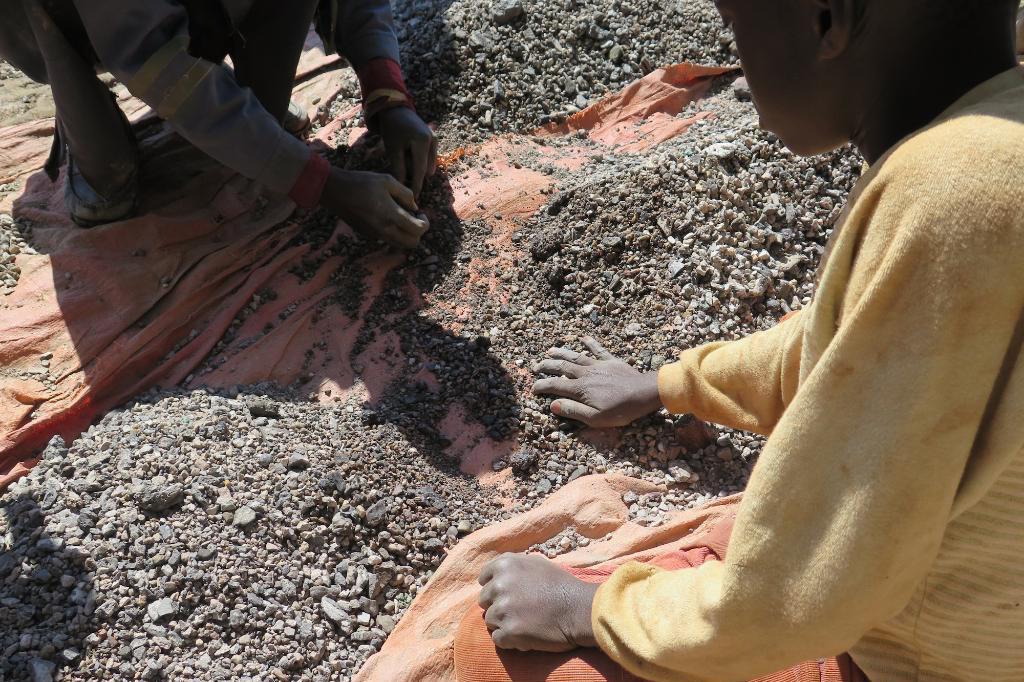
Prominent US and multinational companies such as Apple, Dell, Motorola, Nokia, and Hewlett-Packard are among the businesses pinpointed as culprits in an unflinching, new report released by Global Witness that details the often noxious connections between the illegal mining trade, widespread human rights abuses and tech and mining firms.

The detailed analysis provides excellent current background on the situation, and names the names of companies operating in the Democratic Republic of the Congo (DRC) that trade in minerals in ways that ignore corporate social responsibility and perpetuate the conflict.

High-tech human rights abuses

The illegal mining and horrific human rights abuses against civilians – including the use of child soldiers and sexual violence as a weapon of war – have previously prompted a UN Expert Panel review that resulted in a large number of companies reforming their activities or leaving the country.  Yet the new Global Witness report is clear: “no effective action has been taken to stop this murderous trade.” Global Witness states that it is not calling for a complete trade embargo or targeting artisanal mining per se, but is focusing on stopping the mining intertwined with conflict and abuse.

In many ways, the DRC’s plight hearkens back to colonialism and chartered companies empowered to make war in order to capture resources.  But today’s neo-colonialism is more indirect and up-to-date, being linked to some of the world’s most sophisticated new technologies.  The minerals cassiterite (tin ore) and coltan are important components in cell phones, computers, and other electronic devices, and the DRC is a primary global source.

Violations in the region have continued despite the recent rapprochement between the DRC and Rwanda and the integration into the Congolese army of one of the leading rebel groups (the Congrès national pour la défense du people, or CNDP, whose leader Bosco Ntaganda is wanted by the International Criminal Court).  Both the army and remaining rebel groups such as the Forces démocratiques pour la libération du Rwanda (FDLR) are implicated in the illegal mining and abuses – even cooperating at times with each other as well as with the companies to share the spoils.  Rule of law in the DRC is either weak or, in many provinces, effectively absent.

The new report states that the named companies exploiting this lack of oversight had almost no controls or due diligence processes to ensure that their supply chain contained no conflict minerals.

Global brands such as many of these companies  participate in industry initiatives including the Electronic Industry Code of Conduct which require them to hold suppliers to high standards.  Yet “suppliers” has often been interpreted to apply to middlemen but not suppliers further down the supply chain.

Apple’s stance leaves much to be desired

When questioned about these specific practices and their obligations to uphold certain standards, companies generally pointed to generic corporate social responsibility statements.  Only in rare cases did companies seem to recognize the need for greater due diligence.  In most cases, no sense of urgency or clear commitment to applying checks to the entire supply chain was expressed.  Instead, companies relied frequently on the fact that they purchased from licensed exporters.

In a statement accompanying release of the report, Global Witness Director Patrick Alley stated:

It is not good enough for companies to say they buy only from licensed exporters, when they know full well that their middlemen buy from armed groups. The failure of governments to hold companies to account, of Burundi and Rwanda to restrict the trade across their borders, and of donors and diplomats to address explicitly the role of the mineral trade, have all contributed to the continuation of a conflict that has killed millions and displaced many more.

Apple’s response was a bare bones reference to its supplier responsibility policy (via a web link that no longer works).  Nokia, at least, gave the more commendable explanation that while it purchases raw materials through suppliers rather than directly, this “does not change the fact that we have the responsibility over everything that goes into making a Nokia product.”

Hewlett-Packard has room for improvement

Hewlett-Packard’s response shows similar progress in understanding the issue, with the company explaining that it has focused on first-tier suppliers where it thinks it “has the most influence” (an assumption that may be questioned when the underlying harms and their locations are considered).  But HP has successfully reached down to many second-tier suppliers as well, via its first tier suppliers (who have told HP that DRC coltan is “not used in their products supplied to HP”).  HP presumably does not merely accept such assertions (which would be akin to the U.S. government accepting diplomatic assurances that the countries to whom it sends terror suspects “do not torture”), but audits them to some extent.  And HP has the reputation of being better than most companies at such audit processes, stating that it is working with the first-tier suppliers of notebook computers to “map their supply chain down to the extractives level.”

Lukewarm responses Motorola and Dell

The responses from Motorola and Dell were in-between the extremes represented by the nonchalant reply from Apple, on the one hand, and the more detailed and responsive replies from Nokia and HP, on the other.  Motorola and Dell stated that they require high standards in their supply chains, expect their suppliers to do the same, and participate in industry initiatives to that end.

Moving toward real social corporate responsibility

Laudable industry initiatives such as the Global e-Sustainability Initiative (GeSI) do aim to enhance traceability of minerals beyond supplier certifications to the actual mines involved, but thus far have failed to change what Nokia rightly calls a status quo that is “not  . . . acceptable.”

The continued corporate role in this conflict remains shameful and underappreciated but fundamental.  The new Global Witness report usefully reawakens slumbering attention, and clearly demonstrates the need for strengthened accountability mechanisms that truly end what the report calls “the impunity protecting those engaged in illicit mineral exploitation and trade.”

In addition to illustrating the grave risks faced by the extractive industry and companies active in conflict situations, the new report provides sensible recommendations for direly needed urgent actions by governments, corporations, individuals, the UN, and the international community at large to finally call a halt to the ongoing tragedy in the DRC.

Chip Pitts is a lecturer at Stanford Law School, former Chief Legal Officer of Nokia Inc., and former Chair of Amnesty International USA.  He is the co-author and editor of the new book, Corporate Accountability: A Legal Analysis (Lexis Nexis 2009); all the royalties from book sales will benefit human rights and sustainability charities.

Yahoo! needs to click its refresh button on Internet Censorship in China

Friday, July 10th, 2009

By Tony Cruz, AIUSA’s Business and Economic Relations Group

Yahoo! held its annual shareholder meeting on June 25th — the first meeting with the company’s new CEO, Carol Bartz. In the meeting, Ms. Bartz attempted to show a new face of Yahoo; a bolder and progressive “no-nonsense” Yahoo. It was my third Yahoo! shareholder meeting and a chance to see if Yahoo!’s new face meant new business practices that would respect human rights. I presented two questions:

  1. Since 2006, what concrete steps has Yahoo taken to address the problem of Internet censorship in China?
  2. Will you publicly support the Global Online Freedom Act; legislation that would give you the power to fight the Chinese government?

Ms. Bartz responded:

Okay, I’m going to go real simple here. Yahoo is not incorporated to fix China. I’m sorry. It wasn’t incorporated to fix China. It was incorporated to give people a free flow of information. Ten years ago the company made a mistake but you can’t hold us up as the bad boy forever. We have worked better, harder, faster than most companies to respect human rights and to try and make a difference. But it is not our job to fix the Chinese government. It’s that simple. We will respect human rights, we will do what’s right, but we’re not going to take on every government in the world as our mandate. That’s not the mandate that the shareholders gave us.

Not only did Ms. Bartz avoid answering my questions, she also seemed to have misconstrued their meaning. Amnesty International members are not asking Yahoo! to “fix” China. And we haven’t singled out Yahoo! in our campaign against Internet censorship. We’ve targeted Microsoft and Google, too. Because Yahoo!’s actions have led to the highly publicized imprisonment of two Chinese dissidents, we’ve asked the company to call for the release of Shi Tao and to adopt business practices that actively support human rights. You can take action right now to remind them.

After a civil suit was settled with Shi Tao’s family, Yahoo! attempted to “fix” itself. Yahoo! hired a new CEO and implemented a new marketing strategy to distance itself from its tarnished image. The company even created a Business and Human Rights Program. But Shi Tao remains in prison and Yahoo! continues to censor its search engine in China. (I wonder how that technology has helped the Chinese government to block browser searches using the key-word Uighur this week.) So, I still don’t understand how Yahoo! “will respect human rights” and “will do what’s right” when the company hasn’t addressed the problem of Internet censorship in China – a problem that limits innovation and restricts freedom of expression.

The Internet is vital in bringing change to China, and increasingly so around the world. It appears the Obama administration agree, since they objected to China’s mandated web filtering software. Former Amnesty USA Chair Chip Pitts has been blogging about tech companies and democratic rights and the reaction in the US Senate, following the news that Nokia provided technology to the Iranian government that was used to monitor and repress protesters and dissidents. Hmm… doesn’t that sound familiar?

Pitts makes a good point: whether the Internet’s “liberalizing effect” on the flow of information will continue greatly depends on how Internet technology companies, NGOs and governments interact. Take action and remind Yahoo!, Google and Microsoft that they, too, bear the burden of promoting the freedom of information no matter where they operate. It’s time to get behind the Global Online Freedom Act.

Peru Update: Steps Taken Toward Dialogue After Clashes

Thursday, July 9th, 2009

International pressure on the Peruvian authorities has brought some progress for Indigenous Peoples in the Amazon. An Amnesty International delegation will visit the country to assess the situation.

Since the violent incidents which took place in Bagua, in the Peruvian Amazon, on 5-6 June, the authorities have taken some steps to establish a dialogue with Indigenous Peoples and open investigations into the events which led to the death of at least 14 police officers and 10 demonstrators. However, concerns remain about allegations of excessive use of force, torture and ill-treatment of detainees and insufficient legal assistance.

An Amnesty International delegation will visit Peru between 12 and 25 July in order to evaluate recent developments and the current situation. After the mission, new information and strategies for action will be circulated.

Many thanks to those who took action!

If You Can’t Quit Them, Then Regulate Military Contractors

Friday, July 3rd, 2009

By Lillian Tan, Corporate Action Network Intern

Their operations are vast and war zone contractors are likely here to stay, as Suzanne Simons writes in her CNN International article. Her article is a comprehensive piece that places emphasis on one of the more salient issues regarding private military and security companies (PMSCs) or contractors: lack of regulation, oversight, and accountability. The PMSC industry has grown rapidly since the war on terror and continues to play an integral role in the conflict in Afghanistan under the Obama administration, but the US government, as reported by the CWC in its Interim Report, lacks resources to manage the industry that it has come to depend on like a crutch.

Since 2001, Congress has appropriated about $830 billion to fund U.S. operations in Iraq and Afghanistan. Over that period, America’s reliance on contractors has grown to unprecedented proportions to support logistics, security, and reconstruction efforts related to those operations. More than 240,000 contractor employees—about 80 percent of them foreign nationals—now work in Iraq and Afghanistan, supporting the Department of Defense. Additional contractor employees support the Department of State and the U.S. Agency for International Development.

-Executive Summary, June 2009 Interim Report from the Commission on Wartime Contracting (CWC)

The result from the combination of a growing military industry and weak government regulation and oversight is a culture of impunity and lack of accountability for the many human rights abuses committed by PMSCs. Yes, five Blackwater guards will be tried in February 2010 for opening fire and killing civilians in Nisour Square and yes, a private civil lawsuit was filed against Blackwater contractor Andrew J. Moonen for killing one of the Iraqi Vice President’s bodyguards in Baghdad’s green zone. However, let us also keep in mind not only how long it took for the Department of Justice (DOJ) to act in the first case, but also the fact that numerous cases of detainee abuse committed by PMSC personnel have gone unprosecuted. In February 2008, Amnesty found out through Senator Durbin’s inquiry to the DOJ that 24 cases of detainee abuse were transferred to the Eastern District of Virginia; 22 of the 24 were dismissed and 2 are pending. Our efforts to find out why these cases were dismissed or unresolved were fruitless.

The industry cannot be expected to regulate itself and a government that is increasingly outsourcing its operations needs to ensure that it has the mechanisms to regulate PMSCs’ activities and hold the companies accountable for their actions (and not reward them with more contracts). Doug Brooks of the International Peace Operations Association (IPOA) stated that PMSCs are here to stay and that it’s about time we made it work but after the recent completion of a twelfth version of IPOA’s Code of Conduct, the trade association still has not made it work. Essentially, the Code is ineffectual. For starters, there are no guidelines detailing what compliance with its standards entails; companies do not have to show that they are operationalizing the Code to IPOA or any third-party monitor; and there are no requirements for public reporting on company efforts to adhere to the Code.

This is why the U.S. government will have to move beyond the Military Extraterritorial Jurisdiction Act (MEJA) to create a new body of legislation that will hold all U.S. government contractors working overseas accountable – irrespective of which government agency employs them – if they commit human rights violations.

For more information on PMSCs, visit www.aiusa.org/pmscs and read CorpWatch’s investigative report on intelligence contracting Outsourcing Intelligence in Iraq.

China Mandates PC Companies Install Software That Censors

Friday, June 19th, 2009

By Tony Cruz, Amnesty International USA’s Business & Economic Relations Group

Starting July 1, 2009, the Chinese government is mandating all PC makers such as Hewlett Packard and Dell install software that filters Internet content.  The government says it is to help give parents control over inappropriate material, such as pornography, but Business Week reports that the software blocks political and religious websites. And after the government of China’s recent internet crackdown on the 20th anniversary of Tienanmen Square earlier this month, and the widely known controversial self-censorship of companies such as Yahoo and Google, it is clear that the Chinese government continues to use technology to suppress freedom of expression.

For the last three years, I’ve represented Amnesty International USA (AIUSA) at Yahoo! and Google’s shareholder meetings addressing their decisions to self-censor. I’ve asked executives to support freedom of expression on the Internet through such legislation as the Global Online Freedom Act (H.R. 275) which could help IT companies resist information requests by the Chinese government.

Imagine this scenario: if Yahoo! and Google backed this legislation three years ago, the choice facing HP and Dell today would be an easy one — respect human rights or go to jail. But they have not taken concrete steps to rectify their decision to self-censor, a decision that even Google co-founder Sergei Brin calls a “mistake”. In fact, AIUSA recently pulled out of the multi-stakeholder initiative we joined in 2007, with the goal of establishing voluntary principles to promote and respect human rights on the Internet, because we saw no tangible results.

This week we’re able to see in real-time how critical the Internet is for Iranians as a forum for protest and communication. In China, the Internet is equally vital in voicing dissent and discussing justice and rights. If PC companies cave into the Chinese government’s demands to install software that filters internet content, then it could be the next step towards stifling this budding online democratic movement towards accountability, transparency, citizens’ right to participate.

So what’s next for PC companies? Will they be pioneers in socially responsible business practices or will they bend to the Great Firewall of China?

Join us in defending online freedom in China by taking this simple action.

With contributions from Anna Phelan (BERG) and Lillian Tan, Corporate Action Network Intern

Big Oil Finally Pays in Nigeria: A Victory for Corporate Accountability

Friday, June 12th, 2009

By Anna Phelan, Amnesty International USA’s Business & Economic Relations Group

poster of Ken Saro-Wiwa during a rally on the Port Harcourt highway 10 November 2005

An Ogoni man carries a poster of Ken Saro-Wiwa at a rally in Nigeria, November 2005 ©AFP/Getty Images

My mom called me to tell me that a settlement was reached in the Wiwa v. Shell case.  She saw a report on the nightly television news earlier this week. That’s how I knew this story was really big news.  In Tuesday’s Guardian (UK), Ken Saro-Wiwa Jr. talks about the families’ decision to accept the settlement with Shell.  He says, the choice “enabled [the plaintiffs] to advertise the settlement as a living, breathing example of how and why the commitment to peace, non-violence and dialogue is the best way to resolve the challenges in the Niger Delta.” What better advertisement than international news coverage?

When I explain the work Amnesty International members undertake, I point out that there are different levels of success. Our letter writing can result in the release of a prisoner of conscience.  Meetings with diplomats and elected officials can lead to the passage of critical legislation in support of human rights. Many of us wrote countless letters to Nigerian government officials when Ken Saro-Wiwa was adopted as a prisoner of conscience in the 1990s.  After his execution, we continued to work closely with the Nigerian diaspora in the U.S., vowing to “Never Forget” Ken Saro-Wiwa and the Ogoni 9. We held ceremonies – outside the United Nations, in front of the Nigerian Consulate in D.C., and in our communities – to rename streets Ken Saro-Wiwa Place or Ogoni 9 Square in their honor.

Sometimes we don’t immediately see the success we hoped for.  And while Amnesty International has not participated in the lawsuits brought against Shell, our continued work on corporate accountability issues will benefit from Wiwa v. Shell’s successes. Michael D. Goldhaber’s A Win for Wiwa, A Win for Shell, A Win for Corporate Human Rights at The AmLaw Daily offers a comprehensive summary of the benchmarks achieved through the settlement.  Stay tuned for the next big news story, we’re well on our way towards more success.

Learn more about how Amnesty works to promote corporate accountability for human rights.

 
Search this blog