In Egypt, Making Fun of Authorities is No Laughing Matter

Egyptian satirist and television host Bassem Youssef surrounded by his supporters upon his arrival at the public prosecutor's office in the high court in Cairo.  Egypt's public prosecutor ordered the arrest of popular satirist Youssef over alleged insults to Islam and to President Mohamed Morsi, in the latest clampdown on critical media (Photo Credit: Khaled Desouki/AFP/Getty Images).

Egyptian satirist and television host Bassem Youssef surrounded by his supporters upon his arrival at the public prosecutor’s office in Cairo. Egypt’s public prosecutor ordered the arrest of Youssef over alleged insults to Islam and to President Mohamed Morsi, in the latest clampdown on critical media (Photo Credit: Khaled Desouki/AFP/Getty Images).

“I am an American satirist, and Bassem Youssef is my hero,” Jon Stewart has said of his so-named Egyptian counterpart.

Bassem Youssef, whose show frequently pokes fun at Egyptian authorities and the use of religion for political purposes, found himself in the global spotlight after criminal charges were filed against him for his political satire. Jon Stewart highlighted the case on The Daily Show, TIME Magazine named Youssef one of the 100 Most Influential People of the year, and the Egyptian assault on free speech received international attention.

But Youssef himself cast attention on the many others caught up in the crackdown.

SEE THE REST OF THIS POST

The Egyptian Women Standing Up for Human Rights

Faced with a spike in sexual violence against female protesters, Egyptian women are overcoming stigma and recounting painful testimonies to force silent authorities and a reticent society to confront 'sexual terrorism' (Photo Credit: Mahmud Khaled/AFP/Getty Images).

Faced with a spike in sexual violence against female protesters, Egyptian women are overcoming stigma and recounting painful testimonies to force silent authorities and a reticent society to confront ‘sexual terrorism’ (Photo Credit: Mahmud Khaled/AFP/Getty Images).

The hopes and aspirations of Egypt’s 2011 uprising may rest in the ability of women to fight back against official discrimination and gender-based violence in the public arena.

Today, women play a leading role in the struggle for human rights in Egypt, but they’re paying a price for it through laws that marginalize them, increasing number of sexual assaults of women protesters and official pronouncements from authorities that women are to blame for the attacks on them.

A new Amnesty International campaign intends to reverse the loss of rights and to reclaim the promises of the Tahrir uprising by demanding that Egyptian authorities, both civilian and military, condemn sexual violence, fulfill their obligations to ensure women have the full spectrum of human rights and to press for accountability for past abuses.

SEE THE REST OF THIS POST

Inaction by Authorities Leads to Violence in Egypt

Egyptian protesters cheer as they enter the grounds of the St Mark's Cathedral in Abasseyya during clashes with Egyptian riot police on April 7, 2013 in Cairo, Egypt (Photo Credit: Ed Giles/Getty Images).

Egyptian protesters cheer as they enter the grounds of the St Mark’s Cathedral in Abasseyya during clashes with Egyptian riot police on April 7, 2013 in Cairo, Egypt (Photo Credit: Ed Giles/Getty Images).

By Diana Eltahawy, Amnesty International’s Egypt researcher

On Sunday I attended the Cairo funeral of four Coptic Christians killed on Friday night in Khousous, a small town north of the city.

I had been planning to travel to Khousous to find out more about the sectarian violence which led to the deaths there. Instead, I found myself caught up in more violence at the funeral itself – with mourners on one side, and unknown assailants and, later, security forces on the other.

Before the clashes erupted, feelings of grief, anger and injustice were palpable inside Saint Mark’s Cathedral in Cairo, which was filled with mourners. Tears, prayers and wailing were drowned out by chants against the government and the Muslim Brotherhood, and vows to avenge the dead.

SEE THE REST OF THIS POST

An Open Letter to Secretary of State John Kerry: Know Before You Go

U.S. Secretary of State John Kerry

Newly appointed U.S. Secretary of State, John Kerry arrives in the UK at Stansted Airport on February 24, 2013 in Stansted, England. Kerry is embarking on his first foreign trip as Secretary of State with stops planned in the United Kingdom, Germany, France, Italy, Turkey, Egypt, Saudi Arabia, the United Arab Emirates, and Qatar before returning to Washington on March 6th. (Photo by Warrick Page/Getty Images)

Dear Mr. Secretary:

I know you have a lot on your plate as you begin your first trip overseas as Secretary of StateYou’ll be visiting America’s allies in Europe and the Middle East, by my count nine countries in eleven days. According to press reports, the on-going conflict in Syria is going to be at the top of your agenda, which is as it should be. The latest estimates by the United Nations indicate that at least 60,000 people, mostly civilians, have been killed since unrest beganHuman rights violations there have been appalling and wide-spread.

While you continue your important work on Syria, however, I hope that you can spare some time for the on-going human rights violations elsewhere in the Middle East.  Sadly, many of these violations are undertaken by America’s allies in the region, including Egypt, Saudi Arabia, and Bahrain.

SEE THE REST OF THIS POST

Sexual Attacks on Women in Egypt

A woman protester waves the victory sign during clashes with military police near Tahrir Square.

A woman protester waves the victory sign during clashes with military police near Tahrir Square.

By Diana Eltahawy, Amnesty International’s Egypt researcher

Almost every girl and woman – regardless of age, social status or choice of attire – who has walked the streets or taken public transport in Cairo, has experienced some form of verbal or physical sexual harassment.

This isn’t new. For years, Egyptian women’s rights activists and others have called on the authorities to recognize the seriousness of the problem.

There needs to be a fundamental shift in institutionalized attitudes that discriminate against women.

The Egyptian authorities must introduce legal reforms, prosecute perpetrators and address root causes, because the plight of women who have experienced sexual violence has been ignored.

SEE THE REST OF THIS POST
The Road Forward in Egypt Begins By Ending Police Impunity

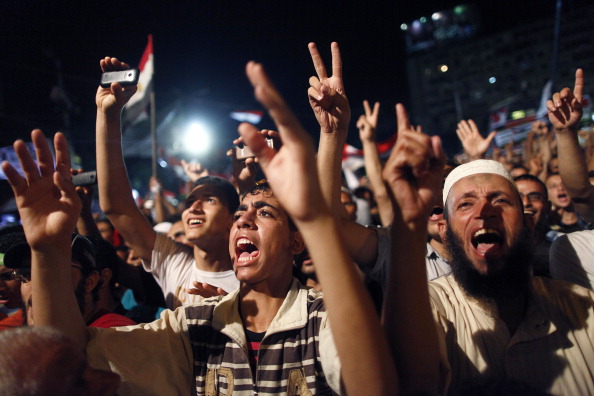
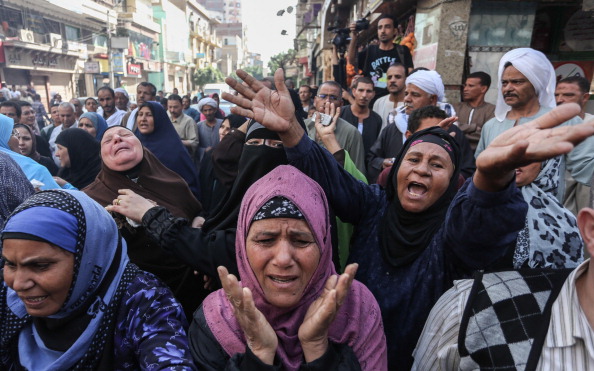
Egyptian protesters shout slogans against President Mohamed Morsi during a demonstration outside the high court in central Cairo on January 30, 2013.

Egyptian protesters shout slogans against President Mohamed Morsi during a demonstration outside the high court in central Cairo on January 30, 2013. (Photo KHALED DESOUKI/AFP/Getty Images)

Before Egypt tears itself apart, it must get out under the shadow of the Mubarak years.  The way forward begins with breaking the culture of impunity that protects security forces and police from accountability for their abuses.

Amnesty International has long feared that the failure of the Morsi government to hold security forces and military accountable for their past human rights abuses ensured that those abuses would be repeated when the government called on those institutions to respond to the popular protests.

Sure enough, reporting from Egypt, Amnesty International researcher Diana Eltahawy documented evidence that points to the use of excessive force by Egyptian security officials. 

SEE THE REST OF THIS POST

Five Reasons for Engagement Following the Egyptian Uprising

Egyptians demonstrate outside of the Presidential Palace in May, 2012.  Copyright Amnesty International.

Egyptians demonstrate outside of the Presidential Palace in May, 2012. Copyright Amnesty International.

On the second anniversary of the Egyptian Jan. 25 uprising, there’s a strong sense that the hopes of Tahrir Square have been tarnished.

There’s some reason for this: There have been too many broken promises.  Women, who were so essential to the uprising, were quickly marginalized in the months after it. Copts and other minority groups fear for their future. A new civilian government pushed through a constitution that may further minimize the role of women and lead to past human rights abuses being repeated. And perhaps most important, no institution seems capable of holding former Mubarak officials, security forces and the military accountable for decades of human rights abuses. The spirit of impunity lives on.

Yet, that’s only one side of the situation. There is in fact reason not to lose faith in Egypt’s future. This is not a promise that the path toward justice in Egypt is smooth, nor is it a prediction. But here are five reasons why we must remain engaged:

SEE THE REST OF THIS POST

10 Absurd and Unjust Arrests of 2012

Check out our list of 10 absurd arrests and sentences of the year. You might be surprised to learn what can get you thrown in jail in a few places around the world, and how harsh the sentences are once you’re there.

belarus teddy bears fly over minsk

Bears being dropped. Photo via Studio Total

1. Posting photos of teddy bears.

Anton Suryapin of Belarus spent more than a month in detention after posting photos of teddy bears being dropped from an airplane. The bears were part of a stunt by a Swedish advertising company calling for freedom of expression in Belarus. Anton is charged of “organizing illegal migration” simply because he was the first upload photos of the teddy bears, and still faces a prison sentence of up to seven years.

2. Tweeting.

After allegedly “publicly insulting the King” on Twitter, a Bahraini man had his six-month prison sentence upheld on appeal, while three others are serving four-month prison sentences. Article 214 of Bahrain’s penal code makes it a crime to offend the King.

3. Opposing the death penalty.

SEE THE REST OF THIS POST

Division, Distrust and Despair – Egypt Votes On a New Constitution

Egyptian polling place

Egyptians line up outside a polling station in Mahalla on 15 December to vote in the referendum on a new Constitution. © Amnesty International

By Diana Eltahawy, Amnesty International’s North Africa Researcher

Arriving in Cairo a few days before the constitutional referendum held on Saturday, 15 December, I couldn’t remember a more bitterly divided and polarized Egypt.

During my last visit to the country as part of an Amnesty International delegation to document human rights violations committed during the 18 days of the “25 January Revolution”, there was a palpable sense of unity among protesters despite the suffering and violence.

Egyptians from all walks of life – women and men, Christians and Muslims, young and old, liberal and Islamist, affluent and poor – stood together against the government and its tactics to crush the uprising. They put aside their political, religious and ideological differences to fight for a common cause, and they were successful.

SEE THE REST OF THIS POST