You Can Bring Hope to Prisoners in Iran for the Iranian New Year

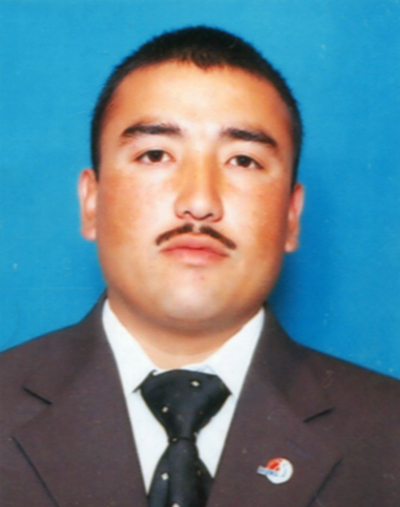
Shiva Nazar Ahari, a prominent human rights activist who has been jailed by the Iranian government several times.

Shiva Nazar Ahari, a prominent human rights activist who has been jailed by the Iranian government several times.

Imagine—if you can—what it is like to be a political prisoner sitting in Tehran’s notorious Evin Prison. You are likely hungry as the food is practically inedible. You are likely sick as the filthy conditions breed illnesses and infections among the inmates. You are likely not receiving adequate health care. You are living in a constant state of fear and apprehension; if you are one of those lucky enough not to be tortured yourself, you have to listen to the cries of others being tormented. You have not received anything that remotely resembles justice. Worst of all, you believe that you have been forgotten.

But now imagine the consolation and hope that you can bring to these prisoners by remembering them at this time of year. Nowruz is the Iranian New Year festival and begins on the first day of spring. It is supposed to be a joyous occasion when family and friends gather and share traditions such as the Haft Sin table, which literally means the seven s’s. Seven items beginning with the Persian letter sin (equivalent to the English s) and which represent spring time are set out.

SEE THE REST OF THIS POST

Why the Iranian Government Should Listen to the King Who Died 3,000 Years Ago

captive-in-iran

Captive in Iran, relates the story of two young women who endured detention for nearly nine months in Tehran’s Evin Prison, solely for the peaceful promotion of their religion (Photo credit: Tyndale Momentum)

Iranians often point to the fact that the first human rights charter in history came from Iran. When the Cyrus Cylinder, dating from the sixth century B.C., and owned by the British Museum, was exhibited in Iran, President Mahmoud Ahmadinejad attended the opening in Tehran. The cylinder was seen by more than one million Iranians.

The inscription on the cylinder, which has just begun its highly publicized first tour in the U.S., has been interpreted as a commemoration of Cyrus the Great’s proclamation of religious freedom and tolerance for all throughout his empire. How sad then that the current Iranian government blatantly contradicts Cyrus’ edict. Instead of honoring their ancient and noble traditions, the Iranian authorities are intensifying the pernicious and widespread persecution of Iran’s religious minorities.

Adherents of the Baha’i faith are probably the most persecuted religious community in Iran. Their faith is not recognized as a religion in Iran’s Constitution. Many Baha’is were executed in the 1980s. The seven leaders of the Baha’i community are serving 20-year prison sentences after their convictions on specious charges of “espionage for Israel,” “insulting religious sanctities” and “spreading propaganda against the system.”  Baha’is are excluded from higher education and face severe discrimination in employment, their cemeteries have been desecrated, and they are not permitted to meet, to hold religious ceremonies or to practice their religion communally. Because they are excluded from universities, the community established the underground Baha’i Institute for Higher Education, but its faculty and staff have been arrested and imprisoned solely for peacefully providing instruction to their young people.

SEE THE REST OF THIS POST

5 Questions on Drones Senators Should Ask Attorney General Holder on Wednesday

The Senate Judiciary Committee will hold its ninth periodic oversight hearing of the Department of Justice on Wednesday, March 6th at 9 a.m. with U.S. Attorney General Eric Holder  (Photo credit: MANDEL NGAN/AFP/Getty Images).

The Senate Judiciary Committee will hold its ninth periodic oversight hearing of the Department of Justice on Wednesday, March 6th at 9 a.m. with U.S. Attorney General Eric Holder (Photo credit: MANDEL NGAN/AFP/Getty Images).

On Wednesday March 6th at 9 a.m., the Senate Judiciary Committee will hold its ninth periodic oversight hearing of the Department of Justice with Attorney General Eric Holder. It’s not a hearing on drones and the Obama administration’s counter terrorism policy, but it should be.

As we saw with the Senate Intelligence Committee’s confirmation hearing with John Brennan several weeks ago, the Obama administration’s killing program remains shrouded in secrecy and the little information we do know gives grounds to conclude that the program as a whole allows for the use of lethal force that violates the right to life under international law.

SEE THE REST OF THIS POST

Iranians in Outer Space–and Their Scientists in Prison?

Omid Kokabee

Omid Kokabee

Lately, we have been hearing a lot about the extraterrestrial experiences of Iranians, both actual and desired. Iranian-American NASA engineer (and heart throb) Bobak Ferdowsi, who gained fame for his distinctive hairdo as well as his skill in guiding the Mars Rover landing, was the First Lady’s guest at President Obama’s State of the Union address, thanks to his efforts to inspire kids to pursue their education in the STEM fields.

Meanwhile, Iran successfully sent a monkey into space and back, prompting president Mahmoud Ahmadinejad to declare that he would like to become the nation’s very first astronaut. While the prospect of Iran’s controversial president being launched into orbit in a space ship intrigued many both inside Iran and out, Iran’s ability to advance the frontiers of science is being undermined by its government’s practice of putting some of its brightest scientists in prison.

SEE THE REST OF THIS POST
Freed Filipino Prisoner of Conscience: “I Am in High Spirits”

Emman and Ericson Acosta

Emman and Ericson Acosta

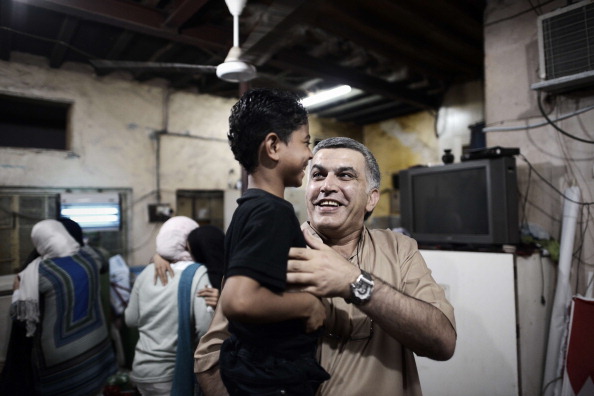
In February 2013, 40-year old poet and Amnesty International activist Ericson Acosta has more reason to celebrate other than his freedom from his unjust detention. A few days after the Philippine Justice Department decided to drop the trumped-up charges against him, Ericson witnessed the awarding of a silver medal to his only son, 10-year old Emmanuel, who won in a division-wide Math competition in Pasig City, Metro Manila.

Arrested by military troops in February 2011, Acosta was interrogated for 44 hours on 2 hours sleep and threatened with death. He was then charged with being a member of the once banned Communist Party and later, with the illegal possession of explosives. In August 2011, Amnesty International called for the release of Acosta as a Prisoner of Conscience. In his statement after being released, Acosta thanked his supporters, including Amnesty International, and called for the release of the rest of political prisoners in the Philippines.

SEE THE REST OF THIS POST

In Turkey: The Ivory Tower Besieged

Turkish students stage a protest against the government and condemning the detentions of students at the universities in Ankara on June 16, 2012. (ADEM ALTAN/AFP/GettyImages)

In Turkey, it is not “publish or perish” that scholars must fear.  It is prison.

There was a time, not very long ago, that Turkey seemed on the edge of a new era of academic and intellectual freedom.  New private universities created institutional support for more independent scholarship, while the Turkish government showed at least grudging willingness to allow debate of formerly “taboo subjects.”  For example, in 2005, the ruling AK (Justice and Development Party) Party, after initial hesitation, publicly supported the first conference in Turkey that seriously examined the Armenian Genocide.  It soon became apparent, however, that the AK Party’s vision of academic freedom has clear limits.

Asserting Control over the Universities

In some cases, basic science came under attack.  In Turkey, as in the United States, there is a powerful creationist movement eager to debunk fundamental aspects of evolutionary science.  Creationism has deep roots in Turkey and the ruling AK Party has quietly picked up the banner of anti-science.  Slowly, over the past several years, major scholarly institutions have lost their independence and party hacks have replaced serious researchers.

SEE THE REST OF THIS POST

President Obama: Keep Your Promise to Close Guantanamo

indefinite detention graphic

Click to enlarge.

Nearly four years ago, on his second day in office, President Obama ordered the Guantanamo prison closed within one year.  Today it remains open, with 166 detainees, and human rights violations in the name of “global war” have become the “new normal” there, at Bagram in Afghanistan and elsewhere, including indefinite detention, unfair trials, unlawful killings with drones and impunity for torture.

President Obama must make good on his promise to close the prison, and he must end–and ensure accountability for–human rights violations in the name of “global war.” Yes, there are obstacles to closure and reform–however, if President Obama were to change course and honor the U.S. government’s international human rights obligations, the path forward is clear, because human rights provide a framework that protect and ensure justice for all of us.

Here are 10 concrete steps–by no means exhaustive–President Obama can take now and in the near future to keep his promise and help make his rhetoric on human rights a reality:

1) Immediately recommit publicly to closing Guantanamo, recognize that international law applies to all U.S. counterterrorism operations, and recognize that the right way to close Guantanamo is to ensure that detainees are either charged and fairly prosecuted in federal court, or released to countries that will respect their human rights.

SEE THE REST OF THIS POST

Rhino Season and Iran’s Historical Trauma

Rhino SeasonImagine you have spent nearly 30 years in prison just for writing poems—the only thing that keeps you going is the hope of someday being reunited with your wife and family. But then when the day of your release finally comes, you discover that your family has been told that you are dead and you are left to wander the earth like a ghost, caught between the horror of the past and a present where you don’t even really exist.

This is the tragic situation faced by the protagonist of a powerful new movie called Rhino Season (Fasle Kargadan) by the eminent Iranian film director Bahman Ghobadi. It can also be interpreted as a metaphor for an entire society, haunted by the human rights violations that shattered so many lives, yet unable to move forward because of the Iranian government’s stubborn refusal to accept responsibility for the crimes they perpetrated. Thousands of people were imprisoned, tortured and executed in Iran in the 1980s; there has never been a reckoning, there has been no accountability and it is impossible for any of those scarred by those years to find peace and closure.

SEE THE REST OF THIS POST

The Facts About Solitary Confinement in California Prisons [INFOGRAPHIC]

Our new report on solitary confinement shows how the United States has shamefully become a world leader in the practice of holding people in isolation for prolonged periods — as much as 20 years or more.  More than 3,000 prisoners in California are held in high security isolation units known as “Security Housing Units.” Help us stop this practice by taking action.
SEE THE REST OF THIS POST

The Shocking Abuse of Solitary Confinement in U.S. Prisons

cell solitary confinement

Bunk in Secure Housing Unit cell, Pelican Bay, California © Rina Palta/KALW

Today, Amnesty International issued a new report calling for an end to the use of prolonged, indefinite solitary confinement in California prisons.  The report contains shocking details about the scope and impact of abusive use of solitary confinement on prisoners, ex-prisoners, families and communities.

There is no policing of the system, they do whatever they want and they get away with it.

Sister of a man held in solitary confinement for a total of 21 years

What’s Solitary Like?

Personally, I find it hard to imagine what it’s like to be held in solitary confinement for a couple days, let alone a couple decades. Medical doctors have described how, even after short periods of time, solitary can lead to insanity. I can see how after reading this Kafkaesque story about a prisoner who participated in a hunger strike to protest  the use of solitary:
SEE THE REST OF THIS POST