Turning Away From Celebrating Death

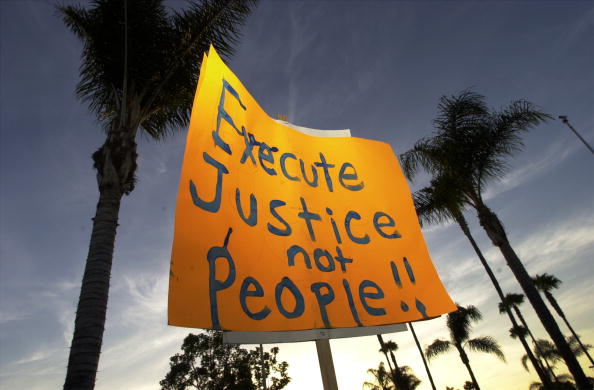
Despite the recent filibuster in Nebraska, support for death penalty abolition is once again on the rise (Photo Credit: Allen Hailey).

Despite the recent filibuster in Nebraska, support for death penalty abolition is once again on the rise (Photo Credit: Allen Hailey).

LB 543, Nebraska’s death penalty repeal bill, was successfully filibustered this week by a minority of the state’s senators. During the course of two days of debate and occasional voting, it became clear that the votes to pass the bill might have been there, but the two-thirds majority needed to break a filibuster was not.

Nebraska’s death penalty, like capital punishment elsewhere, suffers from arbitrariness, unfairness, and general uselessness, facts that are dawning on a lot of legislators in a lot of states. The defense of the death penalty in the Nebraska debate was not passionate, and relied on the citing of discredited deterrence studies and a vague sense the executions somehow equal justice.

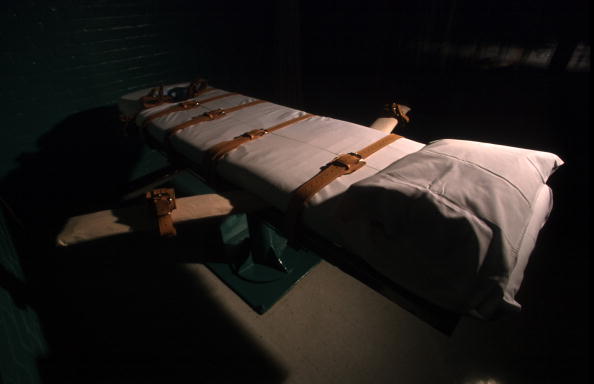
Nebraska’s embarrassing attempts to acquire lethal injection drugs may have been partially responsible for the sheepishness with which the pro-death penalty arguments seemed to be infused. But more likely it’s just that the days of cheering for executions and celebrating the death penalty are over.

SEE THE REST OF THIS POST

A Mother Speaks: “I Don’t Want To Lose My Son to the Death Penalty”

Vera Thomas

Vera Thomas

By Vera Thomas, Reggie Clemons’ Mother

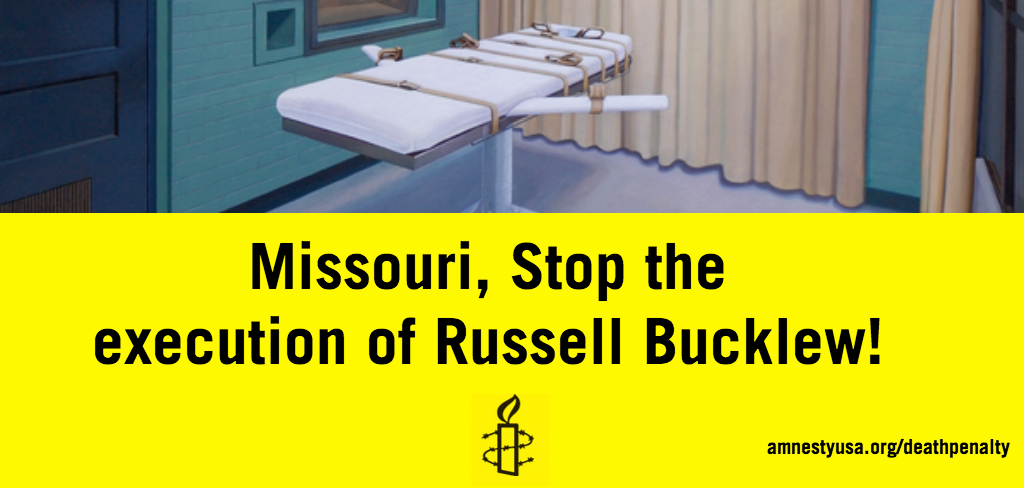
When my son was young, he would say, “When I grow up I want to invent things.” Reggie as a young boy was always a people person. Almost 30 years later, he sits on death row, and I’m waiting to see whether or not the state of Missouri will take my son’s life. This is a parent’s worst nightmare.

My son’s name is Reginald Clemons, but we call him Reggie. He has been on Missouri’s death row for 21 years. No mother can truly imagine that there may come a day where she may have to watch her son take his last breath, listen to his last words and watch him executed. Last year, Reggie was granted an opportunity where his case would be reviewed by a judge who would then recommend to the Missouri Supreme Court whether or not my son should live or die. As we await the judge’s recommendations – expected to be announced by June 1st – I want you to understand a few things about my son, his case and just how flawed the death penalty system is.

Then I hope you will take action to stop Reggie’s execution and join the movement to abolish the death penalty in the state of Missouri and beyond.

SEE THE REST OF THIS POST

It’s Official! Death Penalty Now Abolished In Maryland

Amnesty International activists with Governor Martin O'Malley as he signed the death penalty repeal bill, making Maryland the 18th U.S. state to abolish capital punishment (Photo Credit: Amnesty International USA).

Amnesty International activists with Governor Martin O’Malley as he signed the death penalty repeal bill, making Maryland the 18th U.S. state to abolish capital punishment (Photo Credit: Amnesty International USA).

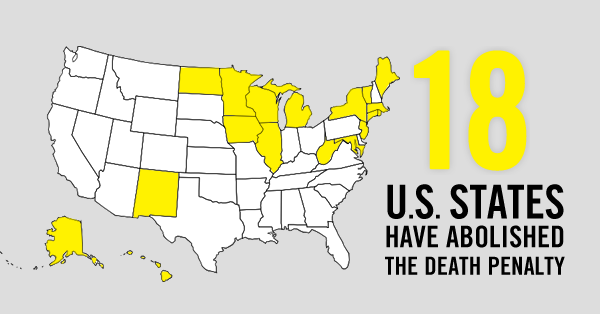
Maryland’s death penalty repeal bill has now been signed into law. Governor Martin O’Malley today made it official, but there is still work to do. There are still 32 states with capital punishment laws on the books, and there is the federal and military death penalty.

But while the U.S. will not be joining the ranks of abolitionist countries any time soon, the trend is certainly in the right direction, and more individual states will be repealing the death penalty in the near future, perhaps maybe even later this year.

The death penalty has gone from a third-rail political issue to one that is openly debated and hotly contested. As DNA technology has exposed the shortcomings of our judicial system, the public has become increasingly uncomfortable with the irreversible punishment of execution. Five Governors have now signed repeal bills since December 2007, and others, from states like Arkansas, Oregon, New Hampshire and Virginia, have publicly expressed a willingness to do so.

SEE THE REST OF THIS POST

Rushing To Judgment

Kharey Wise was wrongfully convicted of beating and raping a female jogger in Central Park in 1989 and spent 15 years in prison. He was released when the real assailant confessed to the crime (Photo Credit: Debbie Egan-Chin/NY Daily News Archive via Getty Images).

Kharey Wise was wrongfully convicted of beating and raping a female jogger in Central Park in 1989 and spent 15 years in prison. He was released when the real assailant confessed to the crime (Photo Credit: Debbie Egan-Chin/NY Daily News Archive via Getty Images).

For many who remember the terrible crime, the huge outcry and the media circus around the 1989 “Central Park Jogger” case, which was BIG national news, it may have come as a surprise to learn that all 5 of the teenagers convicted were in fact innocent.

But it probably shouldn’t have.

The film The Central Park Five, recently premiered on PBS, offers an important cautionary tale about how a rush to judgment, fueled by all-in media coverage of a particularly heinous crime, increases the chances that criminal justice officials will make critical mistakes, or engage in deliberate misconduct. The Reggie Clemons case, tainted by allegations of police abuse during the investigation and prosecutorial misconduct during the trial, is a reminder that a process compromised in this way can result in a death sentence.

At the other end of the spectrum, a rush to judgment can occur when there is a callous indifference on the part of authorities toward a crime they may perceive as less important because it was committed in a marginalized community. That’s what seems to have happened in the Carlos De Luna case, where an almost certainly innocent man was put to death for a crime another man named Carlos probably committed.

SEE THE REST OF THIS POST

Who’s Next To Abolish The Death Penalty – Delaware?

The state of Delaware is known as the “Small Wonder”, but it has a surprisingly large death row.  With 17 men (10 of them African American) facing execution, Delaware’s death row is more than twice as big as Virginia’s, and more than 3 times the size of Maryland’s.  And Delaware has the third highest per capita execution rate of any state in the U.S. (behind Oklahoma and Texas).

But now, a bill making its way through the state legislature may mean than no one else will be sent to Delaware’s death row.  A death penalty repeal bill has already cleared the Delaware Senate, and will be taken up by the House on April 24.

There are deep concerns about costs, about wrongful convictions, and about the racial disproportionality of Delaware’s death penalty (the subject of a Cornell University study). These concerns, amplified by powerful appeals from family members of murder victims, and by the voices of those forced to become complicit in state killing (like this juror from a recent Delaware capital case), may be enough to bring about a second successful state death penalty repeal this year.

SEE THE REST OF THIS POST

The Slow Decline Of The Death Penalty Continues

Abdullah al-Qahtani, a Saudi Arabian national, faces imminent execution in Iraq - a sentence based on “confessions” he says were false and obtained through torture.  His story is a perfect illustration of why the death penalty is the ultimate violation of human rights; how ceding to the state the power to kill prisoners is connected to unfair trials, torture, and other abuses.

As Amnesty International’s survey of the death penalty worldwide in 2012 reports, Saudi Arabia and Iraq are both among the top executioners in the world, along with China, Iran, and, yes, the United States. The U.S. was once again the 5th most prolific executioner in 2012, and its death penalty continued to be plagued with bias and error and misconduct by the state (as has been exposed in the Reggie Clemons case).

With 15 executions in 2012, Texas would have ranked 8th in the world, between Sudan and Afghanistan.

SEE THE REST OF THIS POST

Maryland Must Support Victims’ Families

The abolition of the death penalty in Maryland mattered to many victims’ families; that’s one of the reasons it passed. Also important for these families was the funding originally attached to the repeal bill that would have provided real tangible support for families who lose loved ones to homicide. Support that pays for counseling, that helps mitigate the loss of a breadwinner, or that helps pay for funeral costs.

The funding provision was stripped from Maryland’s repeal bill, but promises were made, by the Governor among others, that the funding would be covered in the state’s budget. Well, the first supplemental budget has been submitted, and funding to support victims’ families is NOT included.

SEE THE REST OF THIS POST

More Evidence of Misconduct In Reggie Clemons Case

Reggie Clemons

New evidence has emerged reinforcing the contention that Reggie Clemons’ trial was marred by misconduct; a judge’s recommendations are expected by June 1 (Photo Credit: Color of Justice).

On March 18, the final oral arguments in the “Special Master” investigation of Reggie Clemons‘ case were held in Independence, Missouri. Reggie Clemons was sentenced to death in 1993 after a disturbingly flawed investigation and trial.

At the Clemons hearing before Special Master Judge Michael Manners last September, evidence of police brutality and prosecutorial misconduct in his case was presented, and this month that evidence was reinforced by new testimony of a bail investigator named Warren Weeks.

In a video-taped deposition, Weeks said that he saw evidence that Clemons had been brutalized – a golf-ball sized bump on his head – and that he submitted a written report of this observation. Weeks testified that prosecutor Nels Moss attempted to intimidate him about the report. The report obtained by Clemons’ current attorneys and presented to Judge Manners had the word “bump” or “bruise” scratched out.

SEE THE REST OF THIS POST

Maryland Legislature Passes Death Penalty Abolition!

Today the Maryland House of Delegates followed the lead of the state Senate and passed the death penalty repeal bill. The bill now goes to Governor Martin O’Malley who almost certainly will sign it, making Maryland the 18th state to abandon capital punishment (Photo Credit: Marvin Joseph/The Washington Post via Getty Images)

Today the Maryland House of Delegates followed the lead of the state Senate and passed the death penalty repeal bill. The bill now goes to Governor Martin O’Malley who almost certainly will sign it, making Maryland the 18th state to abandon capital punishment (Photo Credit: Marvin Joseph/The Washington Post via Getty Images)

Today the Maryland House of Delegates followed the lead of the state Senate and passed the death penalty repeal bill. The bill now goes to Governor Martin O’Malley who almost certainly will sign it, making Maryland the 18th state to abandon capital punishment, and the 6th state in 6 years to join the abolition club.

This culminates a decades-long campaign, stretching back to the 1980s, in which Amnesty International – in coalition with other groups – has always played an integral part. For me personally, it caps 6 years of thoroughly meaningful and rewarding work with a terrific collection of Amnesty staff and activists and coalition partners.

SEE THE REST OF THIS POST

Maryland Senate Endorses Death Penalty Abolition

Maryland Senate death penalty vote

Final Maryland Senate vote on the death penalty bill — 27-20. Photo by Mona Cadena

The Maryland Senate has passed death penalty repeal, by a 27-20 vote, and the bill now moves over to the House with increased momentum.  Excitement at this development is tempered by the fact that desperately needed funding for family members of murder victims was stripped from the bill in committee.

Families of murder victims face many hardships, beyond the shock and grief of the loss itself. Often the lost loved one was the family breadwinner. The costs of travel or missed work time to attend court hearings, as well as expenses for grief counseling and funeral arrangements can add up quickly, particularly for lower income families. They need, and deserve, our support.

The Governor and others have promised to put this funding into the budget that will be considered in March, but the hammering out of budgets is notoriously chaotic, so we will have to be vigilant. There are also no guarantees for death penalty abolition itself, as the vote in the Maryland House is likely to be close. More action is still needed.

SEE THE REST OF THIS POST