As the World Celebrates IDAHO, Homophobia in Russia is on the Rise

Russian LGBTI activists. The LGBT community faces increasingly repressive legislation in Russia (Photo Credit: Charles Meacham/Demotix).

Russian LGBTI activists. The LGBT community faces increasingly repressive legislation in Russia (Photo Credit: Charles Meacham/Demotix).

By Jasmine Heiss, Amnesty International USA’s Individuals & Communities at Risk Campaigner

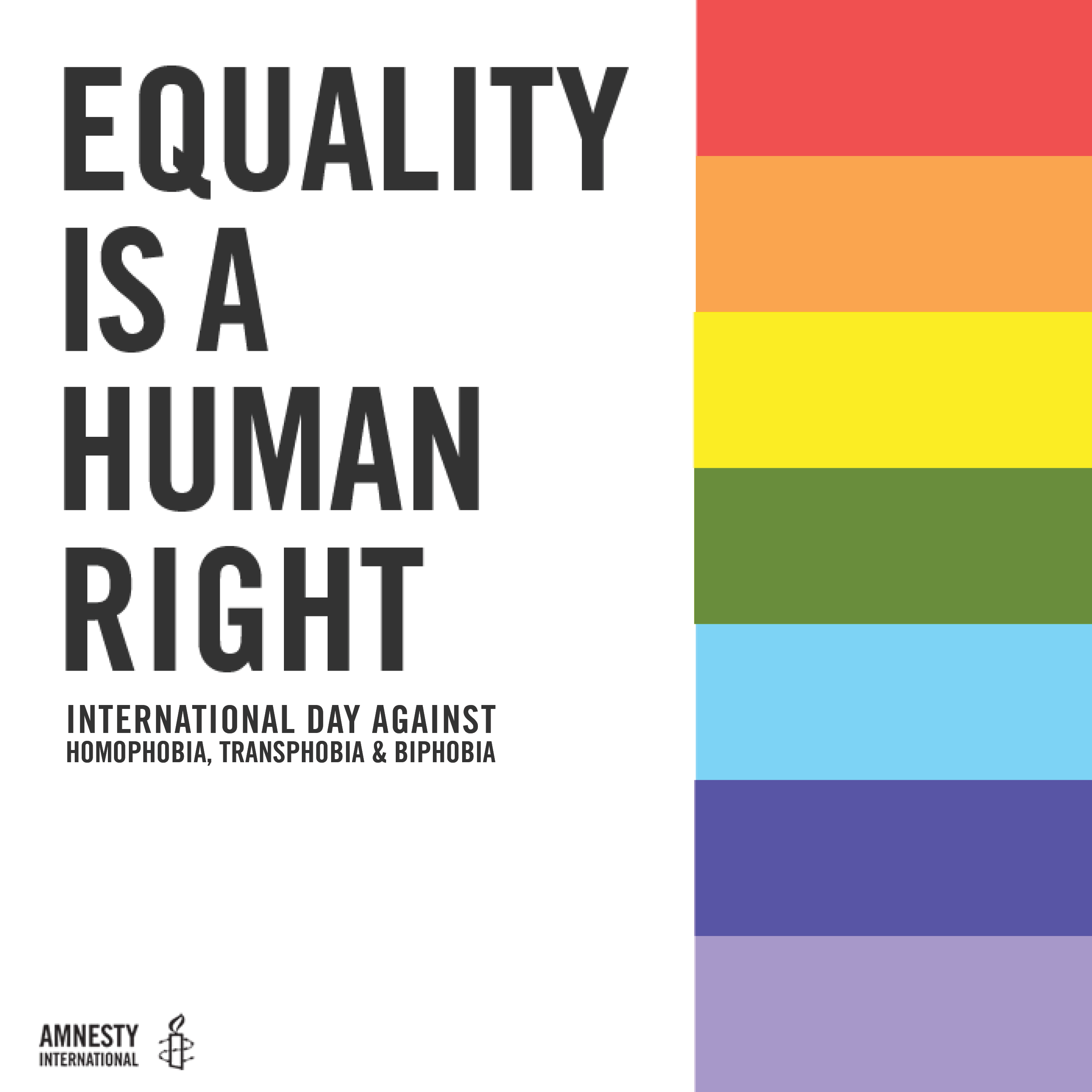
Today, lesbian, gay, bisexual, transgender and intersex (LGBTI) individuals and activists around the world will recognize the International Day against Homophobia and Transphobia (IDAHO). Exactly twenty-three years after the World Health Organization’s landmark decision to declassify ‘homosexuality’ as a mental disorder, LGBTI people and allies continue their work to ensure that the full spectrum of their human rights is respected and upheld.

Just last week, news out of the Russian Federation served as a tragic reminder of just how critical that work is.

SEE THE REST OF THIS POST

Armenia, Azerbaijan, and Turkey: Odd Men Out on Conscientious Objection

Halil Savda at a Write for Rights event in France on Human Rights Day, December 10, 2011 (Photo Credit: Michael Sawyer for Amnesty International).

Halil Savda at a Write for Rights event in France on Human Rights Day, December 10, 2011 (Photo Credit: Michael Sawyer for Amnesty International).

This May 15, International Conscientious Objectors Day, is an opportunity to both celebrate the steady acceptance of this fundamental right and to highlight those countries who have not taken the basic steps to protect it.

In Europe for example, the European Court of Human Rights (ECHR) recognized conscientious objection as a protected right in 2011 when, in Bayatyan v Armenia, it ruled that conscientious objection was subject to Article 9 of the European Convention on Human Rights, which protects freedom of thought, conscience, and religion.  Unfortunately, as an Amnesty statement released today highlights, three European countries, Armenia, Azerbaijan, and Turkey, still refuse to accept this basic obligation under international law.

Amnesty’s position on conscientious objection is clear:

The right to conscientious objection to military service is not a marginal concern outside the mainstream of international human rights protection and promotion. The right to conscientious objection is a basic component of the right to freedom of thought, conscience and religion – as articulated in the Universal Declaration on Human Rights, the International Covenant on Civil and Political Rights and the European Convention for the Protection of Human Rights and Fundamental Freedoms.

SEE THE REST OF THIS POST

Repression Worsening as Putin Returns Russia to Dark Period in its History

(Photo Credit: Sasha Mordovets/Getty Images).

(Photo Credit: Sasha Mordovets/Getty Images).

In collaboration with special guest Svetlana Reiter, a Russian journalist who has been reporting on the demonstrations.

A year ago, on the eve of President Putin’s inauguration, the world watched demonstrators prepare to rally in Bolotnaya Square and wondered if the Snow Revolution born during Russia’s “winter of discontent” would bring about real changes in the Russian government‘s approach to human rights and civil society.

Change has come, but not the changes the protesters desired.

In response to calls for openness, transparency, and freedom of expression, the Russian government clamped down hard on dissent. From beating protesters  to banning demonstrations, to requiring non-governmental organizations (NGOs) to wear a “foreign agent” scarlet letter, to restricting freedom of speech in the name of national security, President Putin and his siloviki cronies are creating a culture of fear and repression with assistance from a mostly-compliant Duma.

SEE THE REST OF THIS POST

Ten Ways to Repress a Journalist

People hold posters as they mark World Press Freedom Day in Tbilisi (Photo Credit: Vano Shlamov/AFP/GettyImages).

People hold posters as they mark World Press Freedom Day in Tbilisi (Photo Credit: Vano Shlamov/AFP/GettyImages).

Governments and other organizations across the world are perfecting techniques to prevent journalists from shining a light on corruption and human rights abuses. From trumped-up charges and removing work licenses to murder, here are 10 ways journalists are repressed and prevented from reporting freely and fairly.

1. Physical Attacks
In some countries such as Syria, Turkmenistan and Somalia, governments, military forces and armed groups attack and even kill journalists who are seen to be critical of their policies and practices.

In May 2012, 18-year-old citizen journalist Abd al-Ghani Ka’ake was fatally shot by a government sniper in Syria while filming a demonstration in Aleppo. Armed opposition groups have also attacked and killed journalists.

SEE THE REST OF THIS POST

Two Minutes to Fight for Freedom in Turkey

Supporters of Fazil Say, a world-renowned Turkish pianist who went before an Istanbul court on charges of insulting Islam and offending Muslims in comments he made on Twitter (Photo Credit: STR/AFP/Getty Images).

Supporters of Fazil Say, a world-renowned Turkish pianist who went before an Istanbul court on charges of insulting Islam and offending Muslims in comments he made on Twitter (Photo Credit: STR/AFP/Getty Images).

In Turkey, freedom of expression is under attack. But you can make a difference. And it will only take two minutes of your time to add your voice to calls for real freedom in Turkey.

The Criminalization of Dissent

The situation is grave. Overly broad anti-terrorism laws have led to the prosecution of people for their ideas. An elderly grandmother has been convicted under terrorism charges for calling for peace between Turks and Kurds. Students, publishers, scholars and lawyers…all have been targeted under laws that confuse peaceful dissent for criminal violence. Moreover, Turkey has retained a series of laws that directly limit freedom of expression. In its most recent report, Amnesty International documents case after case in which Turkish authorities continue to attack individuals for peacefully expressing their ideas.

The force of these laws ripple through Turkish society. There is a concerted effort to depoliticize universities. The arrest of scores of journalists has justifiably damaged Turkey’s international reputation.

SEE THE REST OF THIS POST

Tweet for Freedom in Turkey: Say No to the Criminalization of Dissent!

Journalists and activists participate in a rally for press freedom and against the detention of journalists under anti-terrorism laws in the capital of Ankara (Photo Credit: Ümit Bektas/Reuters).

Journalists and activists participate in a rally for press freedom and against the detention of journalists under anti-terrorism laws in the capital of Ankara (Photo Credit: Ümit Bektas/Reuters).

In a major report this week, Amnesty International has outlined the wide range of legal tools that Turkish authorities have used to target political dissent and limit freedom of expressionScholars, students, journalists, human rights activists, and thousands of others have been subject to prosecution and lengthy punishment under these statutes. But you can join us in working for real reform in Turkey!

Amnesty has noted that:

The most negative development in recent years has been the increasingly arbitrary use of anti-terrorism laws to prosecute legitimate activities including political speeches, critical writing, attendance of demonstrations and association with recognized political groups and organizations – in violation of the rights to freedom of expression, association and assembly.

SEE THE REST OF THIS POST

An American Intern’s Fight for Justice in Armenia

Narine Esmaeili was intimidated by Armenian police and the subject of an interrogation after she tried to stop massive ballot stuffing in Artashat’s polling precinct (Photo Credit: Karen Minasyan/AFP/Getty Images)

Narine Esmaeili was intimidated by Armenian police and the subject of an interrogation after she tried to stop massive ballot stuffing in Artashat’s polling precinct (Photo Credit: Karen Minasyan/AFP/Getty Images)

A 21-year-old U.S. student was an observer in her ancestral homeland Armenia’s disputed February 18, 2013 Presidential election. When Narine Esmaeili, who interns for Transparency International, tried to prevent massive ballot stuffing in Artashat’s polling precinct 17-5, she was physically assaulted by the local mayor’s son and instructed to be a “good girl” – keep her mouth shut – by the police who responded to her phone call. The young woman did the opposite, videotaping a testimony and posting it on YouTube.

SEE THE REST OF THIS POST

An Open Letter to Secretary of State John Kerry: Know Before You Go

U.S. Secretary of State John Kerry

Newly appointed U.S. Secretary of State, John Kerry arrives in the UK at Stansted Airport on February 24, 2013 in Stansted, England. Kerry is embarking on his first foreign trip as Secretary of State with stops planned in the United Kingdom, Germany, France, Italy, Turkey, Egypt, Saudi Arabia, the United Arab Emirates, and Qatar before returning to Washington on March 6th. (Photo by Warrick Page/Getty Images)

Dear Mr. Secretary:

I know you have a lot on your plate as you begin your first trip overseas as Secretary of StateYou’ll be visiting America’s allies in Europe and the Middle East, by my count nine countries in eleven days. According to press reports, the on-going conflict in Syria is going to be at the top of your agenda, which is as it should be. The latest estimates by the United Nations indicate that at least 60,000 people, mostly civilians, have been killed since unrest beganHuman rights violations there have been appalling and wide-spread.

While you continue your important work on Syria, however, I hope that you can spare some time for the on-going human rights violations elsewhere in the Middle East.  Sadly, many of these violations are undertaken by America’s allies in the region, including Egypt, Saudi Arabia, and Bahrain.

SEE THE REST OF THIS POST

One Year Later, Raising Our Voices for Pussy Riot

Amnesty campaigner Jasmine Heiss

By Jasmine Heiss, Individuals and Communities at Risk Campaigner at Amnesty International USA

On the evening of February 20, 2013 I stood with a small, but colorful group of activists outside the Embassy of the Russian Federation in Washington, DC. Thousands of miles away in remote regions of the Russian Federation it was already February 21st and Nadezhda “Nadya” Tolokonnikova and Maria “Masha” Alyokhina were hours from waking to serve another day of their two-year sentences.

But the 21st was not simply another day – it was the one-year anniversary of Nadya and Masha’s performance with feminist punk group Pussy Riot in Moscow’s Christ the Savior Cathedral. SEE THE REST OF THIS POST

Why is Turkey Prosecuting Yet Another Artist?

Supporter of Turkish pianist Fazil Say holds a sign in support of Say.

A supporter of world-renowned Turkish pianist Fazil Say holds a cardboard reading “Fazil Say is not alone” during a protest held outside an Istanbul court on October 18, 2012. (Photo credit: STR/AFP/Getty Images)

It is a cold winter for freedom of expression in Turkey. Thousands are in prison or in pre-trial detention under Turkey’s bloated anti-terrorism laws, including nearly three thousand students.

Artists have been targeted as well. Five members of the protest band, Grup Yorum, have reportedly been taken into custody on terrorism charges (their lawyers have alleged that members of the group were tortured in a previous case). And Fazıl Say, arguably Turkey’s most respected classical music artist, is on trial for “religious defamation.”

Say is one is a long, unhappy series of prominent artists and intellectuals, including Nobel Prize laureate Orhan Pamuk,  who have been targeted for prosecution in Turkey because of opinions they have voiced.

SEE THE REST OF THIS POST