The editor of Zambia’s largest independent newspaper, The Post, is currently on trial for distributing pornography. Chansa Kabwela was charged in July for ”circulating obscene matters with the intention to corrupt the morals of society,” punishable by a five year prison sentence. What exactly did Kabwela circulate that was so dangerous to the moral character of Zambians? Pictures of a woman giving birth on the ground outside a hospital.
A recent nurses’ strike led to dangerous medical conditions in the country, a fact Kabwela wanted to highlight. When she received pictures of the incident, she decided not to publish them in the paper, but instead sent copies to the vice president, the health minister and several organizations. The pictures were taken by a relative of the woman, who visited clinics and the hospital in search of medical assistance due to the breach birth position of the baby. Eventually she laid down on the ground near the hospital before doctors from the hospital finally assisted her. The baby did not survive.
Reporters Without Borders calls the arrest shocking and the charges without grounds. They also accuse authorities of harassing and intimidating the newspaper’s staff. The Post is a fierce critic of President Banda, who has made no secret of his dislike for the paper, called for Kabwela’s arrest. Banda became president upon the death of Levy Mwanawasa, one year ago today. Too bad Nixon didn’t think of the same tactic: Nick Ut would have gone to trial instead of winning a Pulitzer.
Since July 2008, abortion in all circumstances has been banned in Nicaragua. The new law makes no exceptions for terminating pregnancies that endanger the health or life of the woman, or that result from rape or incest. Girls or women seeking or obtaining abortions are subject to imprisonment. Health care professionals providing abortions — or even unintentionally injuring a fetus — face jail time and being barred from practice.
A new Amnesty International report, The Total Abortion Ban in Nicaragua, details the effects of the new measures. Medical professionals are put in an impossible situation: they’re prevented, on pain of criminal prosecution, from providing essential medical services — in direct contradiction of best-practice guidelines from the Ministry of Health. Women who need abortions to preserve their health — or lives — have to find doctors willing to risk prosecution and suspension of their license, or seek out dangerous back-alley terminations.
The ban has a chilling effect, too, on women suffering obstetric complications: one woman admitted to a hospital following a miscarriage was so frightened that she would be charged with having an abortion that she asked doctors not to intervene. The rate of maternal deaths in Nicaragua has increased: Official figures show that 33 girls and women have died in pregnancy or childbirth so far this year, up from 20 in the same period a year ago.
Finally, girls and women who become pregnant as a result of sexual violence must either carry the pregnancy to term, or look for risky, clandestine abortions. Our researchers spoke with women, raped by relatives, who were forced to give birth — sometimes to their own brothers or sisters. In every case, it’s low-income women who are hit hardest — richer Nicaraguans are able to travel abroad to escape the ban.
The legal system in Zimbabwe isn’t comprised of lawyers in skimpy clothing sharing a unisex bathroom while litigating bizarre and yet fascinating cases. Instead, there is a politicized judiciary, draconian laws designed to stifle dissent and a prison system that would give Auschwitz a run for its money. Amnesty International is monitoring the legal cases of human rights defenders and political activists. Below is an update on some of these cases.
Women of Zimbabwe Arise (WOZA)-
The leaders of WOZA were arrested and jailed in October 2008 for disturbing the peace during a protest over food aid distribution. Their trial has been continually delayed by both the prosecution and due to a petition the women filed before the Supreme Court asking the charges be dismissed as unconstitutional as Zimbabwe’s Constitution guarantees the right of assembly. The leaders, Jenni Williams and Magodonga Mahlangu appeared in court yesterday where the magistrate wanted to proceed to trial despite this pending petition. The Supreme Court verbally ruled on June 4th that the arrest was unlawful but a written decision has not yet been produced. The case was finally postponed again until August 17th to wait for the ruling from the Court.
On June 18th, four members of WOZA were viciously beaten by police during a protest to call attention to the plight of informal traders struggling to make a living in Zimbabwe. Yesterday, a court in Harare ruled that the police officers responsible will be charged with assault. The case was postponed to July 13th to allow the officers time to prepare their case. The charges against the four WOZA members of disturbing the peace were dropped the day before.
Jestina Mukoko et al- Late last year, Jestina Mukoko, head of the Zimbabwe Peace Project, was abducted from her home, illegally detained, tortured and charged with recruiting persons to participate in alleged militia camps in Botswana. She is one of 18 persons abducted and tortured around this same time and charged with variations of the same crime. On June 25th, the Supreme Court heard a petition from Ms. Mukoko and her co-defendants claiming their arrest was unconstitutional because they were illegally abducted and tortured. The Attorney General’s office admitted that Ms. Mukoko was illegally detained by state security agents but asserted that this should have no bearing on the case. A decision by the Court is still pending.
MDC activists and an independent journalist also on trial filed a petition before the Supreme Court asserting the same claim of unconstitutionality. At the hearing before the High Court, however, the State Security Minister took the opportunity to deny that the defendants, including Mukoko, were illegally detained. The petition was referred on to the Supreme Court. It is assumed that the remaining abductees will file similar complaints and their cases will be remanded until such time as the Supreme Court rules on the pending petitions.
This major victory just proves that when you speak up for human rights, the people in power do listen. It may have taken us a lot of effort to seal the deal, but today, the fight seems well worth it. The doors are now opened for major advancements in combating violence against women and improving women’s health care, education, and economic stability.
The bill still needs to move on to the Senate before finally landing on President Obama’s desk. We’ll keep you updated on the blog. Thanks to those who took action!
A vote in Congress tomorrow (6/10) will decide the fate of a new Office of Global Women’s Issues, a key provision of the International Violence Against Women Act (IVAWA).
The creation of this office would mean major advancements in healthcare, poverty reduction and U.S. foreign policies aiming to empower and improve the lives of women worldwide. But opposition groups are trying to de-rail this piece of legislation by spreading misinformation about what this office would really do. They claim that this legislation would hurt women’s rights. Nothing could be further from the truth.
This new office is about:
helping the U.S. meet its foreign policy goals of economic stability and poverty reduction
advancing the global fight against the HIV/AIDS epidemic and other health crises, and
pushing the United States to finally take a leadership role in the fight to end violence against women and girls globally
In the immediate aftermath of President Obama’s speech today in Cairo, the heavy web traffic of discussion among Arab activists was divided essentially into two camps. One person claimed that the speech could have been given by George W. Bush. Another compared it to Sadat’s historic trip to Jerusalem.
It’s not that either opinion is wrong – either may be proved right – but it was the nature of this talk from the very beginning that its meaning won’t be known for years down the road. For what will make it historic (or not) is not the rhetoric of the speech but the policies that follow it (or don’t).
For one, I don’t believe this was a talk that George W. could have given, although it did share much of the same language on democracy that Bush stubbornly adhered to long after his own policies made shreds of any hope for it.
Midway through Obama’s speech, he digressed to condemn the belief in “a world order that elevates one nation or group of people.” That is something that the worldview of American exceptionalism held by Bush and many of his presidential predecessors would never agree to. I hope that this radically different worldview may result in a new path of policies.
And it was promising that Obama addressed a broad range of issues – democracy, women’s rights, Israel and Palestine and economic development – with an understanding that they all affect the human rights situation and all have to be addressed.
One thing that stood out was when it came to economic development, Obama announced a long line of initiatives that hold promise. But in each of the other areas, particularly on Israel and on democracy, the rhetoric wasn’t matched by specifics. I hope that doesn’t imply that he thinks that action on economic development is more important than in the other areas.
Amnesty International welcomes Obama’s comments, but we now expect him to follow up with policies to match the rhetoric. He should begin with ending all practices that make the U.S. complicit in the various abuses that he denounced, such as extraordinary renditions and secret detention. He should insist that Israel and the PNA to cooperate with the UN’s fact-finding mission looking into violations of international law during the recent Gaza war. And he provide a public and independent report of America’s war on terror practices, a step he has opposed to date.
These would be just a first step, but an important step. It would start us on a path that could turn his speech today from a remarkable moment into an historic event.
Ground-breaking legislation that could help end violence against women around the world is currently in Senator Kerry’s hands – just in time for mother’s day. What a great gift it would make to mothers and women everywhere if that legislation became reality.
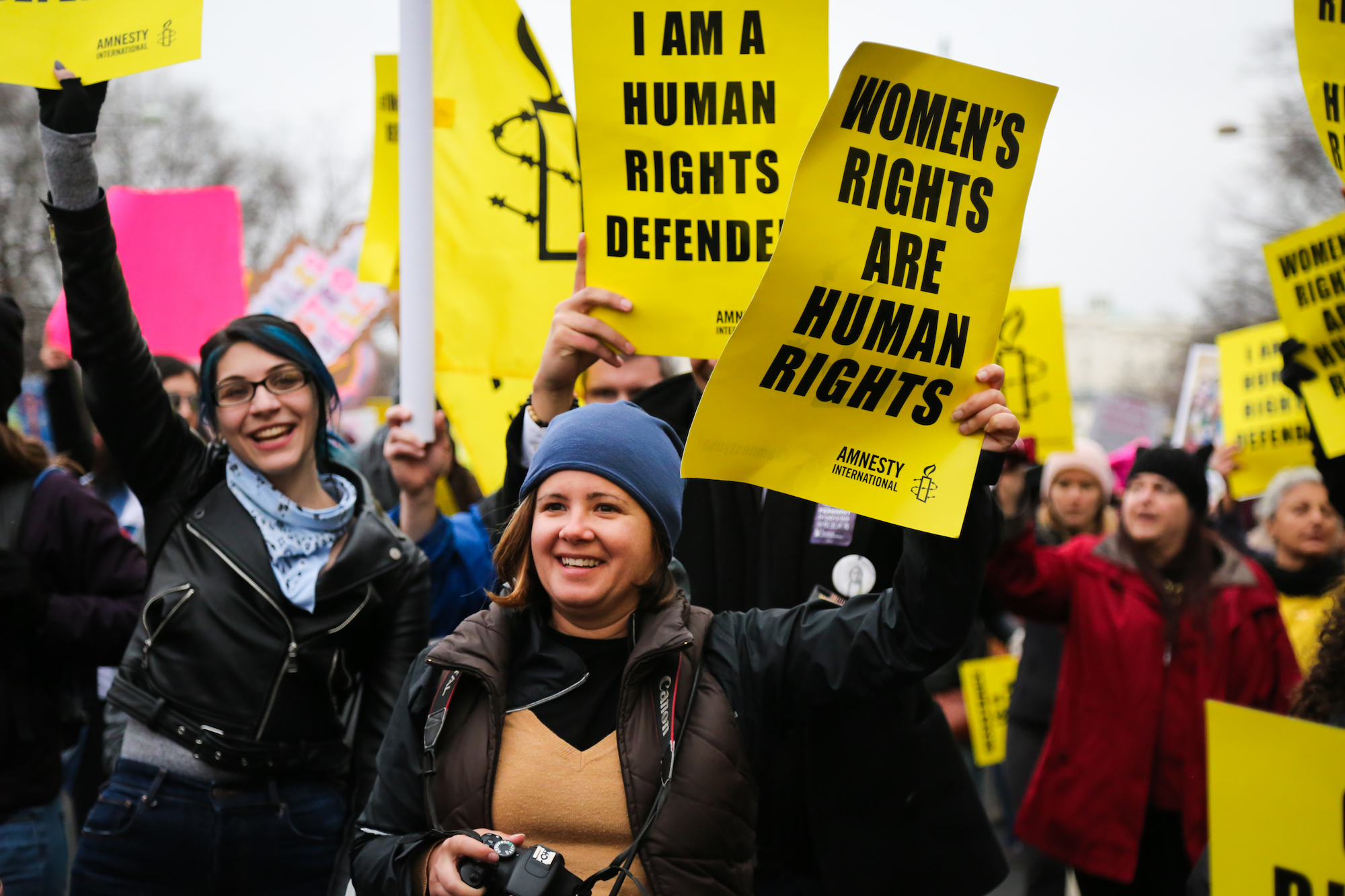
The International Violence Against Women Act (IVAWA) is an unprecedented effort by the United States to address violence against women globally. One out of every three women worldwide will be physically or sexually abused during her lifetime. Violence against women and girls is a violation of human rights. Violence and abuse devastates the lives of millions of women, knows no national or cultural barriers, and most importantly, it must be stopped.
Amnesty International worked with a coalition of supporters and partners to draft IVAWA. Last week, we sent Senators Kerry and Lugar, the Chair and Ranking Member of the Senate Foreign Relations Committee, a final draft of the legislation. Now, it’s up to them to say “yes” to ending violence against women – walk the bill over to the floor of the Senate and reintroduce it this week before Mother’s Day, May 10th.
The women of Atenco calling for justice on the 2nd anniversary of the abuses, one year ago.
…and they’re still waiting. Yesterday and today mark the third anniversary of the police operations in San Salvador Atenco that resulted in the arbitrary arrests of more than 45 women. At least 25 of those women filed complaints of physical and sexual abuse at the hands of the police who arrested them. However, none of those responsible for the events at Atenco have been brought to justice. The women of Atenco continue to wait for justice.
This past week, the swine flu outbreak has caused terrible problems for Mexico. Unfortunately, on the third anniversary of those events at Atenco, several campaign actions that were planned now have to be postponed. Rallies had to be cancelled, speakers cannot fly into Mexico, and offices are closed throughout the country. As such, several of our actions and campaign ideas have had to be set aside for the time being as Mexicans struggle to get through this sudden outbreak.
As you can imagine, the women of Atenco are feeling pretty discouraged that they will not be able to draw attention to their case this week as they had hoped. They continue to wait for impunity to end and for justice to be served. Support them through our Mariposas Initiative or by signing our online petition to tell President Calderon that they are not alone – the world is waiting for justice for these women. Even though swine flu is his main concern right now, he needs to remember the Women of Atenco and he needs to see how many people are watching and waiting.
As International Women’s Day approaches on March 8th, it’s time to recognize the struggles and achievements of women’s rights activists around the world. One of the most vibrant women’s rights movements is in Iran, where every day courageous women risk their freedom and safety to fight for their rights. While most use peaceful means to end discriminatory treatment of women in Iranian family law, they face increasing persecution from the Iranian government: Women are routinely arrested, imprisoned, threatened and banned from traveling abroad.
Even the most prominent women’s rights activist in Iran, lawyer and 2003 Nobel Laureate Shirin Ebadi, is not immune to this mistreatment. She has been repeatedly threatened in government-controlled media in recent months and the Defenders of Human Rights Center, that she operates to provide legal assistance to victims of human rights violations, was forcibly shut down by the government last December and her papers and computers seized.
Why is the Iranian government so afraid of its own women citizens calling for equal rights? The government trots out preposterous charges against them such as “acting against national security through propaganda against the state.” How can women walking around a mountainous area north of Tehran to collect petition signatures possibly undermine the state? How could Alieh Eghdamdoust, recently taken into custody and forced to start serving a three-year prison sentence for participating in a peaceful demonstration in June 2006, possibly be a threat to the security of Iran?
As the Iran country specialist for Amnesty International USA I am constantly challenged on how to craft actions and mobilize activist to combat this disproportionate and seemingly irrational repression of non-violent human rights defenders. And like many human rights activists, I am often frustrated and confounded. But I am also always inspired by the unrelenting courage and pluckiness of women activists in Iran. When asked by the judge at her trial why she participated in the demonstration, Alieh Eghdamdoust replied to the judge, “You should participate as well. Why didn’t you defend your daughters and wife’s rights by attending the legal peaceful gathering?”
Yesterday I saw this clever, 2 minute video called the Girl Effect that basically says that a girl can save the world! It shows how by giving a girl an education and opportunities she can improve the situation of an entire community. It is thought provoking and inspiring and takes 2 minutes to watch. For me, the video underlines the importance of acheiveing human rights for women and girls. Too many people argue that social practices that harm girls or in some way disadvantage them are just “culture” or “tradition” and therefore the West should not interfere. My response? Human rights are universal. We musn’t underestimate, or undermine the power of the girl effect by denying women and girls human rights.
Amnesty International works to protect human rights worldwide. We have more than 2.2 million supporters, activists and volunteers in over 150 countries, and are completely independent from government, corporate or national interests.
Learn more about us at AmnestyUSA.org »
Kate Vandermade is the Central America Co-Group Chair and RAN Coordinator in AIUSA's Country Specialist Program. She works with local and student groups to organize events about Central America and Mexico human rights abuses. See all »