Israel is denying Palestinians their right to access to adequate water by using discriminatory and restrictive policies.
Donatella Rovera, senior researcher on Israel and the Occupied Palestinian Territories said,
“Israel allows the Palestinians access to only a fraction of the shared water resources, which lie mostly in the occupied West Bank, while the unlawful Israeli settlements there receive virtually unlimited supplies. In Gaza the Israeli blockade has made an already dire situation worse.”
The report, “Troubled Waters: Palestinians Denied Fair Access to Water,” says Israel uses more than 80 per cent of the water from the Mountain Aquifer, the main source of underground water in Israel and the OPT, while restricting Palestinian access to 20 per cent. Israel takes all the water from the Jordan River, the Palestinians get none.
The 2009 Toronto International Film Festival (TIFF) has received a lot of attention this week after over 50 film makers, actors, academics, and activists signed and released a statement called the “Toronto Declaration: No Celebration of Occupation”. The 2009 festival chose to highlight Tel Aviv with 10 films by local filmmakers for its City to City Program and this prompted the protests because the individuals felt that “TIFF, whether intentionally or not, has become complicit in the Israeli propaganda machine.” The Jerusalem Post reported that some of the various individuals who signed the statement include American Actors Jane Fonda and Danny Glover, musician David Byrne, film-maker Ken Loach, and authors Naomi Klein and Howard Zinn.
The open letter to the TIFF highlighted several reasons for the withdrawal from the festival. One reason was because that the festival was celebrating Tel Aviv as a city of diversity while Palestinian film-makers were absent from the program. Furthermore, the history of the city, which includes the struggles of Palestinian people is excluded and is also indirectly being celebrated through this spotlight.
“The emphasis on ‘diversity’ in City to City is empty given the absence of Palestinian filmmakers in the program. Furthermore, what this description does not say is that Tel Aviv is built on destroyed Palestinian villages, and that the city of Jaffa, Palestine’s main cultural hub until 1948, was annexed to Tel Aviv after the mass exiling of the Palestinian population. This program ignores the suffering of thousands of former residents and descendants of the Tel Aviv/Jaffa area who currently live in refugee camps in the Occupied Territories or who have been dispersed to other countries, including Canada.”
The letter also included another dimension of critcism against Israel by drawing parallels between Apartheid South Africa and Israel at times.
“Looking at modern, sophisticated Tel Aviv without also considering the city’s past and the realities of Israeli occupation of the West Bank and the Gaza strip, would be like rhapsodizing about the beauty and elegant lifestyles in white-only Cape Town or Johannesburg during apartheid without acknowledging the corresponding black townships of Khayelitsha and Soweto.”
“However, especially in the wake of this year’s brutal assault on Gaza, we object to the use of such an important international festival in staging a propaganda campaign on behalf of what South African Archbishop Desmond Tutu, former U.S. President Jimmy Carter, and UN General Assembly President Miguel d’Escoto Brockmann have all characterized as an apartheid regime.”
The protest began originally with film-maker John Greyson from Canada who withdrew his documentary “Covered”, which is about the violence in Bosnia-Herzengovina that shut down the 2008 Sarajevo Queer Festival, the Washington Times reported. In a later email Greyson added that,
“We’re not protesting the Israeli films or the filmmakers our target is TIFF’s Spotlight on Tel Aviv itself, and specifically its connections to the ‘Brand Israel’ campaign and the Israeli Consulate, which make the spotlight look and feel like a propaganda exercise. As filmmakers and audiences, we’re telling TIFF that eight months since the Gaza massacre, this is no time to be uncritically ‘celebrating’ Tel Aviv”
Critics of the protest have also spoken out in favor of the festival and Israel. Rabbi Marvin Hier was critical of those who signed the letter and was reported by TMZ as saying that “Whoever would sign on to a campaign like this would support the complete destruction of Israel.” Jane Fonda replied to the accusations with a statement issued saying,
“I, in no way, support the destruction of Israel. I am for the two-state solution. I have been to Israel many times and love the country and its people.”
The director of the TIFF, Richard Moore also spoke out and called this protest an effort to censor the films and the festival saying that, “Loach’s demands were beyond the pale. As a supporter of independent film and filmmaking he should be ashamed of himself.”
Even amidst criticism, Loach, O’Brien, and Laverty and many others have defended their decision to withdraw from the festival and encouraged others to take part in the greater international Boycott and Divestment Campaign any way that they could.
“On this site last week, Neve Gordon, a Jewish political professor teaching in an Israeli university argued: “The most accurate way to describe Israel today is an apartheid state.” As a result he too is supporting the international campaign of divestment and boycott. We feel duty bound to take advice from those living at the sharp end inside the occupied territories. We would also encourage other film-makers and actors invited to festivals to check for Israeli state backing before attending, and if so, to respect the boycott. Israeli film-makers are not the target. State involvement is. In the grand scale of things it is a tiny contribution to a growing movement, but the example of South Africa should give us heart.”
Amnesty International has taken no position on cultural or other boycotts anywhere in the world, though it does advocate sanctions in certain circumstances, as when it calls for embargoes on arms supplies to states or other parties in a conflict where such could be used to attack civilians. Earlier this year AI called for an arms embargo against both Israel and armed Palestinian groups, including Hamas, in light of evidence of war crimes and other serious violations of international humanitarian law during the December 2008-January 2009 conflict in Gaza.
Sana Javed contributed to this post.
UPDATE: I just changed the title of the blog post to reflect that the film makers, actors, and activists are in fact protesting the TFF and not boycotting. My apologies for the error.
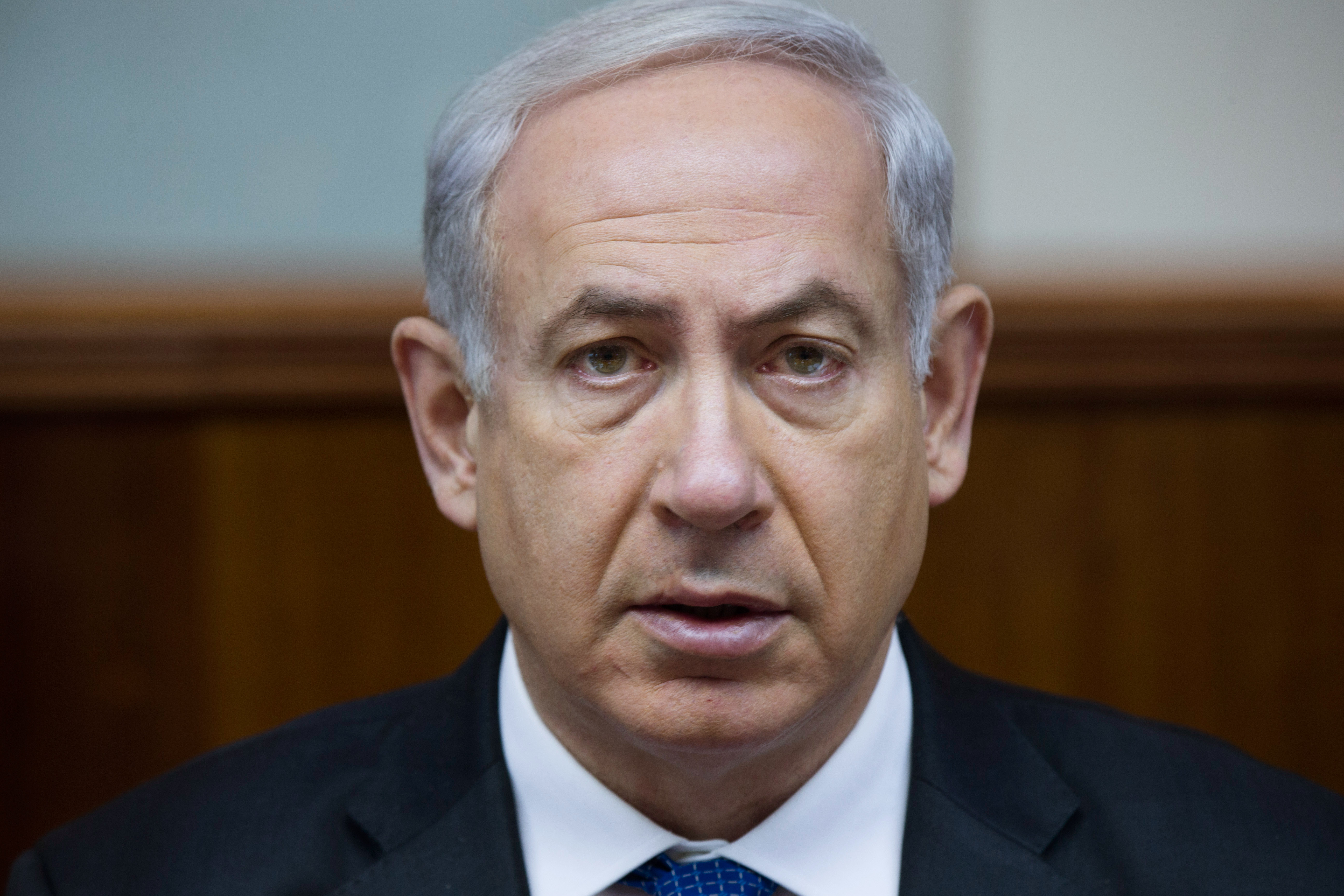
Binyamin Netanyahu, Israel’s Prime Minister, has approved the construction of hundreds of new homes in the occupied West Bank and east Jerusalem despite statements by the U.S. government, including many by President Obama, that settlements are an obstacle to peace.
This BBC News video with Paul Wood aired on the BBC September 7th gives a good summary of situation.
There are approximately 500,000 Israelis living on settlements in the occupied West Bank and east Jerusalem. All settlements are illegal according to international law and no country, with the exception of Micronesia and Israel itself, view it otherwise.
Israel does not recognize the West Bank and east J’lem as occupied, but the majority of the international community, including the United States continue to hold both the territories as occupied and should be afforded the protections under the Geneva Conventions and other international bodies of law.
Under international law, an occupying power cannot transfer it’s population into territory it is occupying or change the demography unless it is for the benefit of the population being temporarily occupied. Some say that the Israeli gov’t (GOI) is not transferring it’s population; the population is voluntarily moving there so this argument is mute. This is disingenuous though as east J’lem and the West Bank are considered occupied territory and the GOI provides infrastructure and military support for the settlements to exist. Without government subsidies, support and encouragement, the settlements would not exist, nor would the growth continue at such a rate.
This McClatchy created graphic shows the expansion of settlements since the 1960
Although the current U.S. position supported by President Obama calling for a freeze on settlement expansion including so-called ‘natural growth’ is considered ‘unreasonable’ by some, it actually doesn’t go far enough.
The GOI has been changing the demography and encouraging settlement of east J’lem and the West Bank for over 40 years against international law. Obama is simply asking Israel to cease illegal activity. The GOI should not only halt construction, but begin implementing removal of all illegal settlers from occupied territory since all settlements and outposts are illegal, including those in east J’lem and compensate those Palestinians displaced or forced from their homes due to home demolitions or evictions.
After witnessing the deaths of her father Fathi, her sister Ismat, and her brother Ala on January 14, Amira Alqerem has turned to the (ICC) seven months later in hopes of justice for her family. Her family was attacked in Gaza during which lasted 22 days this past January and resulted in the deaths of more than 1,300 Palestinians and three Israelis.
“The three children were awoken by an explosion to find their father’s body, covered in blood, next to a crater near their house, the document claims. Ismat and Ala went off to seek help, but were killed in another explosion. Amira, who had stayed behind with her dead father, was hit in the right leg.”
Gilles Devers, an international lawyer from Lyon, is currently representing Alqerem. He believes the Israeli attacks were aimed at citizens and recently said, “This was a crime against humanity, that is why we brought it to the ICC.” He also reaffirmed the need for accountability, adding that “Israeli politicians and military leaders must be held responsible.”
Luis Moreno-Ocampo, the ICC Prosecutor, began a preliminary analysis in February of the alleged crimes committed by Israel during Operation Cast Lead. He has received many claims similar to that of Amira Alqerem and to date, has received complaints from over 360 individuals in addition to evidence of wrong-doing from other non-governmental bodies, the Palestinian Justice Minister Ali Kashan, and the Palestinian National Authority all pertaining to this most recent Israeli offensive.
Through her interpreter, Alqerem noted that she was doing this “for all the children of Gaza” and that “I want to do something to change the situation.”
The Israeli navy intercepted, boarded, and took control of a Greek cargo ship carrying foreign peace activists, including former US congresswoman Cynthia McKinney and Nobel prize winner Mairead Maguire. Their ship was carrying humanitarian aid cargo for the residents of Gaza.
The Israeli military instilled a blockade June 2007 in Gaza; a response to the rise in power of Hamas. Since then, the sanctions have made it incredibly difficult to get the bare essentials to the population, such as food, fuel, and medicine.
Israeli senior officials yesterday said that Israel is open to a 3-6 month complete settlement freeze (including natural growth) in order to allow for Palestinian negotiations to take place. Officials asked they not be named, as the issue is so “explosive” within Israel that they do not wish to be associated with the idea yet.
Despite the officials’ claims, Israeli Defense Minister Ehud Barak, who meets with US envoy George Mitchell this week, has shied away from the subject, saying “the matter mentioned in the headlines has not been finalized.”
This freeze, however, would allow for existing settlement construction to continue. Currently, over 2000 new buildings are under construction across the Palestinian West Bank. While not meeting US calls for a complete freeze, a brief halt to new settlements is indicative of the Israeli desire to move on from the current tension between the two countries.
Settlements are illegal under International Law. Last month, President Obama and Secretary Clinton made vocal requests for Israel to completely end its creation of new settlements in the West Bank.
President Obama’s strategy of “reaching out to the Muslim world” over the past few weeks has inspired strong sentiments of both praise and derision from across the US to the Muslim world itself. Supporters see him heralding a brilliant new vision for American foreign policy while critics view this vision as little more than naïve pandering.
Among what is widely seen as a departure from the past, the president has stood steadfast on the issue of Israeli settlement expansion, calling for a complete freeze on settlements being built in the West Bank, including “natural growth”. One thing to keep in mind, however, is that this is the same position taken by the Bush Administration in 2003’s Road Map to Peace. By demarking expansion (natural or not) as the only settlement issue, he legitimizes already-built settlements as permissible—though they are anything but. International Law clearly states that “The Occupying Power shall not deport or transfer parts of its own civilian population into the territory it occupies”, so in order to comply with this, all settlements must be disassembled.
Settlements continue to grow at a staggering rate, with settlement populations in East Jerusalem growing faster than the general population in 2008: 4.5 percent compared to 1.5 percent. There are currently close to 500,000 settlers living in the West Bank.
During the lead up to former president Jimmy Carter’s trip to Gaza, the general media sentiment regarding the trip was ominous. Questions of safety (and loyalty, due to the boycott of Gaza and the legitimacy of its government) arose as Carter announced he would be meeting with Hamas leaders to discuss the future of Palestine.
He arrived on Tuesday, June 16th, and met with the Gazan leadership, including Ismail Haniya and Mahmoud Zahhar. He also visited sites that were destroyed during Operation Cast Lead, including an American school obliterated by bombs dropped by F-16s. The human rights violations that took place during the Israeli offensive in earlier this year have stunned him, he said. “I have to hold back tears when I see the deliberate destruction that has been wracked against your people.”
Other objectives of Carter’s trip to Gaza included delivering a letter to Gilad Shalit (the Israeli soldier taken hostage by Hamas in June 2006), asking Hamas to consider recognition of Israel (it refused), calling for an end to the Gaza blockade, and also to insist that Hamas end its rocket fire into areas such as Sderot.
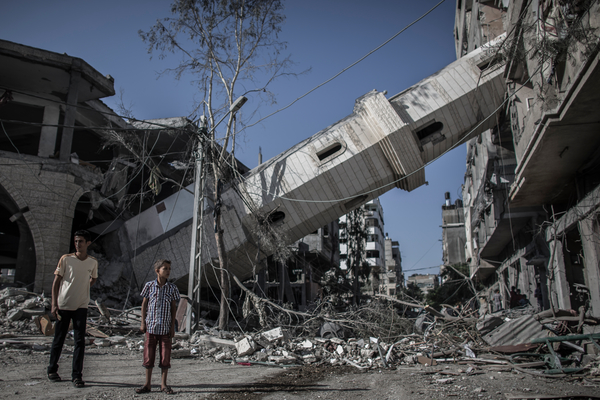
Israel launched an offensive in the Gaza Strip last December in response to rocket fire, a war that left the territory in shambles and unable to rebuild due to the stiff international blockade from 2 years prior. Only the bare humanitarian needs are delivered to a population of 1.5 million. Carter specifically pushed the US and Europe to allow basic goods into Gaza. “Never before in history has a large community like this been savaged by bombs and missiles and then denied the means to repair itself,” said Carter. “The citizens of Palestine are treated more like animals than like human beings.”
In the immediate aftermath of President Obama’s speech today in Cairo, the heavy web traffic of discussion among Arab activists was divided essentially into two camps. One person claimed that the speech could have been given by George W. Bush. Another compared it to Sadat’s historic trip to Jerusalem.
It’s not that either opinion is wrong – either may be proved right – but it was the nature of this talk from the very beginning that its meaning won’t be known for years down the road. For what will make it historic (or not) is not the rhetoric of the speech but the policies that follow it (or don’t).
For one, I don’t believe this was a talk that George W. could have given, although it did share much of the same language on democracy that Bush stubbornly adhered to long after his own policies made shreds of any hope for it.
Midway through Obama’s speech, he digressed to condemn the belief in “a world order that elevates one nation or group of people.” That is something that the worldview of American exceptionalism held by Bush and many of his presidential predecessors would never agree to. I hope that this radically different worldview may result in a new path of policies.
And it was promising that Obama addressed a broad range of issues – democracy, women’s rights, Israel and Palestine and economic development – with an understanding that they all affect the human rights situation and all have to be addressed.
One thing that stood out was when it came to economic development, Obama announced a long line of initiatives that hold promise. But in each of the other areas, particularly on Israel and on democracy, the rhetoric wasn’t matched by specifics. I hope that doesn’t imply that he thinks that action on economic development is more important than in the other areas.
Amnesty International welcomes Obama’s comments, but we now expect him to follow up with policies to match the rhetoric. He should begin with ending all practices that make the U.S. complicit in the various abuses that he denounced, such as extraordinary renditions and secret detention. He should insist that Israel and the PNA to cooperate with the UN’s fact-finding mission looking into violations of international law during the recent Gaza war. And he provide a public and independent report of America’s war on terror practices, a step he has opposed to date.
These would be just a first step, but an important step. It would start us on a path that could turn his speech today from a remarkable moment into an historic event.
The Lemon Tree is a 2008 Israeli film follows a Palestinian woman’s fight to keep her lemon grove to the Israeli High Court. Released internationally on April 17th, this film has already garnered widespread acclaim for its emotional and nuanced storytelling, focusing on the Palestinian struggle to hold onto livelihood and identity—in short, their human rights.
Actress Hiam Abbass stars as Salma, a widowed Palestinian whose only source of income is the lemonade from her lemon grove. At the film’s start, the Israeli Defense Minister moves into the mansion next door. His security forces zero in on Salma’s lemon grove as a potential security threat (providing terrorists with perfect cover) and order it to be taken down. She decides to fight the decision, and with the help of a young Palestinian lawyer, takes the case to the Israeli Supreme Court.
What’s great about this film is its desire to blur the lines and truly cultivate its characters. Too often, human rights violations become a matter of numbers and statistics, so it’s certainly refreshing to be able to put a face and a story to the headline. “I think people want to see into the psyche of the people,” said Eran Riklis, the film’s director, to Haaretz. “It’s about people trapped in a deadlock. It tells a story, shows you emotions and glides through a complex, delicate situation in an explosive setting.”
Amnesty International works to protect human rights worldwide. We have more than 2.2 million supporters, activists and volunteers in over 150 countries, and are completely independent from government, corporate or national interests.
Learn more about us at AmnestyUSA.org »
Simon Maghakyan is a Eurasia country specialist with Amnesty International USA. He is a Political Science graduate student at University of Colorado where he studies international relations, ethnic conflict, foreign policy, and indigenous peoples’ political structures. See all »