Dispatch from Guantanamo: Military Commissions, in Fits and Starts

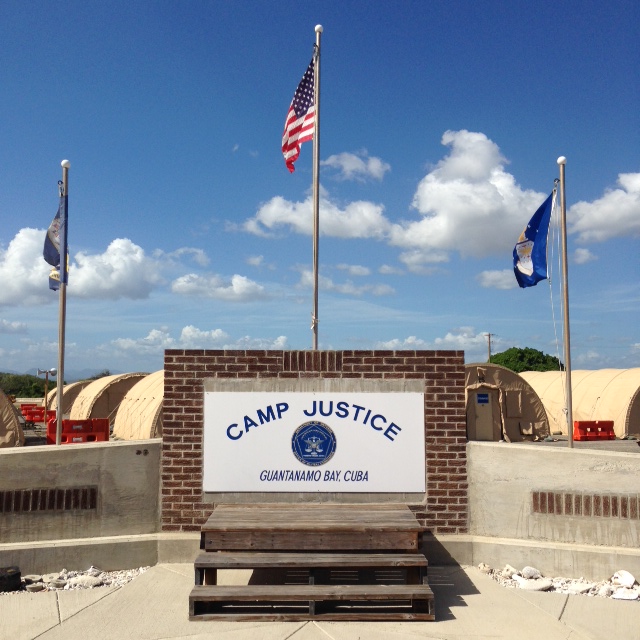
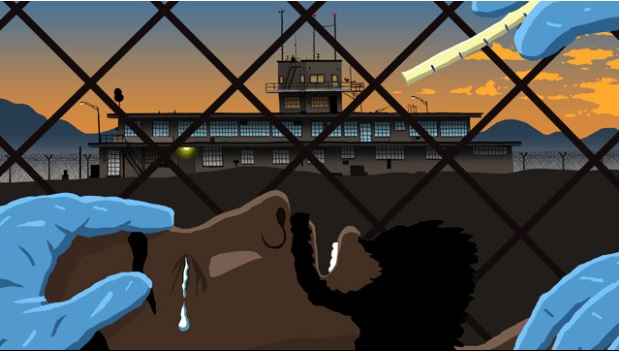
Camp Justice, Guantanamo Bay, Cuba
By Justin Mazzola, Researcher at Amnesty International USA

This assignment was supposed to fulfill a career-long dream. In the ten years I have been employed by Amnesty International USA in research, the opportunity to travel to Guantánamo Bay, Cuba to observe military commission proceedings against the detainees charged with leading involvement in the September 11th terrorist attacks was something I always wanted to experience firsthand.

I flew down to this US Naval station on the southeast edge of Cuba and I arrived Sunday evening just in time to gain my first experience of the ever-changing world of military commission justice when the press briefing rules were amended at the last minute to prevent observers from attending the opening press briefing by the defense and prosecution counsels.

As a human rights researcher, I somewhat knew what to expect. However as an attorney, this morning threw me a relative curveball, even from a military commission process which is now in its third incarnation with multiple legal challenges and stoppages in the past 12 years.  SEE THE REST OF THIS POST

4 Things We Can Do in 2013 to Close Guantanamo

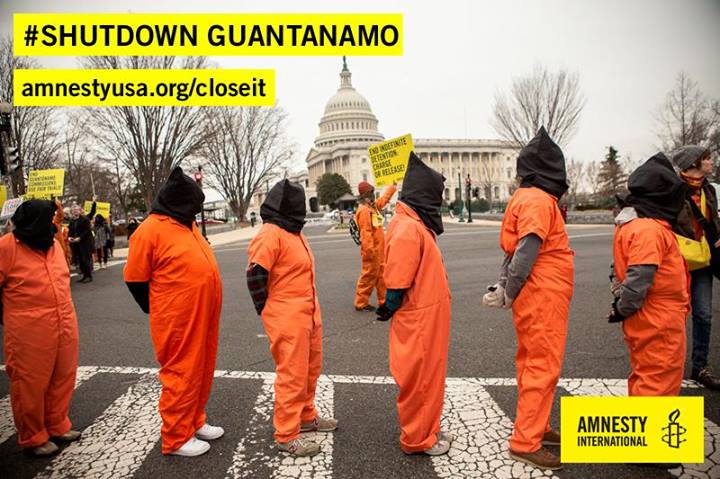
Jan 11, 2013 Guantanamo anniversary protest

© Scott Langley Photography

2013 has been a busy year at Amnesty already. From protesting torture at the Washington, DC premiere of the film Zero Dark Thirty to people across the US and around the world spending January 11 (the 11th anniversary of “war on terror” detainees arriving at Guantanamo) marching against the continued human rights violations being committed by the US government, we have some real momentum to start the new year.

We still don’t have the outcome we all want — President Obama hasn’t ended human rights violations and hasn’t kept his long-standing promise to close Guantanamo prison. But we are making progress. We know it will be a long fight, but history shows that change can happen through sustained activism. Just last week the infamous Tamms “supermax” prison in Illinois closed after years of campaigning. Guantanamo will be next!

We can’t do it without you. Here are 4 things we can do to close Guantanamo and promote human rights in 2013:

SEE THE REST OF THIS POST

President Obama: Recapture the Human Rights High Ground

President Obama

US President Barack Obama gives a thumbs-up after winning the 2012 US presidential election in Chicago on November 7, 2012. Photo: SAUL LOEB/AFP/Getty Images

When President Obama was first elected in 2008, many human rights activists rejoiced. It had been eight long years where the United States tortured, detained hundreds without charge and trial and tried to justify the horrors of Abu Ghraib.  His first campaign for the White House offered the promise of an administration that would recapture the United States’ credibility on human rights issues, bringing detention practices in line with international law, repudiating secrecy and ensuring that human rights weren’t traded away in the name of national security.

More simply, President Obama promised a new dawn of American leadership, one in which human rights would be given more than lip-service.

Unfortunately, the first Obama administration broke many of its promises when human rights were pitted against national security interests. When it comes to countering terrorism, President Obama has hidden behind national security imperatives to shield administration policy in secrecy and pursue programs such as expanded drone use and thwarted accountability.

SEE THE REST OF THIS POST

What’s Going On At Guantanamo This Week? Shhh…It’s A Secret

camp justice guantanamo

Camp justice?

It’s no secret that I’m at Guantánamo this week to observe pre-trial motion hearings in the military commission case against Khalid Sheikh Mohammed and the four other alleged co-conspirators in the 9/11 attacks.

What is secret? According to U.S. authorities, everything the five defendants know, say or write–including about their time in CIA custody. It’s all “presumptively classified” Top Secret/Special Compartmented Information (TS/SCI).  Everything. From torture to what they ate for breakfast.

According to a defense motion filed against “presumptive classification” (one of several motions to be addressed at Guantánamo this week), “If a prisoner says that he misses his family, this information is ‘born classified’ even though no original classification authority would or could ever classify it.”

As Amnesty International’s report, “Wrong Court, Wrong Place, Wrong
Punishment” explains:
SEE THE REST OF THIS POST

Good News! Court Blocks NDAA Indefinite Detention Provision

guantanamo adnan latif

Protest in Washington DC of the 9th anniversary of the Guantanamo prison.

On Wednesday, a U.S. judge ruled that a provision in the 2012 National Defense Authorization Act (NDAA) that authorizes indefinite detention is unconstitutional, and blocked the government from using the provision to hold people without charge.

The ruling is a major win for the movement to end indefinite detention, which for over 10 years has been a hallmark of the human rights vaccum at Guantánamo and was codified in U.S. law last year by President Obama and Congress. Shamefully, the Obama administration has appealed.

Why care about indefinite detention?

Imagine you were locked up, accused of—but never charged with—a crime, and denied a fair trial to make your case. Seem farfetched?

SEE THE REST OF THIS POST

Guantanamo: Still Open, Still Violating Human Rights

Omar Khadr guantanamo

Omar Khadr has been held since he was 15 years old, and awaits transfer home to Canada as part of a plea deal.

Today, 168 people are imprisoned at Naval Station Guantanamo Bay by the US government.

I’ll be at Guantánamo this week to observe military commission proceedings in a case relating to the September 11 attacks. (When possible, I’ll share my thoughts from Guantánamo on the blog and on Twitter @ZekeJohnsonAi.) The case is resuming over three years after President Obama ordered the prison closed in one year.

All of the detainees at Guantánamo should already long ago have either been charged and tried fairly in civilian court, or been released to countries that would respect their human rights.

Instead, the US government continues to violate human rights at Guantánamo Bay. A 2010 government task force outlined the Administration’s plans:
SEE THE REST OF THIS POST

Time to End Arbitrary Detention in Sri Lanka

Sri Lankan policemen stand guard over prison

Sri Lankan policemen stand guard outside the main prison in Colombo (Ishara S.KODIKARA/AFP/Getty Images)

Right now, hundreds of people are languishing in detention in Sri Lanka.  They haven’t been convicted of any crime; indeed, they haven’t even been charged with any crime.  Their detentions violate international law.  Many of them are tortured while in custody.  Some detainees have been killed.

More than three years after the end of Sri Lanka’s brutal civil war, security laws enacted to combat armed opposition groups continue to be used against outspoken, peaceful critics, including journalists, and others.

No one has been held accountable for these crimes. Impunity for human rights violations is the norm in Sri Lanka.

SEE THE REST OF THIS POST

Military Commissions: Still a Failure

Camp Justice, Guantanamo Bay, Cuba

Last week a court in Brooklyn convicted Al Qaeda operative Adis Medunjanin of plotting to bomb the New York subway.

Bosnian-born US citizen Medunjanin conspired with Najibullah Zazi and Zarein Ahmedzay to launch a major attack before the anniversary of the 9/11 attacks in 2009.

U.S. intelligence and law enforcement officials disrupted the plot before anyone could get hurt, and arrested those involved.

Make no mistake, this plot represented a serious threat to the United States. It was conceived in 2008 by the then head of Al Qaeda’s external operations, Rashid Rauf.

SEE THE REST OF THIS POST

Eric Holder Unveils 'The Cake Doctrine'

Holder Discusses Obama Administration's Counterterrorism Efforts

U.S. Attorney General Eric Holder Discusses Obama Administration's Counterterrorism Efforts at Northwestern Law School March 5, 2012 (Photo by John Gress/Getty Images)

Speaking yesterday at Northwestern University the Attorney-General Eric Holder set out the clearest intellectual framework so far for the Obama administration’s evolving counterterrorism doctrine.

All good doctrines need a name and so I am going to take this opportunity to propose one for President Obama’s approach: ‘The Cake Doctrine.’

As in wanting to have your cake and eat it too.

The Cake Doctrine is an advance on the Bush Doctrine of pre-emptive self-defense in that President Obama has more faith in the courts and our system of justice than his predecessor did.

SEE THE REST OF THIS POST

Friends, Neighbors and the Fight Against Torture

Many Amnesty International members have long experience with the challenge of opposing state-sponsored torture in other countries.  But when human rights activists in North Carolina found that a trail of torture led to their own backdoor, they learned that talking to neighbors about human rights abuses is just as difficult as challenging a foreign government.

The Washington Post last week featured a story, “Hangar 3′s Mystery” about the work of North Carolina Stop Torture Now to document the activities of a small, nominally private air charter company, Aero Contractors,  whose headquarters are at an airfield in Smithfield, North Carolina.

SEE THE REST OF THIS POST