Repression Worsening as Putin Returns Russia to Dark Period in its History

(Photo Credit: Sasha Mordovets/Getty Images).

(Photo Credit: Sasha Mordovets/Getty Images).

In collaboration with special guest Svetlana Reiter, a Russian journalist who has been reporting on the demonstrations.

A year ago, on the eve of President Putin’s inauguration, the world watched demonstrators prepare to rally in Bolotnaya Square and wondered if the Snow Revolution born during Russia’s “winter of discontent” would bring about real changes in the Russian government‘s approach to human rights and civil society.

Change has come, but not the changes the protesters desired.

In response to calls for openness, transparency, and freedom of expression, the Russian government clamped down hard on dissent. From beating protesters  to banning demonstrations, to requiring non-governmental organizations (NGOs) to wear a “foreign agent” scarlet letter, to restricting freedom of speech in the name of national security, President Putin and his siloviki cronies are creating a culture of fear and repression with assistance from a mostly-compliant Duma.

SEE THE REST OF THIS POST
Who Wants to Kill Honduran Journalist Héctor Longino Becerra?

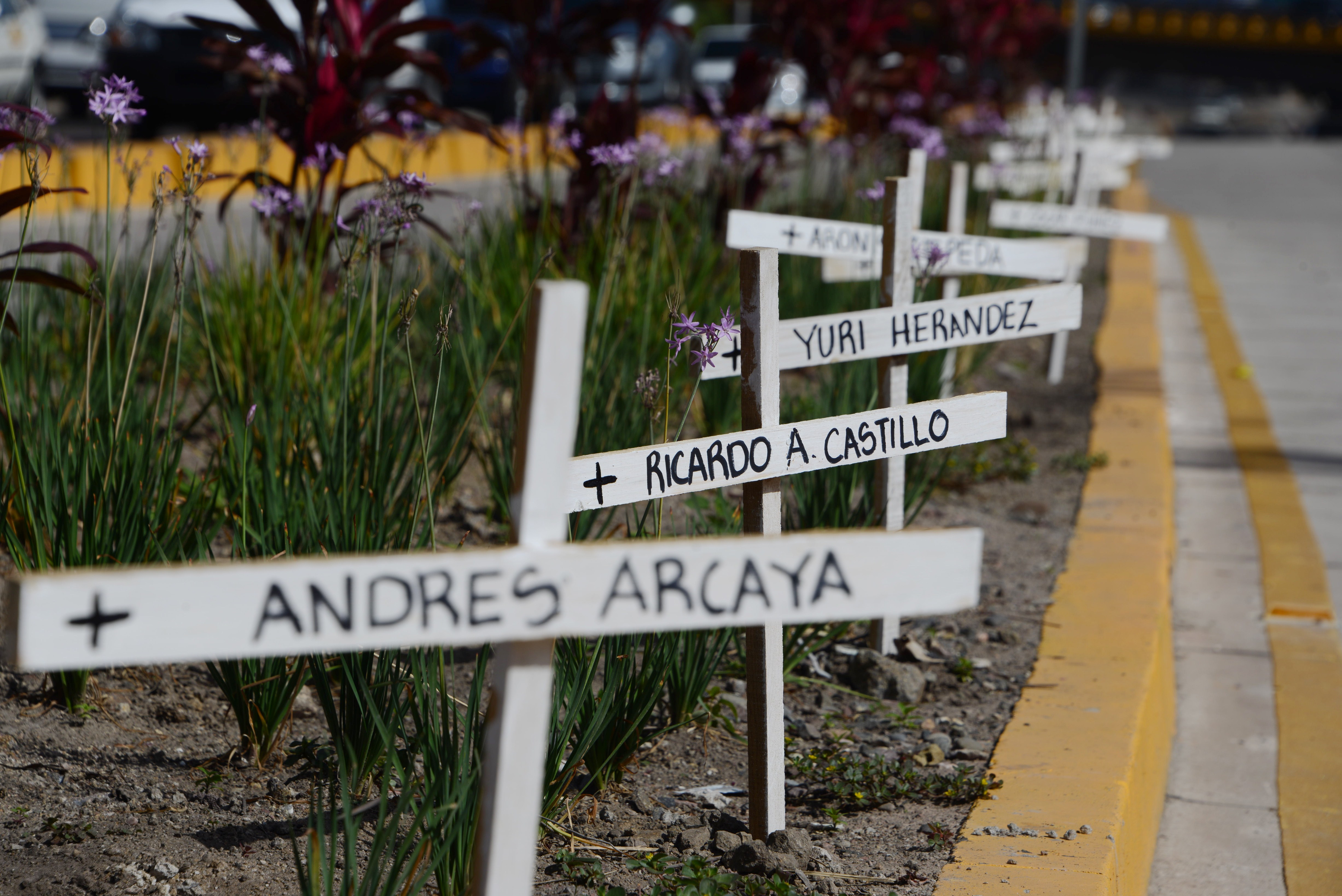
Hector Longino Becerra LanzaIf you care about the crucial role of human rights defenders as much as Amnesty International, you want to know the answer to this question. Longino Bacerra is the Executive Director of the Committee for Free Expression, C-Libre. On April 20, an anonymous caller warned him, “I lead a campaign to kill you, your mum, your dad, your grandparents, your aunts and uncles, your friends and your friends’ friends. If they are dead, I will revive them and kill them again, did you hear me?”

Unlike Amnesty, the Honduran government has not demonstrated interest in identifying and punishing those behind attacks on journalists. In its 2012 report on conditions in Honduras, the Committee to Protect Journalists (CPJ) indicated that the government has not solved 80% of the cases of journalists murder in the nation. 15 of these murders took place since the 2009 coup. Last month, the CPJ reported an attempt on the life of Honduran television journalist Fidelina Sandoval.

SEE THE REST OF THIS POST

In Egypt, Making Fun of Authorities is No Laughing Matter

Egyptian satirist and television host Bassem Youssef surrounded by his supporters upon his arrival at the public prosecutor's office in the high court in Cairo.  Egypt's public prosecutor ordered the arrest of popular satirist Youssef over alleged insults to Islam and to President Mohamed Morsi, in the latest clampdown on critical media (Photo Credit: Khaled Desouki/AFP/Getty Images).

Egyptian satirist and television host Bassem Youssef surrounded by his supporters upon his arrival at the public prosecutor’s office in Cairo. Egypt’s public prosecutor ordered the arrest of Youssef over alleged insults to Islam and to President Mohamed Morsi, in the latest clampdown on critical media (Photo Credit: Khaled Desouki/AFP/Getty Images).

“I am an American satirist, and Bassem Youssef is my hero,” Jon Stewart has said of his so-named Egyptian counterpart.

Bassem Youssef, whose show frequently pokes fun at Egyptian authorities and the use of religion for political purposes, found himself in the global spotlight after criminal charges were filed against him for his political satire. Jon Stewart highlighted the case on The Daily Show, TIME Magazine named Youssef one of the 100 Most Influential People of the year, and the Egyptian assault on free speech received international attention.

But Youssef himself cast attention on the many others caught up in the crackdown.

SEE THE REST OF THIS POST
Department of State Human Rights Reports: The Resource That Washington Ignores

Secretary of State John Kerry spoke to how the 2013 Human Rights Reports were the foundation of U.S. foreign policy and a statement to the world that the U.S. is watching to make sure that foreign governments protect the human rights of their citizens (Photo Credit: Mladen  Antonov/AFP/Getty Images).

Secretary of State John Kerry spoke to how the 2013 Human Rights Reports is the foundation of U.S. foreign policy and a statement to the world that the U.S. is watching to make sure foreign governments protect the human rights of their citizens (Photo Credit: Mladen Antonov/AFP/Getty Images).

At long last, the 2013 country reports documenting global human rights trends has been released by the U.S. Department of State.

This year’s report, which was first produced during the Carter administration, is as important for what it does not say – or perhaps how it says it – as it is for what it says. In looking back at events in 2012, the report highlights several alarming trends, first what can only be described as a growing assault on civil society and human rights defenders.

SEE THE REST OF THIS POST

Tweet for Freedom in Turkey: Say No to the Criminalization of Dissent!

Journalists and activists participate in a rally for press freedom and against the detention of journalists under anti-terrorism laws in the capital of Ankara (Photo Credit: Ümit Bektas/Reuters).

Journalists and activists participate in a rally for press freedom and against the detention of journalists under anti-terrorism laws in the capital of Ankara (Photo Credit: Ümit Bektas/Reuters).

In a major report this week, Amnesty International has outlined the wide range of legal tools that Turkish authorities have used to target political dissent and limit freedom of expressionScholars, students, journalists, human rights activists, and thousands of others have been subject to prosecution and lengthy punishment under these statutes. But you can join us in working for real reform in Turkey!

Amnesty has noted that:

The most negative development in recent years has been the increasingly arbitrary use of anti-terrorism laws to prosecute legitimate activities including political speeches, critical writing, attendance of demonstrations and association with recognized political groups and organizations – in violation of the rights to freedom of expression, association and assembly.

SEE THE REST OF THIS POST

Mapping the Injustice: Why We Need the Inter-American Commission

Click to explore some emblematic human rights cases throughout the Americas, many of which have been positively influenced by the Inter-American System. These were taken from Amnesty International's report “Transforming Pain into Hope: Human Rights Defenders in the Americas" (Photo Credit: Katie Striffolino via ArcGIS).

Click to explore some emblematic human rights cases throughout the Americas, many of which have been positively influenced by the Inter-American System. These were taken from Amnesty International’s report “Transforming Pain into Hope: Human Rights Defenders in the Americas” (Photo Credit: Katie Striffolino via ArcGIS).

By Kathryn Striffolino, Crisis Prevention & Response Advocate. You can follow her on Twitter @katiestriff

This Friday, a Special Organization of American States (OAS) General Assembly will meet in Washington, D.C. to consider and adopt a draft resolution regarding strengthening the work of the Inter-American Commission on Human Rights (IACHR). While not many would argue the IACHR is perfect, its integrity and core principles are under attack at the very moment the system is needed most by so many throughout our hemisphere.

On September 22, 2012, Honduran human rights lawyer Antonio Trejo Cabrera was killed. Gunmen shot him five times outside a wedding ceremony in a southern suburb of the capital, Tegucigalpa. Antonio Trejo Cabrera had reported receiving death threats linked to his work representing the victims of human rights abuses amidst the ongoing land conflict in the Bajo Aguán region of Honduras. Antonio Trejo Cabrera had been a lawyer for three peasant cooperatives embroiled in the complex land-rights dispute in Bajo Aguán. He had helped campesino communities to regain legal rights to land in the valley and was due to travel to Washington, D.C. in October 2012 to take part in hearings at the Inter-American Commission on Human Rights.

SEE THE REST OF THIS POST

Freed Filipino Prisoner of Conscience: “I Am in High Spirits”

Emman and Ericson Acosta

Emman and Ericson Acosta

In February 2013, 40-year old poet and Amnesty International activist Ericson Acosta has more reason to celebrate other than his freedom from his unjust detention. A few days after the Philippine Justice Department decided to drop the trumped-up charges against him, Ericson witnessed the awarding of a silver medal to his only son, 10-year old Emmanuel, who won in a division-wide Math competition in Pasig City, Metro Manila.

Arrested by military troops in February 2011, Acosta was interrogated for 44 hours on 2 hours sleep and threatened with death. He was then charged with being a member of the once banned Communist Party and later, with the illegal possession of explosives. In August 2011, Amnesty International called for the release of Acosta as a Prisoner of Conscience. In his statement after being released, Acosta thanked his supporters, including Amnesty International, and called for the release of the rest of political prisoners in the Philippines.

SEE THE REST OF THIS POST

Stand Up to Homophobic Violence in Honduras!

Patricio Vindel, the Executive Director of OPROUCE, an LGBT rights organization in northern Honduras, received several text messages threatening his life last fall. The situation escalated dramatically on January 22, when unidentified individuals broke into the organization’s yard and spray painted, “Patricio, you are going to die” on the office wall.

Anyone targeted by graffiti such as this would have cause for alarm. Unfortunately, the situation is much worse for Vindel because of the pattern of homophobic violence in his country. According to the International Gay and Lesbian Human Rights Commission (IGLHRC), at least 31 LGBT individuals were murdered in Honduras—a small country with a population roughly the same size as that of New York City—from June 2009 to January 2011.  A report by the Honduran government’s own Human Rights Commissioner found that at least 20 LGBT people were murdered in 2010 and 2011.

SEE THE REST OF THIS POST

In Turkey, Who Will Be Left to Defend the Victims?

Police raids in several Turkish cities have resulted in the arrest of 15 human rights lawyers, including from the the Contemporary Lawyers’ Association.© ADEM ALTAN/AFP/Getty Images

Police raids in several Turkish cities have resulted in the arrest of 15 human rights lawyers, including from the the Contemporary Lawyers’ Association.© ADEM ALTAN/AFP/Getty Images

It is hard to ignore the increasingly grave human rights situation in Turkey, where, as part of a broader crackdown on leftists, Turkish police raided residences and offices last night, arresting scores of individuals.

Amnesty notes that, among those detained, were fifteen “human rights lawyers known for defending individuals’ right to freedom of speech and victims of police violence.” Some of those arrested had previously voiced to Amnesty their fear of arrest due to their work defending those standing trial under Turkish anti-terrorism laws.

Andrew Gardner, Amnesty International’s researcher on Turkey, notes:

“The detention of prominent human rights lawyers and the apparent illegal search of their offices add to a pattern of prosecutions apparently cracking down on dissenting voices. Human rights lawyers have been just some of the victims in the widespread abuse of anti-terrorism laws in Turkey. The question to ask is: who will be left to defend the victims of alleged human rights violations?”

The Crackdown on Democracy Activists is “Trampling on the Eternal Good Morals of the Vietnamese Nation”

Activists accused of plotting to overthrow the communist regime stand listening to verdicts at a People's Court in Vinh city, in the north-central province of Nghe An on January 9, 2013.  Vietnam on January 13 jailed 13 activists convicted of plotting to overthrow the communist regime, in a new crackdown criticised by the US as part of a "disturbing" trend in the authoritarian state.  (Vietnam News Agency/AFP/Getty Images)

Activists accused of plotting to overthrow the communist regime stand listening to verdicts at a People’s Court in Vinh city, in the north-central province of Nghe An on January 9, 2013. Vietnam on January 13 jailed 13 activists convicted of plotting to overthrow the communist regime, in a new crackdown criticised by the US as part of a “disturbing” trend in the authoritarian state. (Vietnam News Agency/AFP/Getty Images)

I sit at my desk and write about human rights with ease, yet in Viet Nam, blogging can land you in prison. Last week, Vietnamese authorities convicted 14 activists for plotting to overthrow the government under article 79 of the criminal code. The sentences range from three to thirteen years. The activists were all linked to the US-based, pro-democracy group Viet Tan, which the Vietnamese government labels a terrorist organization. Five of the sentenced activists are bloggers who wrote about freedom of expression. Before the start of the trial, one of the bloggers, Dang Xuan Dieu, said, “I have done nothing contrary to my conscience” and that in punishing him, the government was “trampling on the eternal good morals of the Vietnamese nation.”

The defendants were all charged after attending a Viet Tan training course held in Bangkok in 2011. Viet Tan led a resistance movement in the 1980s, but has more recently called for democracy and peaceful change in Viet Nam. A spokesperson for the Office of UN High Commissioner for Human Rights said that none of the activists were alleged to have used violence.

SEE THE REST OF THIS POST