Eyes on El Salvador: will officials act to #SaveBeatriz?

There has been an overwhelming amount of global support over the past few weeks for Beatriz and those in El Salvador working tirelessly on her behalf to save her life. Much of this support has emerged online via Twitter, Facebook, blogs and other outlets. Because of these digital tools, countless people are closely following events unfold in El Salvador and calling on the authorities to uphold their international human rights obligations by immediately granting Beatriz authorization for an abortion.

Will Salvadoran authorities listen to Beatriz’s plea and take action to save her life in accordance with her wishes and at the advice of the medical professionals caring for her?

SEE THE REST OF THIS POST

This Mother’s Day, It Was Motherhood, Not Rape, That Made Congo the Worst Place to Be a Woman

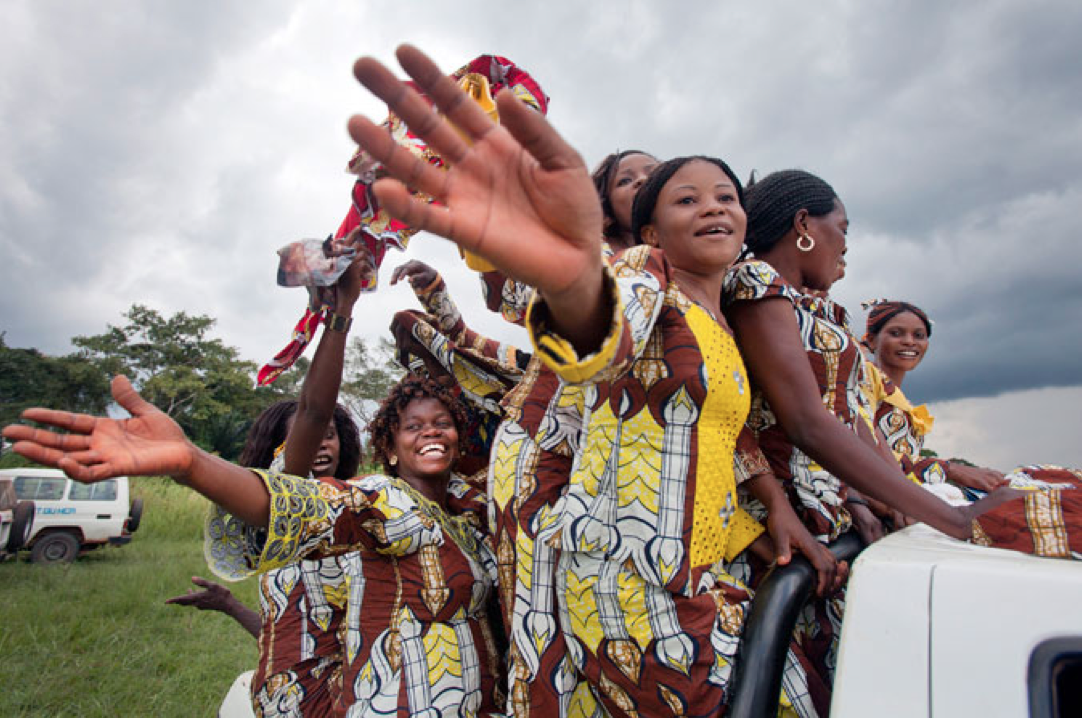
Save the Children's "State of the World's Mothers" report has named the Democratic Republic of Congo as the world's worst place to be a mother (Photo Credit: Leon Sadiki/City Press/Gallo Images/Getty Images).

Save the Children’s “State of the World’s Mothers” report has named the Democratic Republic of Congo as the world’s worst place to be a mother (Photo Credit: Leon Sadiki/City Press/Gallo Images/Getty Images).

In honor of Mother’s Day, Save the Children released its annual “State of the World’s Mothers” report. I was saddened, but not surprised to see the Democratic Republic of Congo is the worst place to be a mother.

Severe violations of women’s human rights in Congo are, unfortunately, a perennial subject of attention for me and numerous other rights activists. Typically those violations are associated with the long and bloody conflict that has spanned the country and concentrated in its most recent stages in the East.

Indeed, DRC has been plagued by almost two decades of conflict resulting in the suffering and death of millions of men, women and children. Most chillingly, the Congo conflict has become synonymous with rape and other forms of sexual violence, which are committed with impunity by security forces, including the armed forces of the DRC (Forces Armées de la République Démocratique du Congo, FARDC), and other armed groups. For this reason, it was ranked the worst place to be a woman by the United Nations just last year.

SEE THE REST OF THIS POST

What Would You Tell a Victim of Domestic Violence?

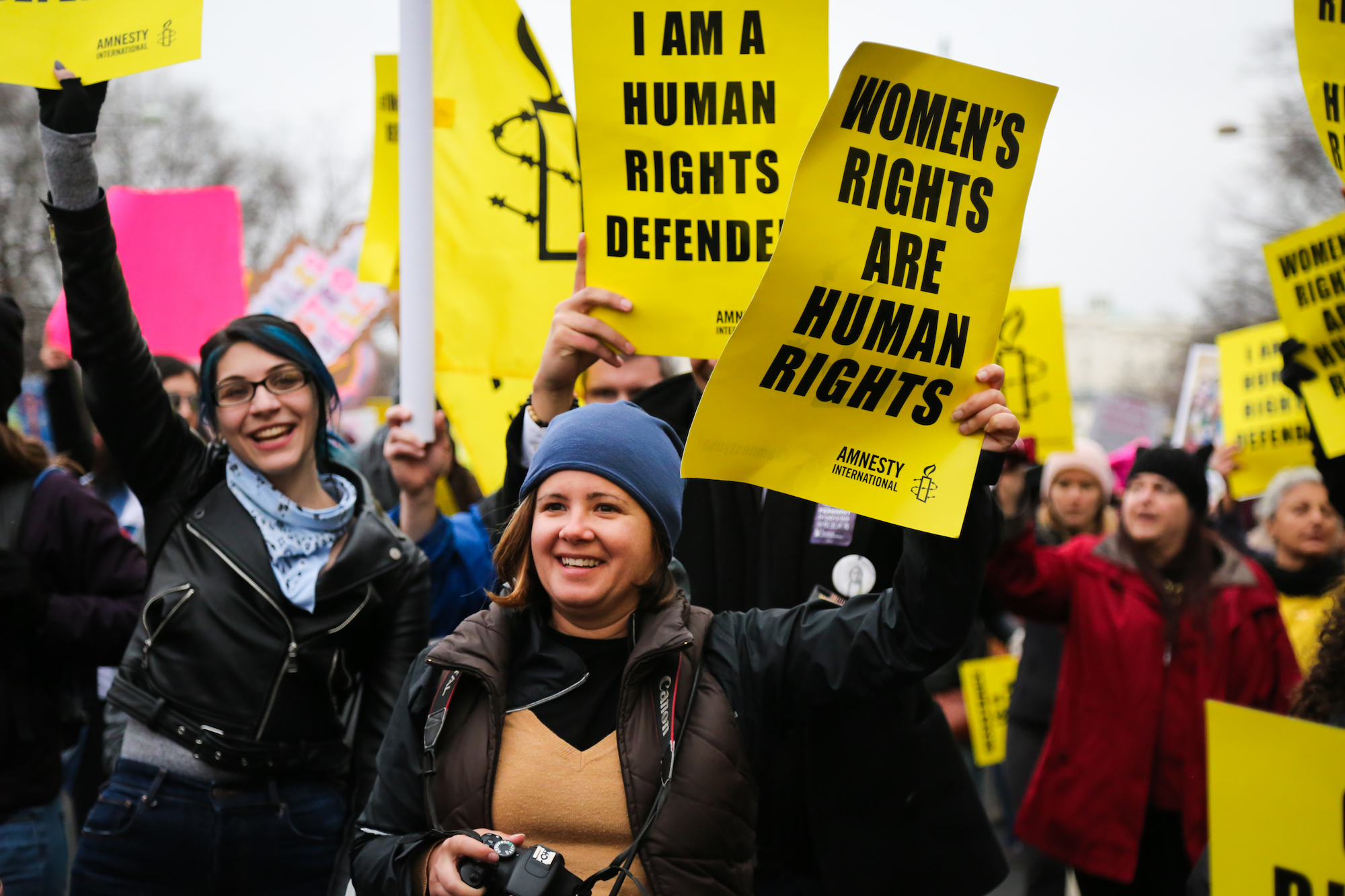
Women, girls, men and boys take to the streets in Nicaragua on the Day for the Decriminalization of Abortion in Latin America and the Caribbean (Photo Credit: Grace Gonzalez for Amnesty International).

Women, girls, men and boys take to the streets in Nicaragua on the Day for the Decriminalization of Abortion in Latin America and the Caribbean (Photo Credit: Grace Gonzalez for Amnesty International).

What if she was your mother, your sister, or your friend?  Would you tell her to press charges? Or would you tell her she should work things out with her husband in order to keep the family (including any children) together? In other words, would you want her to be safe, or remain in danger of further abuse and even death?  I hope you would tell her to get out of there and call the police.

In Nicaragua, however, pressing charges may no longer be an option. Last year, Nicaragua passed Law 779, the Integral Law against Violence Against Women. One of its key provisions is that it does not allow mediation to replace criminal punishment of abusers. Tracy Robinson, the Inter-American Commission on Human Rights Rapporteur for Women’s Rights, called the law “an important step forward.”

Now, Amnesty International is warning that opponents of Law 779 may overturn this key provision on the ground that it “breaks up families” - as if growing up in a climate of violence is good for children. They want to allow mediation as an alternative to punishment in cases involving less than five years of jail time. Doing so will only contribute to a climate of impunity that tells abusive partners that their behavior is acceptable.

SEE THE REST OF THIS POST

Why El Salvador Must Immediately #SaveBeatriz

Women's human rights activists gather in El Salvador to demand Beatriz is granted the life-saving treatment she needs (Photo Credit: Amnesty International).

Women’s human rights activists gather in El Salvador to demand Beatriz is granted the life-saving treatment she needs (Photo Credit: Amnesty International).

By Kathryn Striffolino, Crisis Prevention and Response Advocate. Follow her on Twitter @katiestriff.

As you’re reading this, the Salvadoran authorities are STILL biding their time discussing the merits of Beatriz’s case, the young mother we posted about earlier this month. While she’s in the hospital experiencing early stage kidney failure, the authorities are holding the key to her life that is quickly fading.

We’ve promised updates on this case. Unfortunately, we know that Beatriz has been subjected to another week of cruel, inhumane and degrading treatment, and have no news regarding action by the authorities to save her life – in accordance with her wishes, and the recommendation of the health professionals responsible for her care.

Imagine you are in a hospital. You have lupus and you are experiencing kidney complications as a result. You have a one-year old son at home who was delivered by cesarean section weeks early because of pregnancy-related health complications. You’re pregnant again, and have been diagnosed as high-risk.

You found out after three sonograms your fetus is anencephalic, meaning that a portion of the fetus’s brain - consisting mainly of the cerebral hemispheres including the neo-cortex - doesn’t exist. With very few exceptions, fetuses with anencephaly do not make it to term and none survive infancy.

SEE THE REST OF THIS POST

The Egyptian Women Standing Up for Human Rights

Faced with a spike in sexual violence against female protesters, Egyptian women are overcoming stigma and recounting painful testimonies to force silent authorities and a reticent society to confront 'sexual terrorism' (Photo Credit: Mahmud Khaled/AFP/Getty Images).

Faced with a spike in sexual violence against female protesters, Egyptian women are overcoming stigma and recounting painful testimonies to force silent authorities and a reticent society to confront ‘sexual terrorism’ (Photo Credit: Mahmud Khaled/AFP/Getty Images).

The hopes and aspirations of Egypt’s 2011 uprising may rest in the ability of women to fight back against official discrimination and gender-based violence in the public arena.

Today, women play a leading role in the struggle for human rights in Egypt, but they’re paying a price for it through laws that marginalize them, increasing number of sexual assaults of women protesters and official pronouncements from authorities that women are to blame for the attacks on them.

A new Amnesty International campaign intends to reverse the loss of rights and to reclaim the promises of the Tahrir uprising by demanding that Egyptian authorities, both civilian and military, condemn sexual violence, fulfill their obligations to ensure women have the full spectrum of human rights and to press for accountability for past abuses.

SEE THE REST OF THIS POST

Beatriz: Condemned to Die at 22 by El Salvador?

Women’s human rights activists gather in El Salvador to demand Beatriz is granted the life-saving treatment she needs (Photo Credit: Amnesty International).

Women’s human rights activists gather in El Salvador to demand Beatriz is granted the life-saving treatment she needs (Photo Credit: Amnesty International).

By Kathryn Striffolino, Crisis Prevention and Response Advocate. Follow her on Twitter @katiestriff.

Beatriz’s life is literally in the hands of the Salvadoran government. Demand that they immediately grant her the life-saving medical treatment she needs - before it’s too late.

About Beatriz’s Case

As you may have read recently on this blog, Beatriz from El Salvador is 4.5 months pregnant and suffers from lupus and other medical conditions, including kidney disease related to lupus. She also suffered serious complications during her previous pregnancy, resulting in her being deemed at high-risk of maternal mortality should this pregnancy progress. Three scans of her fetus have confirmed it is anencephalic (lacking a large part of the brain and skull). Almost all babies with anencephaly die before birth or within a few hours or days after.

SEE THE REST OF THIS POST

#Remember #Noxolo, Murdered in South Africa Without Justice

A group of people from the gay, lesbian and transgender community in South Africa demonstrate outside the Parliament in Cape Town (Photo Credit: Rodger Bosch/AFP/GettyImages).

A group of people from the gay, lesbian and transgender community in South Africa demonstrate outside the Parliament in Cape Town (Photo Credit: Rodger Bosch/AFP/ GettyImages).

We often hear the egregious acts of violence perpetrated against women in South Africa. Yet the headlines often forget to mention the violence carried out against members of the Lesbian, Gay, Bisexual, Transgender and Intersex (LGBTI) community. Violence directed at individuals perceived to be LGBTI has steadily increased, yet there has been a consistent failure of police authorities to address these acts of targeted violence.

April 24, 2013 marks the two year anniversary of the brutal death of Noxolo Nogwaza. The 24-year-old was raped, repeatedly beaten and stabbed, apparently because of her sexual orientation. Two years after her death, no progress has been made into the investigation of her murder and her killer(s) remain at large.

To mark the two year anniversary, Amnesty International, together with Ekurhuleni Pride Organizing Committee (EPOC), a local community-based organization, are organizing a Day of Commemoration in honor of all LGBTI individuals murdered due to their sexual orientation. A short memorial service will be held and participants will be given the opportunity to write messages of hope/condolence which will remain at the site as a memorial.

SEE THE REST OF THIS POST

Department of State Human Rights Reports: The Resource That Washington Ignores

Secretary of State John Kerry spoke to how the 2013 Human Rights Reports were the foundation of U.S. foreign policy and a statement to the world that the U.S. is watching to make sure that foreign governments protect the human rights of their citizens (Photo Credit: Mladen  Antonov/AFP/Getty Images).

Secretary of State John Kerry spoke to how the 2013 Human Rights Reports is the foundation of U.S. foreign policy and a statement to the world that the U.S. is watching to make sure foreign governments protect the human rights of their citizens (Photo Credit: Mladen Antonov/AFP/Getty Images).

At long last, the 2013 country reports documenting global human rights trends has been released by the U.S. Department of State.

This year’s report, which was first produced during the Carter administration, is as important for what it does not say – or perhaps how it says it – as it is for what it says. In looking back at events in 2012, the report highlights several alarming trends, first what can only be described as a growing assault on civil society and human rights defenders.

SEE THE REST OF THIS POST

Three Human Rights Victories You Helped Make Happen

One Billion Rising in Washington, DC

Amnesty activists rise up with One Billion Rising in Washington, DC. ©Sarah K. Eddy

Today, we celebrate! Yes, you read that right.

While we often write about urgent news and actions about alarming abuses, today, we want to share some positive news – three major victories activists like you helped make happen.

You demanded justice for all women – not some.

You stood up to shameful efforts by some members of Congress to deny protection against domestic violence for Indigenous women, the LGBT community and immigrant women. Thanks in part to Amnesty activists, an inclusive Violence Against Women Act was reauthorized and signed into law on March 7. Find out more.

You helped end the death penalty in Maryland.

SEE THE REST OF THIS POST

Why Does Salvadoran Law Condemn This Young Mother to Death?

Protesters at a demonstration outside the Supreme Court of Justice in San Salvador.  The sign reads, "If Beatriz were your daughter, would it be illegal to save her life?"(Photo Credit: Courtesy of Agrupación Ciudadana por la despenalización del aborto Terapéutico, Ético y Eugénesico).

Protesters at a demonstration outside the Supreme Court of Justice in San Salvador. The sign reads, “If Beatriz were your daughter, would it be illegal to save her life?”(Photo Credit: Courtesy of Agrupación Ciudadana por la despenalización del aborto Terapéutico, Ético y Eugénesico).

Officially, El Salvador does not have capital punishment. The result will be the same, however, for “Beatriz,” a 22-year-old whose “crime” consists of needing an abortion to save her life. Abortion is illegal in El Salvador law under all circumstances, including rape, incest, and maternal health. Beatriz has a history of lupus, kidney problems, and other health conditions that her doctors have indicated place her at high-risk for pregnancy-related death. She is currently four and a half months pregnant. Preventing her from receiving an abortion is therefore comparable to a death sentence. This, in turn, will leave her one-year-old son motherless.

But surely, you may think, some Salvadoran doctor will ignore the law for the higher goal of saving this woman’s life. In November, I posted an account of another Salvadoran woman, “Mery,” who was turned in to the police by her own doctors after suffering complications from a clandestine abortion. While this may appear shocking to readers in the United States, Salvadoran law requires doctors to do so. “Beatriz” and her doctors have to worry that someone will turn them in if they proceed without explicit government authorization.

SEE THE REST OF THIS POST