 The United Nations’ Declaration of Human Rights (UDHR), proposed by Eleanor Roosevelt and adopted by the United Nations in 1948 established 30 articles of universal Human Rights. This document establishes and protects the framework for civilized and respectful interaction between all people and nations no matter what their political, religious or cultural beliefs. Over 190 nations have ratified this declaration; and yet surveys show that more people can name 3 members of the Homer Simpson TV Cartoon family than they can name three of their basic human rights. You can’t defend what you do not know.
At a time when we see women being stoned to death, child executions, people starving in the Eastern Sudan, children being stolen from their families and made into child-soldiers or prostitutes, prisoners being water-boarded, millions of people starving and dying of AIDS each year – we have to ask: what can human rights education do? My answer is everything. It’s where it all begins.
A friend once told me a story I will never forget. In the early 1940’s there was a young black boy in the Deep South, a sharecropper’s son. He went to school in a one-room, tattered schoolhouse. One morning, sitting by himself, he opened a third-hand, torn Civics text book. He read a page – The United States Bill of Rights. He read it again. He looked around and what he saw were white only schools, white only restrooms, and “sit on the back of the bus”. It didn’t make sense. And at that single moment, education, as it does for all of us, made that young Black boy more aware – and he decided to do something about it. His name was Martin Luther King Jr., and the rest is history.
Nelson Mandela said, “No one is born hating another person because of the color of his skin, or his background, or his religion. People must learn to hate, and if they can learn to hate, they can learn to love.”
Human rights violations know no borders. From child soldiers in the Congo, ethnic cleansing in Darfur, to the rise in human trafficking right here in the US, it is easy to see that the whole world needs to change.
By knowing all 30 Articles of the UDHR we can be equipped with the knowledge to fight against any injustice anywhere in the world. On this 60th Anniversary of the Universal Declaration, with all the turmoil that currently exists in the world, it has become more important than ever for people to know their rights, to pass them onto others, and to defend them relentlessly.
The solution to global issues such as poverty, famine, war and political unrest is encompassed by the UDHR, and human rights education is the first step in resolving these issues at a grassroots level.
I hope to see the day when human rights education becomes a mandatory part of every middle school curriculum on every continent across the world, so that every man, woman and child knows and can defend their God-given rights.

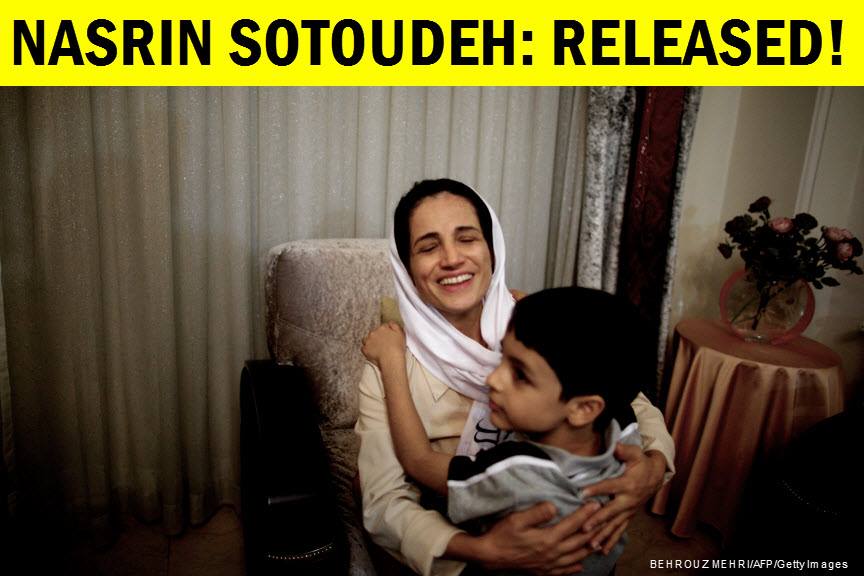



 The first charter on human rights was authored by Cyrus the Great over 2500 years ago. As Iranians we are heirs to a proud tradition of human rights and tolerance. Sadly, the Iranian authorities have not lived up to this legacy, as can be seen by the mock trials, false imprisonments, torture, child executions, and lack of equality for women in Iran today.