On July 25, people in more than 60 cities across the world will be standing in solidarity with the Iranian people in their struggle for human rights. Protesters in Iran continue to experience brutality on the city streets while the number of arrests steadily rises– the latest being the detainment of opposition leader Mir Hussein Mousavi’s brother-in-law, Shapour Kazemi.
That member states and civil society organizations of the international community give sustained attention to the Iranian people’s human rights as a matter of international concern, and that the UN should immediately initiate an investigation into grave and systematic human rights violations in Iran, including the fate of prisoners and disappeared persons, unlawful killings, and torture and other ill-treatment;
An end to state-sponsored violence, accountability for crimes committed and no recourse to the death penalty.
The immediate and unconditional release of all prisoners of conscience, including politicians, journalists, students, and civil society activists; and
Freedom of assembly, freedom of association, and freedom of expression (including freedom of the press) as guaranteed by the Iranian constitution and Iran’s obligations under international covenants that it has signed.
Supporters include Archbishop Desmond Tutu, Shirin Ebadi, Sean Penn, Dariush, Jody Williams, Betty Williams, Mairead Maguire, Adolfo Perez Esquivel, Rigoberta Menchu Tum, Simin Behbahani, Reza Aslan and Ismael Khoi. Dariush will actually be performing at the rally in DC!
Attend an event near you! Visit united4iran.org for a complete listing.
Speaker: Roxana Saberi
Time: July 25, 12 noon Place: Federal Plaza, Dearborn and Adams Rally time: Noon Rally location: Federal Plaza at Dearborn and Adams Street in downtown Chicago More information:Facebook or contact aiis@chicago.edu
Part one: Demonstration @ UN Office
Start at 4:00pm, corner of 18th+K. We have requested road closure from DCDOT. Signs, slogans, use of bullhorns.
Part two: March to Rally
March starts at 5:15pm, East on K st one block, South on 17th st (march past WH w/o stopping), Enter Constitutional Gardens at 17th + Constitution St.
Part three: Rally at National Mall Constitution Gardens (on 19th + Constitution) Speakers:
Jody Williams, Nobel Laureate
Mehrangiz Kar, Human Rights Lawyer
Joe Stork, Human Rights Watch, Deputy Director of Middle East and North Africa Division
Parisa Saeb, Human Rights Activist
Dariush, Prominent Iranian Singer and Social Activist
This is the first edition of Human Rights Flashpoints, a weekly column about countries at risk of escalating human rights violations.
SUDAN—Abyei decision and border skirmish with Chad
Tensions are rising in South Sudan. Both northerners and southerners in Sudan are awaiting the final ruling of the Permanent Court of Arbitration in The Hague on the boundaries of Abyei, which will come on Wednesday. The borders of Abyei were one of the most sensitive issues left undecided in the 2005 Comprehensive Peace Agreement (CPA), which ended the civil war between the North and the South. The BBC reports that the verdict is seen as a key test of the peace process. U.N. Special Representative Ashraf Qazi accused South Sudan over the weekend of having soldiers in Abyei but said he was “reassured” on Monday when the army took steps to withdraw its soldiers.
In a separate development, Sudan referred Chad to the U.N. Security Council on Monday, after the Sudanese army accused Chad of launching an air raid and attacking west Darfur district with two planes on Thursday. Khartoum claims that this is the fourth raid N’Djamena has carried out in Sudan in two months. Reuters reports that Sudan is claiming France, a permanent member of the Security Council, is supporting Chad’s attacks in Sudan.
“All these armed groups must be immediately withdrawn to outside the area, and.. the international community [is] closely monitoring the situation in and around Abyei and expects all sides to behave in the most responsible manner in order to avoid violence.” Ashraf Qazi, U.N. Special Representative for Sudan, July 18, 2009.
“While the members of the international community will be on hand in Abyei to witness the announcement of the panel’s decision and to assist as appropriate with its implementation, it will ultimately be the responsibility of the two parties to ensure lasting peace, stability and security in Abyei, as well as continued implementation of the CPA.” Ian Kelly, U.S. Department of State Spokesman, July 14, 2009.
IRAN—Call for referendum and Global Day of Action
While we can expect major protests around the worldthis weekend, the situation in Iran remains tense. Former Iranian President Mohammed Khatami has called for a national referendum on the legitimacy of the current government in light of last month’s electoral uprising. Khatami was quoted as saying:
“The only way out of the current situation is to hold a referendum. People should be asked whether they are happy with the current situation … If the vast majority of people are happy with the current situation, we will accept it as well.”
This call joins a long string of challenges to the Supreme Leader Ayatollah Khameini’s demand that Mahmoud Ahmedinejad be accepted as the president of the Islamic Republic. Mir Hussain Mousavi, Ahmedinejad’s main opponent during the election cycle, also released a statement yesterday insisting on the immediate release of detained protesters while also laughing off the supposed role of foreign powers during the uprising.
To date, at least 20 people have been killed during the violent protests following the June 12 election. Hundreds of others, including politicians, journalists, and activists have been arrested and detained by police.
A Global Day of Action to demonstrate support for the civil rights movement in Iran has been planned by major human rights organizations, including Amnesty International, for this Saturday, July 25. To find events in your area, visit United4Iran.org for a complete listing.
Must Reads
The Huffington Post’sNico Pitney liveblogging on Iran—a great source for up-to-date information
“Durability of order and continuation of the country’s progress hinge on restoring public trust. From the start, we said there is a legal way to regain that trust. I openly say now that the solution to get out of the current crisis is holding a referendum.” Mohammed Khatami, former Iranian President, July 20, 2009
“Neither the president nor I have any illusions that direct dialogue with the Islamic Republic will guarantee success. But we also understand the importance of trying to engage Iran and offering its leaders a clear choice: whether to join the international community as a responsible member or to continue down a path to further isolation…. The time for action is now. The opportunity will not remain open indefinitely.” Hillary Clinton, U.S. Secretary of State, July 15, 2009
“We’ve got some fixed national security interests in Iran not developing nuclear weapons, in not exporting terrorism, and we have offered a pathway for Iran to rejoining the international community.” Barack Obama, July 11, 2009
July 21: Amnesty International USA 4:30pm rally at the Gambian embassy in Washington, DC to protest human rights abuses
July 22: Permanent Court of Arbitration in the Hague will issue a ruling on the boundary and status of Abyei, territory that lies at the juncture of South Sudan, North Sudan, and Darfur
July 22: Negotiations to resolve the crisis in Honduras to resume in San Jose, Costa Rica
Lawyer and human rights activist Shadi Sadr has been arrested and detained by Iranian authorities. According to the International Campaign for Human Rights in Iran, Sadr was walking with friends to Friday Jummah prayers when she was violently confronted by a group of unidentified plain-clothed men. She was beaten with batons after attempting to escape, losing her headscarf in the process. Sadr was then pushed into an unmarked car and was subsequently driven off.
She confirmed in a phone call to her husband that she had been arrested and was detained in ward 209 of Tehran’s Evin prison. Ms. Sadr has long served as a defender of human rights issues in Iran and is a member of the Committee of Human Rights Reporters. A lawyer and journalist, she was the director of Raahi, a legal advice center for women until it was closed down. She founded Zanan-e Iran (Women of Iran), the first website dedicated to the work of Iranian women’s rights activists and has written extensively about Iranian women and their legal rights. She has represented activists and journalists, several women sentenced to execution, whose convictions were subsequently overturned.
Amnesty International has called for the unconditional and immediate release of Ms. Sadr. “This was an illegal, arbitrary and violent arrest in which no attempt was made by the authorities to show identification or provide any explanation for their action,” said Malcolm Smart, director of the Middle East and North Africa Programme.
So, we’re halfway through July, and most people who haven’t already taken a summer vacation are planning one, or at least expect to enjoy some time at the beach, the pool, or a neighbor’s barbecue. I myself just got back from a 6-day trip which involved a good amount of sun and sand. It’s summertime, and the livin’ is easy, right?
For some people, maybe. But for prisoners of conscience or those who defend human rights in many countries, summer brings no relief from the potential danger and sense of isolation they may face. By simply sending a postcard, however, you can help support these women and men. Take part in our 2009 Summer Solidarity Action and let them know they’re not forgotten.
Iranian President Mahmoud Ahmedinejad gave a speech on state television on Tuesday insisting it due to the meddling of Western nations that violence broke out following the June 12th presidential election. “Our arrogant enemies tried to interfere in our domestic affairs in order to undermine these great elections. The result of their childish acts of interference in Iran’s internal affairs is that the Iranian nation and government will enter the global stage several times more powerful. What they did was very wrong, and some of our people were, unfortunately, hurt.”
20 people were killed in the aftermath of the disputed election results with over 100 people injured and thousands detained. Opposition leaders, including Mir Hussein Mousavi and former President Mohammed Khatami, have released a statement saying such a crackdown would not help his reputation amongst the people. Mousavi also has called on the EU to not recognize Ahmedinejad as a legitimate leader.
Ahmedinejad continued to dismiss charges of election fraud, stating that, “the people who claimed there was fraud didn’t even have one document” to prove it, that “we have no expectations from
Iranian President Mahmoud Ahmedinejad gave a speech on state television on Tuesday insisting it due to the meddling of Western nations that violence broke out following the June 12th presidential election. “Our arrogant enemies tried to interfere in our domestic affairs in order to undermine these great elections. The result of their childish acts of interference in Iran’s internal affairs is that the Iranian nation and government will enter the global stage several times more powerful. What they did was very wrong, and some of our people were, unfortunately, hurt.”
20 people were killed in the aftermath of the disputed election results with over 100 people injured and thousands detained. Opposition leaders, including Mir Hussein Mousavi and former President Mohammed Khatami, have released a statement saying such a crackdown would not help his reputation amongst the people. Mousavi also has called on the EU to not recognize Ahmedinejad as a legitimate leader.
Ahmedinejad continued to dismiss charges of election fraud, stating that, “the people who claimed there was fraud didn’t even have one document” to prove it, that “we have no expectations from normal people, but we didn’t expect politicians to question this great epic.”
After spending one week at in Evin prison in Tehran, Mohammad Mostafaei — the attorney famous for defending juvenile offenders in death penalty cases in Iran — was released on July 1 on a one billion rial bail (more than $100,000). Mostafaei was arrested the previous week for his human rights activism during the Iranian protests, which erupted in the wake of the announcement of Iran’s election results in mid-June. The accusations against him include charges of conspiracy and propaganda, as well as an alleged intention to harm “state security,” even though his activities have been entirely peaceful and guided by his dedication to human rights in the country.
After his release, Mostafaei publicly thanked his supporters and fellow activists across the world and said that this experience has strengthened his resolve to fight against injustice. However, Mostafaei is still in direct danger of prosecution, imprisonment and even torture for defending and publicly expressing his beliefs. A potential conviction and incarceration would be a huge blow to human rights in Iran. It will also be a major setback in the fight against the execution of juvenile offenders in the country, which Mostafaei has led for so long.
The Committee to Protest Journalists published a statement today that said 22 of the 25 journalists that worked on the staff of Kalameh Sabz have been released. According to their website, “Alireza Hosseini Beheshti, manager of Kalameh Sabz, told the site that three editorial staffers remain behind bars. Over the weekend, authorities also released Life.com photographer Amir Sadeghi, who was arrested about a week earlier.”
–
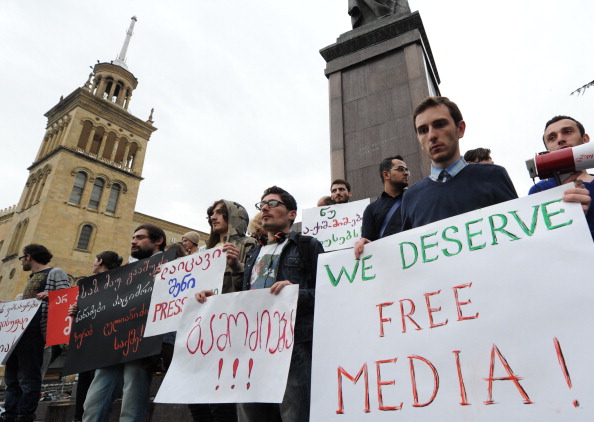
Iran’s presidential election saw a government clampdown not only on protestors’ right to express themselves, but the media’s right to, as well. Currently, dozens of journalists – some who also campaigned for either Mir Hossein Mousavi or Mehdi Karroubi, both candidates in the presidential election, have been detained in the past fortnight with their whereabouts mostly unknown.
For example, around 20 of 25 employees of the newspaper Kalameh Sabz arrested at their office in Haft Tir Square on June 22nd are still detained and their whereabouts remain unknown. Kalameh Sabz is a newspaper established by presidential candidate Mir Hossein Mousavi in 2009, and which has not been published since June 14th.
Amnesty International calls for the immediate release of journalists arrested since June 12th who are at risk of torture in detention.
Amnesty’s Deputy Director for the Middle East and North Africa, Hassiba Hadj Sahraoui released the following statement:
“If nothing else, the authorities must immediately disclose the whereabouts of these journalists, ensure that they are not tortured or otherwise ill-treated and allow their families and lawyers access to them. Unless the authorities lift all unlawful restrictions on freedom of expression – which includes the right of journalists to report on events – and release all the journalists arrested, we can only assume they are trying to hide evidence of abuse and further silence any critical voice.”
In the midst of all of the political and social turmoil in Iran right now, activist and lawyer Mohammad Mostafaei was arrested this afternoon and taken away by plainclothes officers while out with his wife and daughter. The arrest was most likely related to his human rights activites connected with the recent protests, but he is most well-known for his work representing juveniles facing the death penalty. The officials searched Mostafaei’s home and his office after arresting him and then took him away to an undisclosed location. His family has not been informed of his whereabouts.
Mohammad Mostafaei is a lawyer who, among other things, represents those on death row who were juveniles at the time of their crimes. He currently has 25 such cases. As a signitory of the International Convention on Civil and Political Rights, Iran has agreed not to execute anyone for a crime committed before the age of 18, but they have ignored this agreement many many times. By Amnesty International’s count, Iran has executed 18 child offenders since 2007.
It is important for the Iranian government to know that others are watching how they treat their citizens, particularly those who work in defense of human rights. And it is important for Iranian human rights defenders to have our support. Mostafaei is, in many cases, the only hope his clients have of being spared their life, but there is little that he can do from behind bars. Please urge Iranian leaders to release Mostafaei, and to permit others to speak out without fear of persecution.
Of all the players in what has become Iran’s bloodiest uprising in 30 years, few have captured the world’s attention like the Iranian women have. It began with Zahra Rahnavard, the wife of presidential candidate Mir Hussein Mousavi. An professor at Tehran University, she was the first candidate’s spouse to campaign publicly on behalf of her husband, and as a result, her rallies drew thousands decked out in green. Rahnavard was even nicknamed the Michelle Obama of the Middle East. Post-election, she is still campaigning fiercely against the current Iranian regime, only this time for the release of detainees and to allow legal protests to continue.
Since then, women of all ages have been turning up at the protests against the contested election results. One 19 year old girl told CNN that she was beaten by paramilitary forces and forced to give them her camera’s memory card—something she stealthily got around by giving them an empty card instead. “They were hitting everyone, and everywhere was fire because of the tear gas they throw at us,” she said. “There were a lot of other women there. We gave the boys the stones because we can’t throw them so far. We gave them the stones, and we said the slogans.”
In his press conference yesterday, President Obama acknowledged the role of women in the Iranian protests. “We have seen courageous women stand up to brutality and threats, and we have experienced the searing image of a woman bleeding to death on the streets,” Obama said.
Perhaps the most iconic woman of this struggle is now Neda Agha-Soltan, the non-political, 26 year old music student who was shot to death as she stepped out of her car to get some air. The graphic video of her death has already been viewed on YouTube over 200,000 times, in which onlookers tell her “do not be afraid”. She is now referred to as the new voice and symbol of the revolution.
Melody Moezzi, an Iranian American author, went on CNN and emotionally declared that Neda’s death has made an enemy out of all the Iranian people for the Supreme Leader and his leadership. “Natersid, natersid—do not be afraid—is one word in Farsi. That word has become so powerful. She’s a martyr; she’s going straight to heaven. God is on her side, we are on her side.”
Ordinarily, human rights activists would be pleased when the rare major motion picture shining a light on human rights violations comes along. In fact, aside from documentaries, it is very unusual to see issues that Amnesty International has worked on appear on film. However, sometimes a film can so distort an important human rights issue, that it may do more harm than good to the cause.
Sadly, this is the case with the new movie opening this Friday, “The Stoning of Soraya M,” the purportedly true story of the brutal execution by stoning of an innocent Iranian village woman. For one thing, the film is marked by crude story-telling: the main character Soraya is merely a mutely suffering victim while her brutish husband, who falsely accuses her of adultery so that he can marry a teen-aged girl, is a cardboard caricature of evil and malice. More importantly, aside from the numerous inaccuracies and implausibilities, the climax of the film—a bloody and prolonged stoning scene with villagers mercilessly pelting the victim—is so sensationalized that the audience response is likely to be disgust and revulsion at Iranians themselves, who are portrayed as primitive and blood-thirsty savages.
The film is presented as an indictment of Iranian society as a whole, and the setting—a remote rural village of about 25 years ago—is presented as typical of contemporary Iran. In the film, the victim’s aunt (who though she is supposed to be an ignorant village woman, inexplicably speaks excellent English and smokes cigarettes with 1940s femme fatale flourishes) is eager to have the French-Iranian journalist, who stops in the village shortly after the incident, smuggle a tape of her relating the story out of the village. She states that she wants the whole world to know what happened there, presumably so that those on the outside (the west?) can rescue the benighted Iranian people from their barbaric practices.
In fact, Iranians themselves—and in particular Iranian women’s rights activists– have organized and carried out a vigorous campaign against the practice of stoning and have themselves been actively documenting the practice. Opposition to the practice occurs at the highest level of the Iranian legal system; the Head of the Iranian Judiciary announced a moratorium on stoning back in 2002 and it was reiterated in August 2008. Sadly, at least three people have been executed by stoning since then. Interestingly, all three were men.
By criticizing the film, I am not dismissing the importance of the issue. Amnesty International issued a major report on stoning in January 2008, in which it is described how this form of execution is prescribed for adultery—although in practice, it is usually adultery in conjunction with some other crime, such as being an accessory to the murder of a husband. Furthermore stonings are carried out in prison yards by government agents, not by members of the community.
Crucially, we must look at stoning in the overall context of executions in Iran. Stonings represent a tiny fraction of executions in that country. Iran executes more people than any other country in the world except for China. In 2008 it executed at least 346, the overwhelming majority of whom were executed by hanging, sometimes for politically motivated offenses, and often after flawed legal proceedings. But again, Iranians don’t need people from outside Iran telling them what is good for them because Iranians themselves have taken the lead in opposing executions in their country. The renowned Iranian human rights activist Emadeddin Baghi was recently awarded the prestigious Martin Ennals award, partially for his anti-death penalty activism.
I would urge those who really want to see important social issues in Iran critically examined should check out some of the great films made in Iran such as “A Time for Drunken Horses” which deals with poverty among Iran’s Kurdish minority, “The Day I Became a Woman” and “As Simple As That” about the frustrations experienced by women in Iran, and “Santoori” which deals with drug addiction.
An accurate and thoughtful film about executions in Iran would be welcome, but we will still have to wait as the “Stoning of Soraya M” is not it.
Amnesty International works to protect human rights worldwide. We have more than 2.2 million supporters, activists and volunteers in over 150 countries, and are completely independent from government, corporate or national interests.
Learn more about us at AmnestyUSA.org »
Tom Parker is the Policy Director for Terrorism, Counterterrorism and Human Rights at Amnesty International USA. He was previously Executive Director of the Iran Human Rights Documentation Center in New Haven, Connecticut See all »