Human Rights Now Human Rights Now
The Amnesty International USA Web LogVisit us
  Subscribe

Posts Tagged ‘HIV’

One in Four Men Admits to Rape in South Africa

Thursday, June 25th, 2009

A leading research group in South Africa released the results of a survey where one in four men admitted to having committed rape and nearly half admitted to raping more than one person. The study also drew a correlation between violence and HIV prevalence. When you consider the culture of impunity surrounding violence against women in South Africa, the survey is not surprising in the least. “According to the researchers, many of the study’s participants appeared to see no problem with what they had done.”

Current South Africa President Jacob Zuma was acquitted of rape in 2006. The very fact that a case against him was even brought to trial is surprising.  Only one in nine rapes are ever reported and only a fraction of those are brought to trial. During the trial, the judge allowed his supporters to gather outside the courthouse and chant “burn the bitch.” When testifying, Zuma acknowledged a sexual encounter but stated that as the woman was dressed “provocatively” in traditional dress, “it was against Zulu culture for a man to leave a sexually aroused woman unsatisfied.” Zuma also stated that he knew the woman was HIV positive but that he showered after the encounter and because he was healthy deemed this enough of a preventative measure.

Since his inauguration, Zuma has indicated an intention to make crime prevention a priority and has set up a ministry to promote women’s and children’s rights.  But what is most necessary for South Africa is for men who are in positions of power to serve as role models that violence against women is not acceptable. Men in South Africa need to step up and take responsibility for the culture of violence and impunity and demand that their mothers, grandmothers, daughters, sisters, wives and girlfriends are treated with respect rather than with abuse. And it needs to come from the top down. Yes, President Zuma, I am talking to you.

Forcible Evictions of HIV-positive Families in Cambodia

Friday, June 19th, 2009

Yesterday morning, the Cambodian government forcibly evicted about 20 families living with HIV/AIDS from their homes in Borei Keila and resettled them at Tuol Sambo, a resettlement site just outside the capital, Phnom Penh. The site lacks clean water and electricity and has limited access to medical services. Evicted families were compensated with inadequate housing at the site and 50 kilograms of rice, soy sauce, fish sauce, water jars and US$250, but they were warned that anyone who did not comply with the move would not receive compensation. A human rights worker present during the transition described the families as despondent and noted that those who are ill were exhausted by the move.

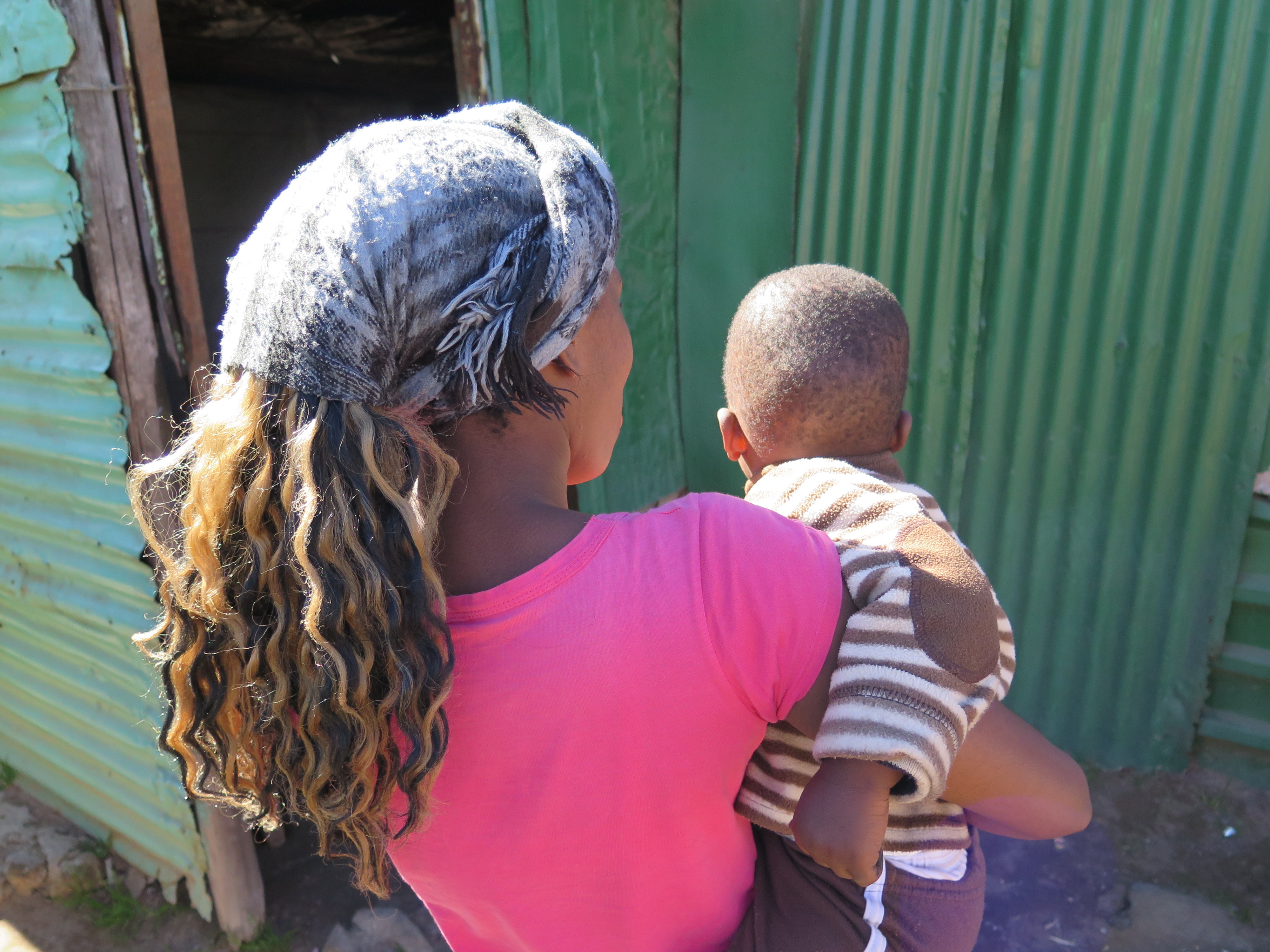
When Amnesty International visited the site – in a semi-rural area where houses are built from green metal sheets – villagers in the vicinity saw it as a place for HIV/AIDS victims. The evicted families expressed fears that being forced to live in this separate, distinct location will bring more discrimination and stigmatization than they already are forced to deal with because of their status as HIV-positive.

Forced evictions are a tactic Cambodia has employed more and more often, and this is not the first time the Cambodian government has taken this sort of action against people living with HIV-AIDS. In March 2007, the Municipality of Phnom Penh resettled an additional 32 families living with HIV/ AIDS against their will in temporary green, corrugated-metal shelters in appalling conditions to make way for the construction of a number of new houses. The families believe that the authorities are discriminating against them because of their HIV status.

Rebuilding Zimbabwe: How ‘Bout Them Apples?

Thursday, May 28th, 2009

It’s said that an apple a day keeps the doctor away. But doctors are very far away in Zimbabwe, as in entirely other countries where they might actually be paid for their services. Worse, most people don’t have anything to eat, let alone fresh fruit. Zimbabwe’s infrastructure has been in a downward spiral for at least the last ten years. The education system is in ruins, hospitals are closed, roads are impassable and the water and sewage systems destroyed.

Zimbabwe inherited a colonial infrastructure now over thirty years old. I don’t condone colonialism, I don’t think Zimbabwe was better off because the British were there and it’s not because the British left that things fell apart. It was a combination of government mismanagement and an acknowledged siphoning of funds by the central bank leading to the lack of infrastructure maintenance. Schools and hospitals, once some of the most respected in Africa are in shambles. Teachers, doctors and other health care professionals left in search of a living wage, particularly as Zimbabwe’s inflation soared to astronomical heights. The current government salary of $100US a month is not enough to feed and house their families, pay school fees, even commute to work.

Last year a cholera epidemic erupted in Zimbabwe which will soon reach the 100,000 cases benchmark. Unless the water treatment plants and sewer systems receive urgently needed repairs, it is anticipated that cholera will return at crisis levels when the rainy season resumes in October. The 2009 harvest was below projected levels, meaning Zimbabwe will be the world’s most food needy country per capita in 2009. Zimbabwe’s once effective HIV anti-retroviral drug dispersal program has faltered with the medical system collapse, and poor nutrition makes the drugs less effective and difficult to digest. Food insecurity also exaccerbates the cholera crisis.

Zimbabwe needs more than apples. It needs good governance and directed humanitarian aid (aid that is dispensed to non-governmental organizations to pay salaries and restore the infrastructure rather than through a government of which donor States remain leery) to help the people of Zimbabwe rebuild their country. Until then, apples and healthcare are both very far away.

AIDS is a Human Rights Issue

Monday, December 1st, 2008

Today is twenthieth anniversary of the first World AIDS Day, established to commemorate those who have died of the disease and marshal attention to address the epidemic.   The World AIDS Campaign has declared “Lead-Empower-Deliver“ to be the theme for this year. 

For the last several years, AI has been zeroing in on the message that AIDS is a human rights issue.   Human rights abuses place people at greater risk of contracting HIV, and, all too often, those living with HIV and AIDS are subjected to human rights abuses. 

Check out Amnesty’s special web feature in honor of World AIDS Day.

Nowhere is the link between human rights abuses and HIV and AIDS clearer than in South Africa, where women, particularly those living in rural areas, face not only high HIV prevalence and high levels of sexual violence, but also widespread poverty.  AI’s report, I am at the lowest end of all, draws on the stories of women who, having contracted HIV as a result of violence, must now overcome extreme poverty and disrcimination in order to obtain treatement.

Circling back to this year’s theme of leadership, Amnesty wants to know how governments measure up to our 10-point plan of action on HIV and AIDS and human rights.  How is the U.S. doing?  What changes would you like President-elect Obama to make to U.S. policy on HIV and AIDS when he takes office?

 
Search this blog