Race And Justice In North Carolina: Sinking Into The Past

Death row inmate Marcus Robinson listens in Fayetteville, North Carolina as Judge Greg Weeks found that racial bias played a role in his trial and sentencing. It was the first case to be decided under the North Carolina's Racial Justice Act (Photo Credit: Shawn Rocco/Raleigh News & Observer/MCT via Getty Images).

Death row inmate Marcus Robinson listens in Fayetteville, North Carolina as Judge Greg Weeks found that racial bias played a role in his trial and sentencing. It was the first case to be decided under the North Carolina’s Racial Justice Act (Photo Credit: Shawn Rocco/Raleigh News & Observer/MCT via Getty Images).

I grew up in Durham, North Carolina in the 1970s. Racism – the Jim Crow kind – was still there in pockets, but it seemed to be receding; or at least it was being replaced by the less overt, white-flight variety. I left home for college in the 1980s and watched from a distance as North Carolina continued to struggle to extricate itself from its legacy of racism.

The death penalty is one of the ugliest vestiges of that ugly legacy, but North Carolina has not executed anyone since 2006. There were no death sentences in 2012. A poll earlier this year showed that majorities of North Carolinians support replacing the death penalty with life without parole.

SEE THE REST OF THIS POST
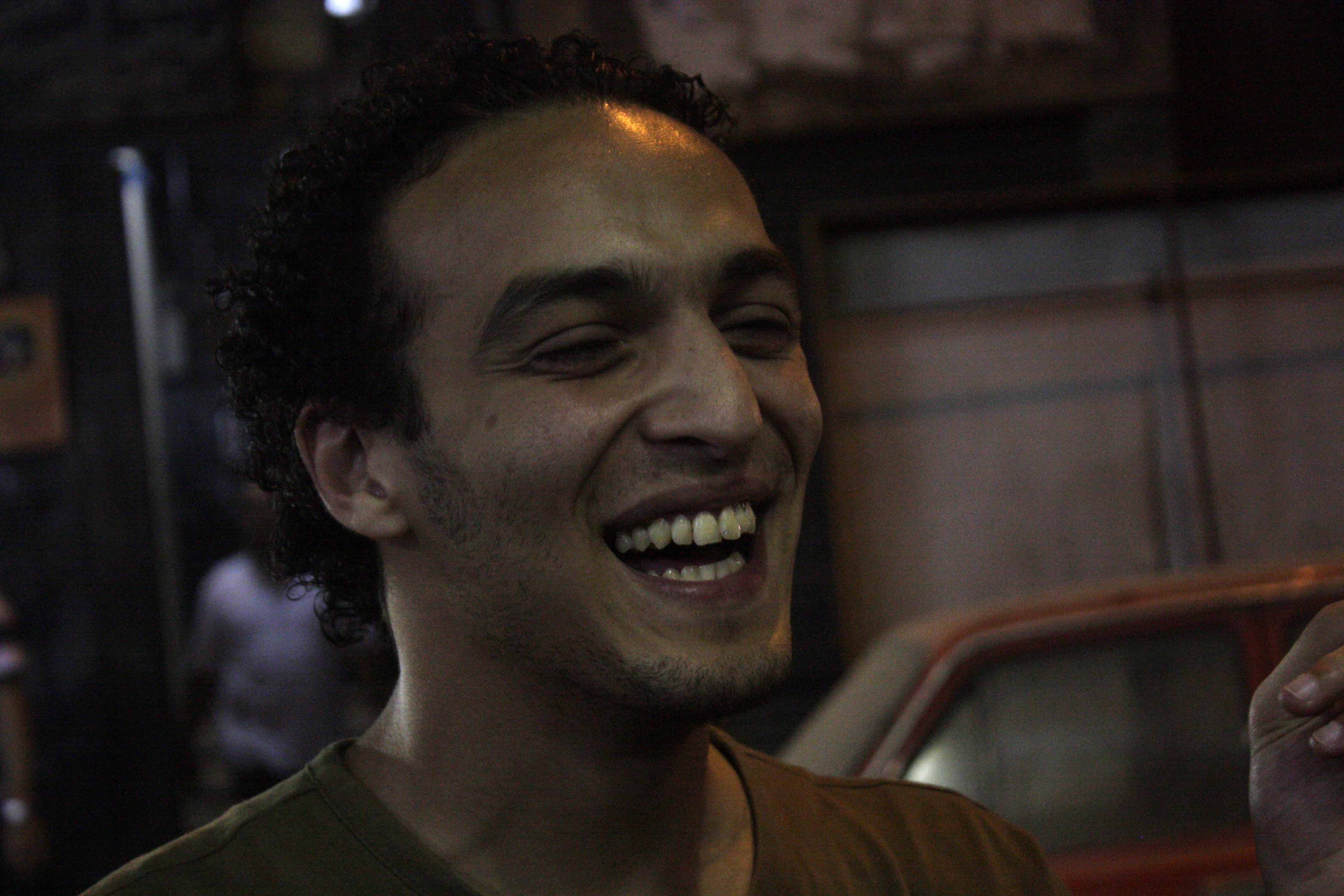
Natan Blanc is FREE

Natan Blanc released by JVPBy Nehal Amer, Social Media Specialist for the Middle East Coordination Group

Natan Blanc, 19-year-old Israeli conscientious objector, was freed from detention on Tuesday and officially discharged from the Israeli army yesterday.

Our last blog on Natan Blanc’s case asked, “What Will it Take for the Israeli Military to Stop Imprisoning Natan Blanc?“ We believed it would take Amnesty International members and other activists making their concerns known and taking action – and because you didNatan Blanc is now FREE after being forced to serve 10 consecutive prison sentences for his refusal to serve in the Israeli military based on his conscientiously held beliefs.

Natan Blanc’s father received a call on May 30th from his son telling him that he had been informed that he would be released at the end of his current prison term. The decision follows a ruling by the Unsuitability (or Compatibility) Committee which – according to the Israel Defense Forces (IDF) – is designed to deal with people with behavioral problems who are deemed unsuitable for army service. It is not a committee which explores whether someone is a genuine conscientious objector or not.

SEE THE REST OF THIS POST
Urgent Action Needed in Turkey to Stop Police Violence

Since May 31, more than 4,000 protesters have been injured as Turkish police continue to use excessive force in an attempt to disperse them. Amnesty International has seen a growing body of evidence of police brutality, including extensive use of teargas and water cannons against nonviolent protesters. Video footage taken at the scene of demonstrations has shown police officers kicking visibly defenseless protesters and even beating them with batons.

During the first days of the crisis, Amnesty International’s office, located in the heart of the Istanbul protest zone, stayed open around the clock, while volunteer doctors treated injured protesters.  Amnesty staff and volunteers have risked their personal safety to document abuses and ensure that the world receives accurate information about the events unfolding in Turkey.

SEE THE REST OF THIS POST

What Next for U.S. Drone Policy?

The CIA knew neither the identity nor the affiliation of about one in four people it killed in drone strikes, an NBC News report released yesterday found. The news agency reviewed classified CIA documents describing U.S. strikes in Pakistan and Afghanistan over a 14-month period starting in September 2010. The news report underscores the need for independent and impartial investigations into allegations of unlawful killings, as Amnesty has repeatedly sought.

By Naureen Shah, co-author of The Civilian Impact of Drone Strikes: Unexamined Costs, Unanswered Questions

In a major speech on national security last month, President Obama for the first time spoke at length about drone strikes. (See Amnesty International’s in-depth analysis, “Words, War, and the Rule of Law“). He called civilian casualties “heartbreaking tragedies” that will “haunt us as long as we live.” He said his administration had put in place a standard for using lethal force that “respects the inherent dignity of every human life.” These welcome words must be followed up by strong actions: greater transparency with the public, investigations of deaths, accountability for illegal killings, and compliance with the law.

SEE THE REST OF THIS POST

What is the UN Saying on Syria?

Sunjeev Bery on Sky News Arabia

Sunjeev Bery on Sky News Arabia

Yesterday, I joined the team at Sky News Arabia for a live discussion of the latest report on Syria by an independent UN panel. Special thanks to Sky News producer Arwa Sawan, reporter Joseph Khawly, and anchor Amer Abdel Aziz for giving Amnesty International USA an opportunity to share our analysis of the grave human rights situation.

The report (PDF) is a catalog of violence, suffering, and geopolitical developments, focusing on events between January 15th and May 15th of this year. It was produced by the Independent International Commission of Inquiry on the Syrian Arab Republic, established by the UN Human Rights Council in 2011.

SEE THE REST OF THIS POST

Jeremy Scahill Talks Dirty Wars, Drones and Human Rights

Still of Jeremy Scahill from the film Dirty Wars

Still of Jeremy Scahill from the film Dirty Wars

Jeremy Scahill is an investigative journalist, author and producer. His latest film is the documentary ‘Dirty Wars’ opening in theaters on June 7.

I worked for the last three years on the film Dirty Wars to shed a light on the U.S. government’s “global war” theory used to justify killing people around the world, from Afghanistan, to Somalia, to Yemen, and beyond.

In this journey, I encountered many people who shared their personal stories with us, including painful memories of the killing of their loved ones in night raids, cruise missile attacks, and drone strikes.

SEE THE REST OF THIS POST

Writing Letters to Guantanamo

Sami al Hajj received than 20,000 letters from members and supporters of Amnesty International during his last two years at Guantánamo Bay (Photo Credit: Sami al Hajj).

Sami al Hajj received than 20,000 letters from members and supporters of Amnesty International during his last two years at Guantánamo (Photo Credit: Sami al Hajj).

Have you ever doubted the power of a letter?

If so, read this note Amnesty received from Sami al Hajj, who was held at Guantanamo without charge for years and finally transferred home to Sudan in 2008:

“I received more than 20,000 letters from members and supporters of Amnesty International during my last two years at Guantánamo Bay…These letters really encouraged me during my very difficult time. They made me feel as though I was not alone and not to give up…Also, I felt and could notice that from all these letters, the Administration of Guantánamo Bay changed and improved towards me, as they knew I was not alone and I had people who cared about me. The guards said to me that they could see I was someone who mattered and must be important because of all the letters – this made them respect me more.”

Read Sami’s full letter to Amnesty supporters here.

Turn to Guantanamo today – we’re entering month five of the hunger strike and over 11 years of indefinite detention. It is well past time for each detainee to either be charged and fairly tried in federal court, or released.

SEE THE REST OF THIS POST