Do you remember when Pinochet was arrested in London? The news flew around the world. The Chilean dictator is now dead, but the victims of torture and their families and friends are still asking the government and the judiciary for the truth about what happened after the military coup in 1973.
At least 110 people were tortured on the training ship Esmeralda that arrived in Boston yesterday. One of them was my brother, Michael Woodward, a catholic priest who had dual nationality (Chilean and British), and who lived and worked with the poor in Valparaiso.
He was driven from his home by a naval patrol to a University which had been taken by the Navy and used as a detention and torture center. He was then fiercely tortured at the Naval War Academy. In a very critical state of health, Michael Woodward was taken to the Esmeralda, anchored in the port. He may well have died on the ship, or on the way to hospital or they might have shot him before leaving the Esmeralda. Information has recently come to light due to the efforts of judge Eliana Quezada who is investigating the law suit presented in 2002. To date 19 retired members of the Navy have been indicted.
The Esmeralda is the Chilean Navy’s four-masted training ship. It goes on a cruise every year to teach the young cadets the law of the sea. At every port it is greeted by the Chilean ambassador and naval and local authorities, before embarking on social, cultural, and sightseeing activities. The Chilean government openly considers it an “ambassador of all Chileans”. President Bachelet emphasized this when she said
farewell to the ship in Valparaiso on 15 March.
Those of us who are still struggling to see justice applied do not feel that the Esmeralda is our ambassador. The attitude of the Chilean Navy clashes with our ideals of human rights. The Navy, as an Institution, needs to take responsibility for the violations of human rights perpetrated.
- By Patricia Woodward, sister to Michael Woodward and Human Rights Activist
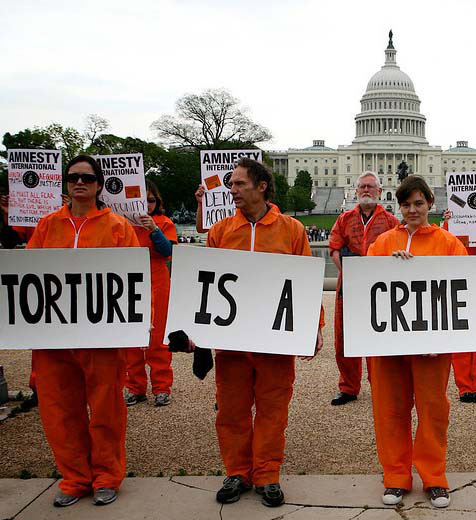
President Obama again displayed in his speech today on national security that he is an exceptionally gifted and thoughtful politician who cares about the rule of law. Indeed, there is much to admire in his remarks today. So I can’t help wondering why he is being so obtuse about investigating torture.
He says he wants to establish legal mechanisms for dealing with terrorists that will be useful for his successors. “We can leave behind a legacy that outlasts my Administration, and that endures for the next President and the President after that. . .”, the President said. Sadly, though, this vision of his legacy apparently does not include concrete measures to ensure that torture will never be carried out again by any of his successors, merely the hope that they will follow his example. That is where his refusal to carry out his legal obligation to investigate torture leaves us — merely hoping his successors will be wise.
The President continues to characterize those who press for an investigation as vengeful zealots uninterested in constructive problem-solving: “Already, we have seen how that kind of effort only leads those in Washington to different sides laying blame, and can distract us from focusing our time, our effort and our politics on the challenges of the future.” The truth is, however, that many in the human rights movement who are calling for an investigation have worked most of their lives for justice and accountability for human rights crimes in country after country — Chile, Argentina, Guatemala, Rwanda, Bosnia, Cambodia, and so many others. These are people whose purpose is the opposite of ”finger-pointing” for petty partisan aims.
In any event, it is not up to President Obama to decide all by himself how to prevent future abuses in combatting terrorism. We — the public, Congress, and officials in the executive branch — all share in the responsibility for this “mess”, as the President labelled it. We must seek solutions together, and an independent, impartial, nonpartisan commission of inquiry is the logical instrument through which we can begin to make this happen.
The weakness of the President’s argument against an investigation is made all the more stark by its contrast with the cogency of his arguments against torture and for closing Guantanamo. Moreover, his speech today marked yet another flip-flop in the reasons for his opposition. Just a month ago, he expressed his preference that, if there was going to be an investigation, it be conducted by an independent panel, outside the normal Congressional hearing process. He said that he worried about hearings becoming too partisan. Today, however, Mr. Obama said that he was opposed to an independent commission because he believes “our existing democratic institutions are strong enough to deliver accountability. The Congress can review abuses of our values, and there are ongoing inquiries by the Congress into matters like enhanced interrogation techniques. . .”
Well, which is it? Is the President now saying that balkanized investigations by Congressional committees controlled by Democrats are actually preferable to a truly independent investigation by experts who have no political agenda? I don’t see the logic in this view. The President prides himself on applying rational, common-sense approaches to problem solving. But rationality and common sense are lacking in his stubborn opposition to an impartial investigation. We need to figure out how to ensure future presidents won’t yield to the same cowardly impulses that defined the Bush administration’s resort to torture. Only a thorough, impartial probe of how it happened can lead to effective remedies for the future.
Yesterday, The Washington Post published an article highlighting the opening of Guatemala’s police archives. The archives — which contain documentation of Guatemala’s internal armed conflict that killed approximately 200,000 people – could provide long awaited justice to families who never got answers about disappearances and murders of their loved ones.
The article continues with a comment from Amnesty International: “I don’t think anyone truly believed this day would come,” said Barbara Bocek, the Guatemala country specialist for Amnesty International USA. “It’s an incredible achievement, especially for Guatemala. In other countries these records would be buried underground, shredded, destroyed.”
However, AI has expressed concern about intimidation of the Human Rights Ombudsman’s Office, the agency credited with discovering the warehouse of documents: “The wife of the Director of the Human Rights Ombudsman’s Office was kidnapped on Wednesday and tortured. One official was beaten up, whilst a number of threats have been made against other officials of the Human Rights Ombudsman’s Office. These include a bomb threat and a threat against the life of the Director of the Office. ”
WIth such an incredible opportunity in Guatemala comes the familiar forces of intimidation and secrecy. Do you think the opening of Guatemala’s police archives will bring long awaited justice to the families of the disappeared?
It is Monday, March 16, 2009. These two lawyers are dancing in celebration outside the home of Iftikhar Chaudhry , Chief Justice of the Pakistani Supreme Court. Why? Because Chaudhry, who had been suspended in March 2007 by then president Pervez Musharraf, has finally been reinstated by the government.
Chaudhry had become an embarrassment to Musharraf’s government. Among his inconvenient rulings: he ordered the country’s Intelligence agency to admit that it was holding secret prisoners. Musharraf finally had had enough. He dismissed the Supreme Court and placed the judges under house arrest.
Luckily our president can’t dismiss the Supreme Court. The powers claimed by President Bush in the war on terror didn’t go that far, but they went far out in that direction. In Pakistan, the firing of the judges led to the unprecedented Lawyers’ Movement. In the U.S., President Bush’s claim that he could hold people indefinitely outside of any system of justice — be it U.S. military or civilian law or international law governing the treatment of prisoners of war — led to a lawyers’ movement here in the U.S. By claiming the right to act outside of the law, the Bush Administration unleashed a storm of litigation.
It took a couple of years, but American lawyers, using the painstaking processes available under U.S. law, finally gained access to Guantanamo. Three times, their cases have reached the Supreme Court.
1. Rasul v. Bush (2004) — The Court ruled that American courts have jurisdiction to consider legal appeals filed on behalf of foreign citizens held by the U.S. military at Guantanamo.
2. Hamdan v. Rumsfeld (2006) — The Court ruled that the tribunals being used to try prisoners at Guantanamo were unconstitutional, and that the Geneva Conventions and Uniform Code of Military Justice could be enforced by the Supreme Court.
3. Boumediene v. Bush (2008) — The Court ruled that prisoners at Guantanamo had the right to habeas corpus under the U.S. Constitution, and that the military commissions established by Congress in 2006 (following Hamdan) were an unconstitutional suspension of that right.
Each time, the Court has ruled against the Administration. But the gains have been slow and incremental. Congress has pushed back with legislation that President Bush signed into law. And each ruling has opened up new avenues of litigation.
This summer the Supreme Court will decide whether or not to hear yet another Guantanamo case. This time the case is brought by the Chinese Uyghurs, who have been detained for over seven years despite long ago being found to harbor no enmity whatsoever towards the U.S, having been found to be “not enemy combatants” by a federal court, and, last fall, having been ordered released into the U.S. by a federal judge.
Guantanamo is Obama’s problem now. He has pledged to close Guantanamo by January 2010. But how he will do that, and what will happen to the detainees, is still an open question. Of special concern is the fate of the detainees who, like the Uyghurs, are cleared for release but have nowhere to go. If this Supreme Court case goes forward, it could force the government’s hand. According to Lyle Denniston, founder of the Scotus blog which follows and discusses Supreme Court cases:
“What is at stake, ultimately, could be the fate of many if not most of the more than 240 prisoners still at Guantanamo, who might have to remain confined there or somewhere else even if the government decides that they are not dangerous enemies.”
The lawyers representing the Uyghurs have worked long and hard for these innocent men who need a home. And they just don’t stop fighting. If they win this one, if the Guantanamo Uyghurs finally come to live in the U.S. under the care of the Uyghur American families who are waiting to take them in, you will see dancing in the streets.
A few years ago, thanks to a grant from the former JEHT Foundation, I began working with the great Skylight Pictures on a short documentary film for Amnesty members. The film was envisioned as a tool to help our members better understand international justice through the stories of the survivors and human rights defenders who are pursuing such cases.
Thanks to their work on the internationally acclaimed State of Fear, Skylight had developed strong relationships with families and activists in Peru involved in the case against former President Alberto Fujimori, and so suggested that we feature the campaign to bring Fujimori to justice as one of the film’s three story segments.
I was hesitant at first: I wanted “hot”, current stories, and Fujimori’s then still-alleged crimes were well over a decade old. His wasn’t “technically” an international justice case because Peru wanted to prosecute. And the case didn’t appear to be making much headway, with Fujimori traveling from one country to the other apparently unfazed by the warrant Interpol issued for his arrest. But director Pam and editor Peter prevailed, and when I saw the rough cut of the segment they created on Fujimori, I knew why.
The segment follows Gisela Ortiz and Raída Condór, whose brother and son, respectively, were among the students disappeared from La Cantuta University in 1992 and later killed by a paramilitary group operating under Fujimori’s effective command. Gisela and Raida, still devastated and still so angry after some fifteen years, never stopped demanding answers about what happened to their loved ones. They were relentless about exposing Fujimori as a murderer who had masqueraded as a head of state. When he moved to Chile from where he had been living in exile in Japan, Gisela traveled to Chile and demonstrated outside his house, demanding to know why the police where hassling the protesters instead of the suspect inside.
When Chile’s Supreme Court decided that Fujimori could be extradited back to Peru for trial, Gisela sent a note that read “I believe that this is a victory for the whole world, recognizing that human rights abusers have little room to hide, and wherever they are, justice much reach them to restore dignity to the victims.”
Today is Gisela’s and Raida’s day, because, in the end, justice is not about the perpetrators of abuses, but about the victims and the survivors. It’s such an important lesson that we need to keep learning over and over again, and so relevant today.
When, for example, we hear Sudan’s indicted president al-Bashir and his allies accuse the International Criminal Court of being anti-African, as though he is somehow more African or more important an African than the millions of Darfuris who have suffered because of his actions. In Darfur, as in Peru, as in so many other places where grave abuses have been committed, we sometimes have to work to hear the voices of the victims above the spin of the perpetrators and the powerful and compilict allies who would like nothing better than to wait us out until we move on to the next story and let them off the hook. We need to wait them out instead, just as Gisela and Raida did.
This is a crucial victory in the struggle against impunity for human rights violations in Peru and a triumph for justice worldwide.
Javier Zúñiga, an Amnesty International delegate who observed the trial noted:
“Justice has been done in Peru. This is historic. Now it is vital that all of those responsible for human rights violations committed in Peru, including those perpetrated prior to the government of Alberto Fujimori, be brought before the courts.”
Former Peruvian president Alberto Fujimori speaks during the hearing in Lima on April 1, 2009. (c) Getty Images
Peru’s Supreme Court ruled in the cases of Barrios Altos (in which 15 men, women and children were executed in 1991), La Cantuta (in which nine students and a university lecturer were kidnapped and later killed in 1992 by members of the Colina Group, a paramilitary force within the Peruvian Army) and the SIE basements (where two kidnap victims were held). The decision, which was unanimously adopted by the three presiding judges, concluded that Fujimori bore individual criminal responsibility in all three cases because he had effective military command over those who committed the crimes.
Amnesty International has been closely following the trial of Alberto Fujimori. We have incontrovertible evidence documenting serious human rights violations and crimes against international law – such as torture, killings and enforced disappearance – were committed. Given their widespread and systematic nature, these constituted crimes against humanity.
The trial of Fujimori was highlighted in Amnesty’s short documentary, Justice without Borders.
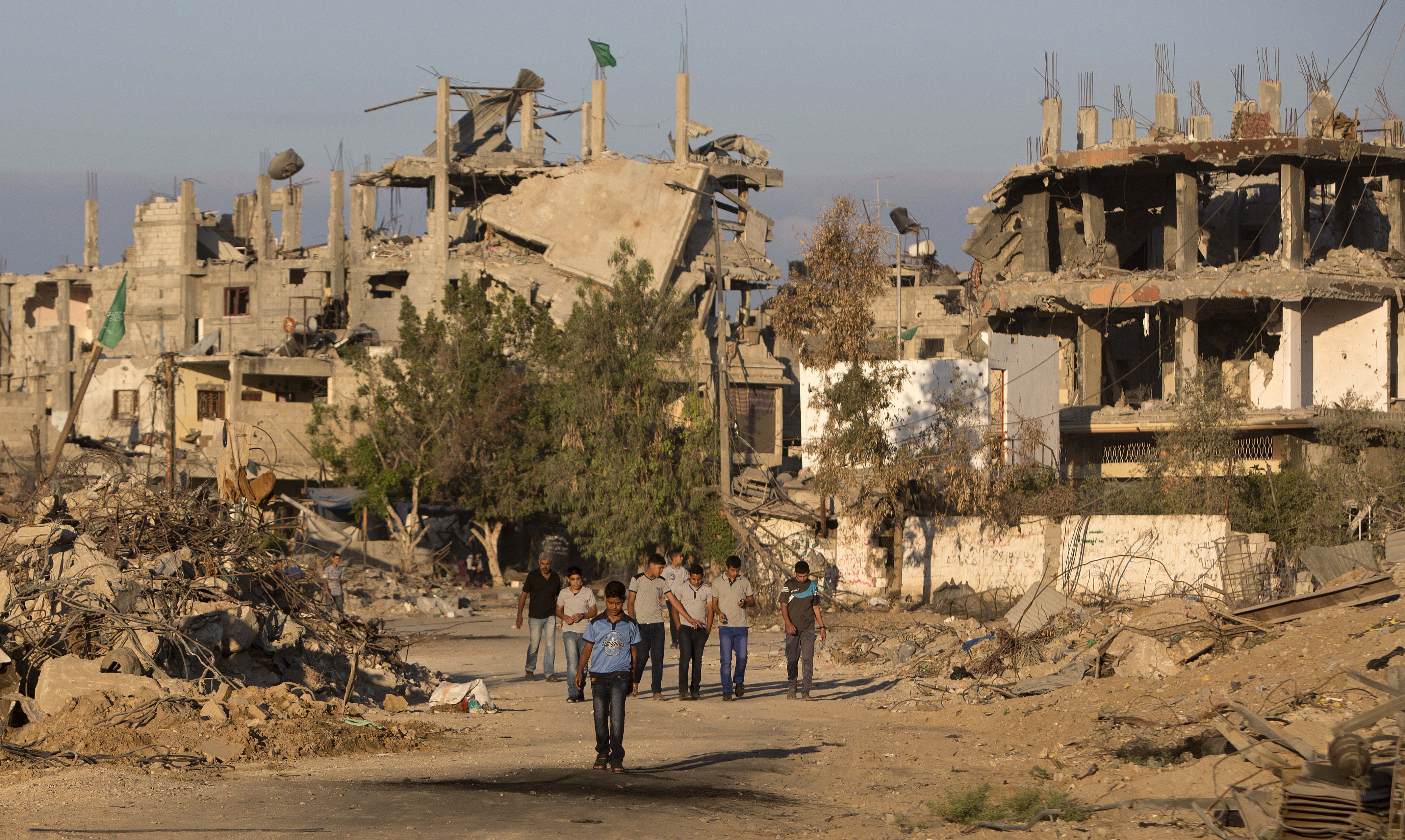
Although the UN initiated a Board of Inquiry into allegations of war crimes in Gaza, Dion Nissenbaum, Jerusalem Bureau Chief for McClatchy news company, says
”I’m not sure what impact this UN report is going to have.” He continues to explain, “I think the only thing that the Israeli government will look at is reports from Israeli soldiers. Israel has always been skeptical of the United Nations, the international press, and they are certainly skeptical of what comes out of the Palestinians.”
Stories from members of the Israeli forces came out recently and created a firestorm of discussion within Israel about accusations which had already been levelled by human rights organizations such as Amnesty International, Human Rights Watch, the international media and other NGO’s working in the area. These stories from the soldiers were given more credit than all the evidence presented from outside sources.
Sadly, these stories were discounted out of hand by investigators and the IDF investigation has been closed already saying the stories by the IDF members were based on ‘hearsay’.
So will there ever be justice for the victims of the human rights violations that took place during the Gaza crisis?
Amnesty Int’l has been calling for an independent, impartial international inquiry into human rights violations by all parties involved be undertaken from the beginning and has said that the UN inquiry is insufficient in that it only looks into attacks on UN personnel and facilities. Other human rights groups are also calling for an independent inquiry and look on the IDF’s eagerness to close the investigation into the IDF members’ stories as questionable:
“the speedy closing of the investigation immediately raises suspicions that [it] was merely the army’s attempt to wipe its hands of all blame for illegal activity…”
UPDATE (April 3, 12:10pm): The UN Human Rights Council announced today that the former chief prosecutor of two criminal tribunals, Richard J. Goldstone will lead a probe into allegations of war crimes committed during Gaza crisis between December 27th, 2008 and January 18th, 2009 by all parties involved. This investigation is separate from the UN Board of Inquiry created by the UN Security Council which was formed to look into specific attacks on UN personnel and facilities in Gaza.
Last week the National Court in Madrid received a complaint filed on behalf of five Spanish nationals formerly detained in Guantanamo who have charged that they were tortured in U.S. custody. The complaint was referred for investigation to one of Spain’s most high-profile law enforcement officials, Judge Baltasar Garzon.
Judge Garzon is best known for bringing similar charges against the former Chilean dictator Augusto Pinochet and seeking his arrest and extradition from the United Kingdom. In 2002, Judge Garzon also sought unsuccessfully to question Henry Kissinger concerning alleged U.S. complicity in acts of state sponsored assassination carried out by Latin American dictatorships in the 1970s and 1980s.
The Spanish complaint names six senior lawyers from the Bush administration: former Attorney-General Alberto Gonzales, David Addington, William Haynes, John Yoo, Jay Bybee and Douglas Feith, the former under secretary of defense for policy. Feith went on record in a Wall Street Journal op-ed piece in May 2004 in support of observing the Geneva Conventions in the context of the War on Terror and his inclusion on the list raises some intriguing questions.
The Spanish action comes at the same time as the British Attorney General, Baroness Scotland, has directed London’s Metropolitan Police Service to investigate the participation of a Security Service (MI5) officer known only as Witness B in the interrogation of former Guantanamo inmate Binyam Mohamed during his detention in Karachi in 2002.
Yet calls inside the United States for Bush administration officials to be held accountable for the abusive policies adopted as part of the global war on terror continue to fall on deaf ears in Washington. Although Judge Baltasar’s investigation is unlikely to lead to those named in the complaint appearing in a Spanish courtroom any time soon, it is nonetheless a timely reminder that crimes were committed and that those responsible have walked away from the mess they created scot free.
In the next few weeks Americans will have the opportunity to reverse this situation without looking to a foreign court to take the lead. The Senate Armed Services Committee is soon expected to re-release its damning bipartisan December 2008 report on the Treatment of Detainees in U.S. Custody reinforced by more than 200 pages of newly declassified material not previously released to the public.
The first version of this report identified those senior officials most responsible for the detainee abuses that occurred in Iraq, Afghanistan and Guantanamo. This expanded version will lay out the evidence of their complicity in compelling detail. The Committee Chairman, Senator Carl Levin (Democrat, Michigan), has already stated that he plans to refer the report to the Department of Justice. The Obama administration will then face the first great test of its campaign rhetoric. The President has said that no one in America is above the law, he will soon have the opportunity to prove it.
When the world you live is filled with the constant threat of disappearances, torture and murder, how do friendships happen?
On Monday, in a small lecture hall at Duke University, Argentine Ambassador Hector Timerman, son of famed journalist Jacobo Timerman, told about one unexpected friendship that developed during that country’s infamous Dirty War and how it helped to save his father’s life.
The Duke event was a celebration of the life of Rabbi Marshall Meyer, the American who lived in Argentina in the 1970s risked his life to help the Timerman family and many others. Hector Timerman couldn’t attend the event, but he sent a letter that moved everyone who heard it.
Timerman wrote of how Meyer refused to let both the violent threats and the petty bureaucratic obstacles of the Argentina military junta stop him from action. But 30 years later, the thing that puzzled Timerman was why? Why did this man who didn’t know the family, who wasn’t even Argentinean, come to their help?
Even now, I sometimes have difficulty understanding the decision Marshall made to risk his life, as well as that of his wife and children, for a few victims whom he hardly knew, for a country that was not his own and against some murderers who had not included him among their enemies.
Marshall could have been one more of the thousands of liars that are still saying that they did not know what was happening while their neighbors were kidnapped and murdered.
Rabbi Meyer, who died in 1993 (his letters detailing his amazing life promoting human rights both in South America and in the United States are held in the Duke Archives for Human Rights), believed human rights activists had a particular imperative to tell true stories. Debora Benchoam, the second-youngest person to be arrested by security forces during the Dirty War, was at the Duke event. She said that after Meyer helped gain her freedom and leave the country, he gave her a mission.
“As we waited to board the airplane, he told me to tell my story, as a way of making sure that people knew what had happened in Argentina and who was responsible,” she said.
Now story telling is not sufficient in itself, but Meyer’s belief is a nice reminder of the importance of story telling to human rights work and how essential it is to taking action.
The top dogs of international justice and reconciliation today called on UN Secretary General Ban Ki-moon and UN member states to set up a UN commission of inquiry into the Gaza conflict, adding a powerful voice to extend the current insufficient investigation beyond attacks against UN facilities.
The impressive group of signatories surely knows what they are talking about: they are the world’s top investigators and judges, having worked on transitional justice issues in countries like Rwanda, the former Yugoslavia, Sierra Leona and South Africa – among others. Signatories include Richard Goldstone, Mary Robinson and Desmond Tutu.
In their letter they identify a key issue of why a proper investigation is so important, and how it will ultimately help to prevent future violence:
Without setting the record straightin a credible and impartial manner, it will be difficult for those communities that have borne the heavy cost of violence to move beyond the terrible aftermath of conflict and help build a better peace.
A prompt, independent and impartial investigation would provide a public record of gross violations of international humanitarian law committed and provide recommendations on how those responsible for crimes should be held to account. We have seen at first hand the importance of investigating the truth and delivering justice for the victims of conflict and believe it is a precondition to move forward and achieve peace in the Middle East.
Additionally, I want to add one point: in setting the record straight, it will be possible to assign individual responsibility for the crimes committed, as opposed to group responsibility, a further key requirement to prevent further conflict.
If anyone can explain to me why attacks against UN installations, like the UN compound in Gaza City, by Israeli forces are worth investigating, while attacks against civilians and civilian infrastructure in both Gaza and Southern Israel are ignored – please go ahead. And if you agree with me on the importance of this issue, support the call for full accountability.
PS: Thanks to Crisis Action for initiating this letter!
Amnesty International works to protect human rights worldwide. We have more than 2.2 million supporters, activists and volunteers in over 150 countries, and are completely independent from government, corporate or national interests.
Learn more about us at AmnestyUSA.org »
Christoph Koettl is the Crisis Prevention and Response Campaigner at Amnesty International USA. In this position he coordinates AIUSA’s responses to international human rights crises and works on a project that utilizes geospatial technologies for documenting human rights violations and preventing conflict. See all »