Connecticut Committee Endorses Abolition

Yesterday Connecticut’s Judiciary Committee voted in favor of repealing the death penalty.  It will now be up to the full House and Senate to vote up or down on whether Connecticut will finally get rid of capital punishment.

Last year, a similar bill was stymied by the fact that a high profile death penalty trial was ongoing. In 2009, a repeal bill passed both houses but was vetoed by then Governor Jodi Rell.  The current Governor has said he supports repeal, and 179 murder victim family members signed a letter in support of ending Connecticut’s use of the death penalty.

Meanwhile in Maryland, repeal bills with 66 House and 19 Senate cosponsors, and with a majority ready to vote for them, remain stuck in committees.  No state is more ripe for repeal than Maryland, where there hasn’t been a jury-issued death sentence in 10 years, and where a 2008 study commission set up by the legislature found that capital punishment is “more detrimental” to victims’ families than the alternatives.

If you live in Connecticut or Maryland, you can take action now to help push repeal across the finish line.

What We Can Learn From 'My Cousin Vinny' About The Death Penalty

joe pesci my cousin vinny

In a recent, pre-Oscars blog post, I asked you all to name your favorite death penalty themed movies. We got lots of responses, from the obvious, to the more obscure, to the somewhat off-topic. One film that did not get mentioned at all is celebrating its 20th anniversary this year: My Cousin Vinny.

Lawyers love My Cousin Vinny. It recently ranked third on the American Bar Association Journal’s list of top 25 movies. For many folks it’s an entertaining fish-out-of-water comedy about New Yorkers in Alabama, with classic (and in one case Oscar-worthy) performances by Joe Pesci, Marisa Tomei and Herman Munster.

SEE THE REST OF THIS POST

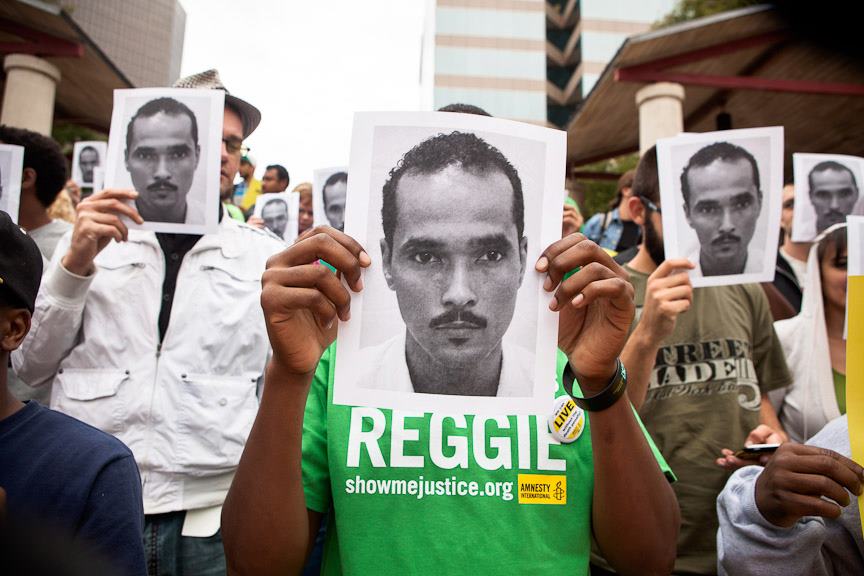
Visiting Reggie Clemons on Missouri's Death Row

Reggie Clemons, U.S. Death Penalty, death row, capital punishment, death penalty abolition

Vera Clemons, Reggie Clemons' mother, and AI activist Meredith outside of Potosi Correctional Center in Missouri

On a recent Friday morning, I paid a visit to Reggie Clemons. I wanted to learn who this convicted accomplice to a double murder, condemned prisoner and human being is. I made the journey to Potosi Correctional Center with Vera, Reggie’s mother, and Meredith, a St. Louis Amnesty leader.

Outside a large concrete fortress in the middle of nowhere, prison workers stood taking a smoke break as we pulled into the parking lot. Walking toward the entrance, we passed the beginning of a long fence with endless loops of razor wire from the ground up, electrified for good measure. I stopped at the electrocution warning sign on the fence and took some moments to prepare myself for the intense, regimented environment of every death row.

SEE THE REST OF THIS POST

Maryland: Will Death Penalty Repeal Follow Marriage Equality?

Maryland Governor Martin O'Malley

Maryland Governor Martin O'Malley speaks ©AFP/Getty Images

Yesterday, marriage equality became the law in Maryland with Governor Martin O’Malley’s signature.  Death penalty repeal is another issue the Governor says he feels strongly about, and he should push for the chance to sign that into law too.

In 2009, Maryland legislators tried to create the perfect death penalty law, one that would not risk executing the innocent.  Of course, human beings are still running Maryland’s capital punishment system. Mistakes will be made, and that awful risk remains. SEE THE REST OF THIS POST

5 Oscar Winning Films that Stood on the Side of Justice

It’s Oscar season! In honor of the 2012 Oscar-nominated documentary on the death penalty, Paradise Lost 3, we thought it was a good time to look back at past Oscar winners that have also helped broaden our understanding of a range of human rights issues.

Movies can be a powerful tool for raising awareness about an issue, or even inspiring people to take action. And in our everyday work at Amnesty International, we aspire to do the same.

With a rich 84 year history of great films, we started looking at Best Picture winners from 1980 and onwards. Here are 5 Best Picture Winning films that not only continue to influence generations of filmmakers but also address social injustices still relevant in our world today.  Read on then let us know what films have inspired you.

SEE THE REST OF THIS POST

Connecticut Victim Families Fight for Death Penalty Abolition

against the death penalty

(c) Scott Langley

A bill to repeal Connecticut’s death penalty was introduced on Wednesday.  It has an excellent chance of passing, largely because an increasing number of murder victim family members have been calling for an end to capital punishment in their state.  There’s a blog on which many of them discuss their reasons, and this piece in the New London Day and this piece in the West Hartford News both do a good job of outlining why so many murder victim family members have had it with Connecticut’s death penalty and believe they will be better off without it.

There are many reasons victim family members may oppose the death penalty.  There is the endless process that turns the killer into a celebrity while forcing the family to constantly relive the worst moment of their lives.  There is the waste of resources that could be spent on counseling and other real support for survivors of homicide.  And there is the false promise of an execution which will most likely never happen (especially in Connecticut where there has been only one execution in the last 50 years) and may not provide the expected “closure” even if it does.

SEE THE REST OF THIS POST

Best Death Penalty Movie? You Decide

paradise lost 3It’s Oscar season.  And that’s great, because I like movies.  I’m not a buff or anything, which is why I wrote “movies” and not “film” or “cinema”.  But I enjoy a good flick.  As someone who campaigns for death penalty abolition, I’m especially interested this year because there is a death penalty film, Paradise Lost 3, nominated for Best Documentary.

Movies can be a powerful tool for raising awareness about an issue, or even inspiring people to take action.  In our death penalty abolition work, we have tried to promote movies we think will do that.

But what do we know?

SEE THE REST OF THIS POST

Ohio's Death Penalty Needs A Time-Out

Tyrone Noling

Tyrone Noling

Following the news of the nation’s 140th death row exoneration, which was also Ohio’s 6th, comes a story in The Atlantic about another disturbing case in the Buckeye State.  Tyrone Noling remains sentenced to die despite:

  • No physical evidence against him
  • Recanting witnesses who may have been coerced
  • An alternative suspect who seems to never have been thoroughly investigated
  • The state refusing to support a DNA test that might shed light on the accuracy of the conviction.

You know, the usual stuff.

Ohio has 13 executions scheduled, but wrongful death sentences, botched executions like that of Romell Broom which have led the courts to harshly admonish Ohio officials, expressions of concern from a state Supreme Court judge and a former Attorney General (authors of Ohio’s death penalty law), and from a warden who oversaw 33 executions, all suggest that the state could use a time-out.

SEE THE REST OF THIS POST

A Prisoner Swap in Saudi Arabia

2010 SABAH ARAR/AFP/Getty Images

‘If you don’t, we won’t either.’

That’s the agreement the Saudi and Iraqi government found on the matter of executing prisoners each is holding from the other country.

Arab News reported Friday that government officials of both countries came to a consent, at least in principle, to put executions of Saudi and Iraqi prisoners on death row on hold. This ‘in principle’ agreement reportedly will last two months until a final agreement to swap prisoners is reached. Currently, there are 138 Iraqi nationals imprisoned in the Saudi Kingdom, most of whom were charged with involvement in terrorist operations.  Eleven Iraqis were sentenced to death. SEE THE REST OF THIS POST

Ohio Produces Nation's 140th Death Row Exoneration

Joe D’Ambrosio is free.  He spent more than 20 years on death row, and almost two more years waiting while the state of Ohio – whose prosecutors had withheld key evidence from his defense – tried to go after him again.  Finally, the U.S. Supreme Court closed the book on his case.  Joe D’Ambrosio is the 140th person exonerated from U.S. death rows since 1973, and the 6th from Ohio.

Is this exoneration an example of the system working?  Hardly.  Mr. D’Ambrosio’s exoneration came about because of a chance meeting with a Catholic priest who was visiting another inmate.  The priest, Rev. Neil Kookoothe, happened to have legal training and decided to look into the case himself.  As Kevin Werner, executive director of Ohioans to Stop Executions, put it: “Coincidence is not the standard we should be comfortable with when our justice system is seeking to execute people.”

SEE THE REST OF THIS POST