Update: Bahrain Keeps Ridiculous Charges Against 11-Year-Old Boy

Ali Hassan Bahrain

Ali Hassan has been spared a prison sentence for now but will be subject to government monitoring for a year. (AFP/GettyImages)

Despite an outpouring of global concern, news reports indicate that the Government of Bahrain has still not dropped its charges against 11 year old Ali Hassan.

As I wrote earlier this week, Bahraini police arrested the young boy in mid-May on a street that is both near his home and the site of a protest.  The police denied him access to a lawyer for 23 days of his nearly one month of detention.

Amnesty International is confirming the details of yesterday’s court decision regarding the young boy’s sentence.  According to news reports, the Government of Bahrain has allowed Ali to live at home, but is requiring him to be subjected to government monitoring for a year. The reports also indicate that the original charge of “illegal gathering” and disturbing “public security” has still not been dropped.

On the one hand, the young boy appears to have been spared the worse case scenario of several years in jail.  This demonstrates the power of the global human rights spotlight, in which worldwide concern for Ali put pressure on the Government of Bahrain to keep him out of prison.  But at the same time, Ali appears to still be facing criminal charges.

SEE THE REST OF THIS POST

Will Bahrain Convict an 11-year-old “Protester”?

Ali Hassan Bahrain

Ali Hassan could face jail time for allegedly "participating in an illegal gathering."(Photo Mohammed Al-Shaikh/AFP/GettyImages)

This Thursday, an 11-year-old boy will find out if the Government of Bahrain truly considers him a security threat.

Young Ali Hassan was arrested by Bahraini police on May 13th on a street near both his home and the site of a protest. He was detained for 23 days before being allowed to see a lawyer, and he spent nearly a month in jail before being released.

He has been charged with “participating with others in an illegal gathering of more than five people, in order to disturb public security by way of violence.” The Guardian reports that if found guilty, Ali could be sentenced to up to three years in prison (take action here).

The case has drawn international media attention, with articles in CNN, the Associated Press, Time, RealClearPolitics, BBCAFP, The Independent, The Telegraph, and others.  Once again, the Government of Bahrain is in the spotlight for violating human rights.

SEE THE REST OF THIS POST

Victory: No More Mandatory Life Sentences For Children In US

Christi Cheramie

Christi Cheramie was sentenced to life imprisonment without the possibility of parole at the age of 16 in 1994.

It’s not a total ban on juvenile life without parole, but at least now courts considering the crimes of juvenile offenders will have options other than a mandated life without parole sentence. So it’s a welcome step forward.

By a 5-4 vote, the Supreme Court ruled that laws mandating life without parole for juvenile offenders, with no other options, are unconstitutionally “cruel and unusual punishment”.  In other words, to be constitutional, a juvenile life without parole scheme needs to have other, lesser, alternatives, so that courts will have the flexibility to consider mitigating factors that are invariably part of a young offender’s background.

While this ruling still allows for the possibility that those under 18 years of age at the time of the crime could be sentenced to life without parole, it is a step in the right direction.

According the Justice Roberts’ dissent, there are over 2,000 juvenile offenders currently serving life without parole who were sentenced under a mandatory scheme (see our infographic). This represents about 80% of the child offenders serving life without parole.

SEE THE REST OF THIS POST

4 Ways You Can Help Stop The Arming Of Tyrants

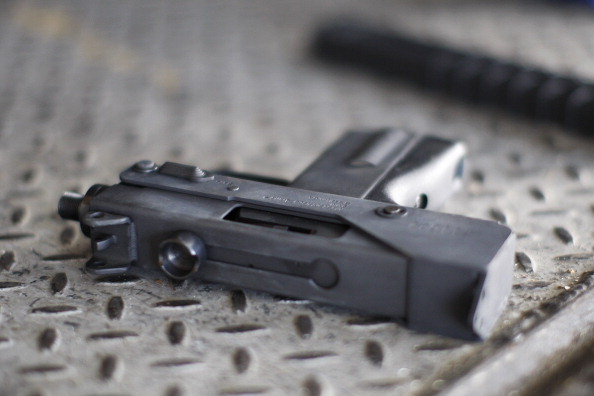
guns have fewer trade regulations than bananasIt’s easier to trade weapons around the world than it is to trade bananas.

No, you didn’t just read that wrong.  It’s really easier to trade guns and bullets than bananas.

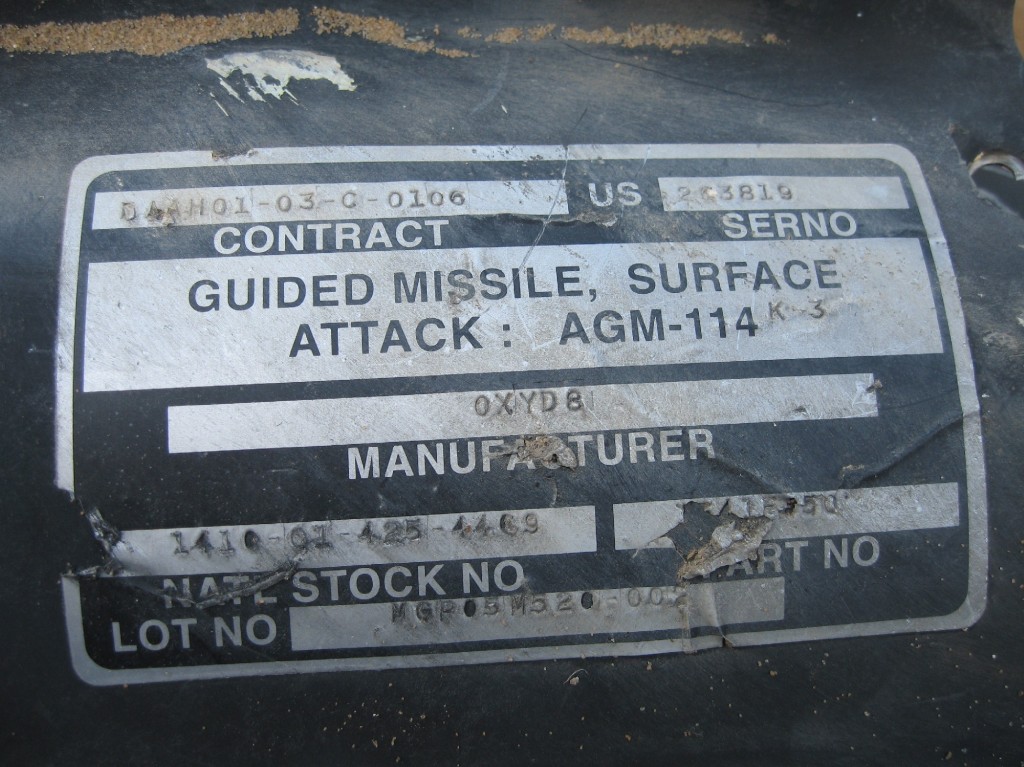
This fact, as absurd as it is, shows how easy it is for brutal dictators and armed groups to buy weapons and use them against civilians.  This weapons free-for-all policy is so bad that every minute, someone dies from armed violence.

World leaders are meeting to negotiate the first ever arms trade treaty in July.  We’ve got just one shot to get it right, so please join us to demand a strong arms trade treaty (without loopholes!) that protects human rights.

A bulletproof arms trade treaty would establish strict rules for the international transfer of arms, and hold irresponsible arms suppliers and dealers to account.

Here are four ways you can help:

SEE THE REST OF THIS POST

Obama to DREAMers: You Can Stay…For Now

Immigration Activists Demonstrate In Los Angeles

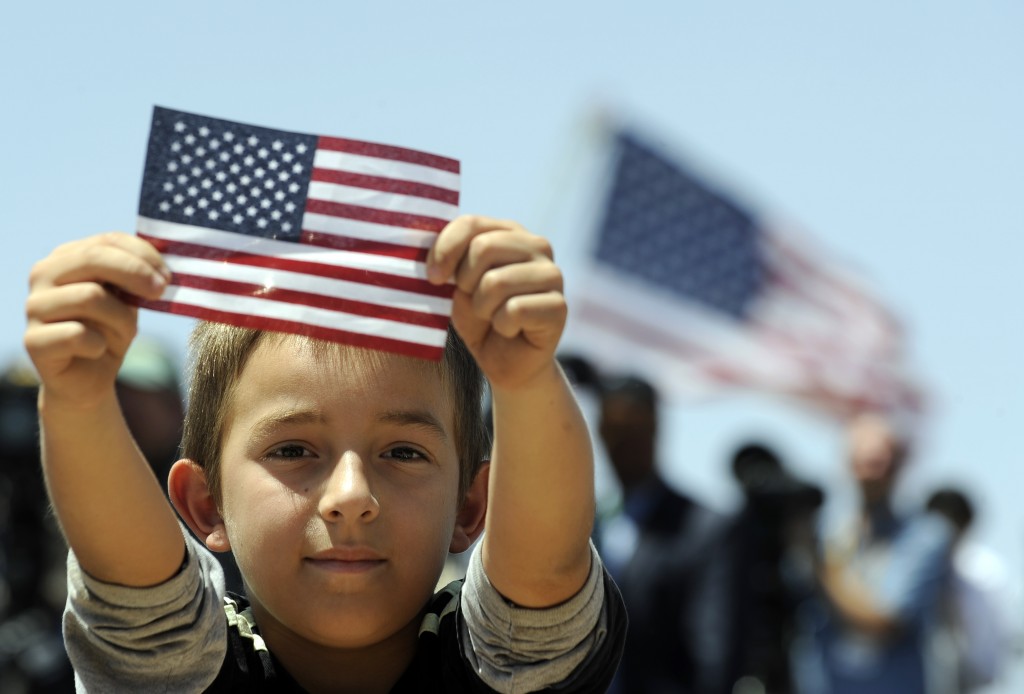
Immigrant students demonstrate for an end to deportations on June 15, 2012 in Los Angeles, California. (Photo by Kevork Djansezian/Getty Images)

“They are Americans in their hearts, in their minds, in every single way but one: on paper,” President Obama stated today, in confirming that an order had been issued permitting some 800,000 DREAMers to remain in the country without fear of deportation and enabling them to seek employment. The President went on:

“Effective immediately, the Department of Homeland Security is taking steps to lift the shadow of deportation from these young people.”

SEE THE REST OF THIS POST

TIME to Make the DREAM a Reality

DREAM Act TIME Magazine CoverThis week’s TIME Magazine hits the newsstands today, taking us inside the lives of our fellow community members who happen to be undocumented immigrants.

In his “Not Legal Not Leaving” article, author Jose Antonio Vargas writes about how many undocumented individuals feel American. Like Vargas — an undocumented immigrant himself — these individuals may live an ostensibly American life. Yet these individuals all face the constant threat of deportation and other realities of a life lived with a sword of Damocles hanging over their heads.

Today’s news that President Barack Obama intends to issue an executive order that will stop deporting and begin granting work permits to young undocumented immigrants who arrived as children is welcome. But it’s only a temporary measure. Immigrant children and their families need a permanent solution — and the DREAM Act, if passed, offers hope. SEE THE REST OF THIS POST

Why Is The US Still Executing Teenage Offenders?

18 and 19 and 20 year-olds are not considered responsible enough decision makers to drink legally, yet they can be held fully responsible for their crimes and sentenced to the ultimate, irreversible punishment of death.

Texas is preparing to execute Yokamon Hearn on July 18th. If his execution is carried out, he would become the 483rd person put to death since Texas resumed executions in 1982.

Yokamon Hearn was 19 years old when he and 3 other youths set out to steal a car. They ended up shooting and killing Frank Meziere, a 23-year-old stockbroker. All four defendants were charged with capital murder, but the other three plead guilty and received deals. One got life imprisonment, the other two got ten years for aggravated robbery.

Yokamon Hearn was a teenager at the time of his crime, but not a juvenile. Article 37 of the Convention on the Rights of Child lays out the international standard for not executing juvenile offenders, defined as those who were under 18 at the time of the crime. (The U.S. is the only country except for Somalia that has not ratified this treaty.)

SEE THE REST OF THIS POST

Why Are We Still Arming Children and Tyrants?

child soldier in liberia

A child soldier in Liberia. (Photo Georges Gobet/AFP/Getty Images)

Growing up in central Texas, I had a lot of friends who were responsible gun owners. Many would hunt deer or sport shoot. Some even carried a gun for self-protection. It was part of the culture. But there was always a heavy emphasis on the “responsible” component of bearing arms.

My gun-owning neighbors in Texas may have embraced the unofficial motto of the National Rifle Association – guns don’t kill people; people kill people – but they would never in a million years have put a loaded weapon in the hands of someone who they knew was likely to use that gun to kill or maim.

So as we watch in horror the slaughter of innocent men, women, and children in Syria, or stare aghast at our computer screens at images of brutal violence and child soldiers in remote regions of the Democratic Republic of the Congo, what are we to call those countries and international arms brokers who irresponsibly sell guns to thugs intent on violence? Profiteers? Bad actors?

SEE THE REST OF THIS POST

War Criminals Are Running Out Of Time – And Space

A statement in an AP story, relating to the start of the trial of alleged war criminal Ratko Mladic, recently caught my attention:

… the fact that he [Mladic] is jailed and on trial is seen as another victory for international justice and hailed by observers as evidence that — more often than not — war crimes tribunals get their indicted suspects, even if years later.

This is a very optimistic and strong statement regarding the current state of international justice. Is the reason for optimism justified? I absolutely think so.

Let’s recap some of the recent historic events to bolster my argument that time’s up for war criminals:

  1. The first conviction of a former head of state for international crimes since the Nuremberg trials: Charles Taylor, Mr. Blood Diamond, was convicted on charges of war crimes and crimes against humanity by the Special Court for Sierra Leone in late April.
  2. Milestone verdict on child soldiers and the ICC’s first verdict: Thomas Lubanga Dyilo, a Congolese warlord, was found guilty in March of the war crime of using children in armed conflict.
  3. The Mladic trial: 17 years after Srebrenica―infamously known as “Europe’s worst massacre since World War II”―Ratko Mladic had his first day in court on May 16. He faces genocide charges at the International Criminal Tribunal for the former Yugoslavia. Mladic allegedly orchestrated the killing of some 8,000 Bosnian Muslim men and boys in Srebrenica in July 1995. The completion of his trial could mark a milestone for the survivors, who did not see a verdict against Slobodan Milošević (who passed away while on trial in 2006).
  4. The unanimous referral by the UN Security Council of the situation in Libya to the ICC. The vote in February 2011 showed a surprising shift in positions when all 15 members―including non-state parties to the ICC such as the United States and Russia―voted in favor of a referral.

SEE THE REST OF THIS POST