Is North Korea Turning Into One Big Prison?

(c) DigitalGlobe 2013. Panchromatic Imagery, February 7, 2013. 39 38 02 N, 125 59 52 E

(c) DigitalGlobe 2013. Panchromatic Imagery, February 7, 2013. 39 38 02 N, 125 59 52 E

This posting is part of the North Korea Revealed blogging series, published in the context of efforts to establish a Commission of Inquiry at the current session of the UN Human Rights Council (February 25 – March 22). Join the conversation through #NKRevealed.

Amnesty International is releasing new satellite images today that raise fears that the North Korean government is starting to blur the line between the country’s horrendous political prison camps and regular villages. This disturbing new development gives further fuel to a previous warning by a UN expert that authorities are turning the country into “one big prison,” and stress the urgent need for the UN Human Rights Council to establish an independent Commission of Inquiry.

We commissioned satellite imagery analysis from DigitalGlobe after reading reports about a potential new political prison camp. The original speculations were based on Google Earth satellite imagery from the fall of 2011. We were able to secure imagery from February 2013, allowing us to provide the most up-to-date snapshot possible of worrisome developments in a valley adjacent to prison camp 14.

SEE THE REST OF THIS POST

North Korea: Stories From The Forgotten Prisons

Explore the system of political prison camps in North Korea

Explore the system of political prison camps in North Korea

This is the first of several postings of the North Korea Revealed blogging series, published in the context of efforts to establish a Commission of Inquiry at the current session of the UN Human Rights Council (February 25 – March 22). Join the conversation through #NKRevealed.

I was born in North Korea in 1982. I was born in a political prison camp (…) and lived there until I escaped in 2005 (…) I was born to an imprisoned mother and father. —Shin Dong-hyuk, the only known North Korean born in a political prison camp to have escaped.

Shin’s shocking story personifies the horrors of North Korea’s vast network of political prison camps, believed to house over a hundred thousand prisoners. His story is emblematic for the daily forced hard labor, calculated starvation and torture that prisoners have to endure. It also reflects the system of collective punishment that results in the incarceration of several generations of one family, often for life. You can hear more from Shin on a new video playlist, together with testimonies of other escapees and exiles. Their voices urge immediate action to stop the horrors of the prison camps. SEE THE REST OF THIS POST

Freed Filipino Prisoner of Conscience: “I Am in High Spirits”

Emman and Ericson Acosta

Emman and Ericson Acosta

In February 2013, 40-year old poet and Amnesty International activist Ericson Acosta has more reason to celebrate other than his freedom from his unjust detention. A few days after the Philippine Justice Department decided to drop the trumped-up charges against him, Ericson witnessed the awarding of a silver medal to his only son, 10-year old Emmanuel, who won in a division-wide Math competition in Pasig City, Metro Manila.

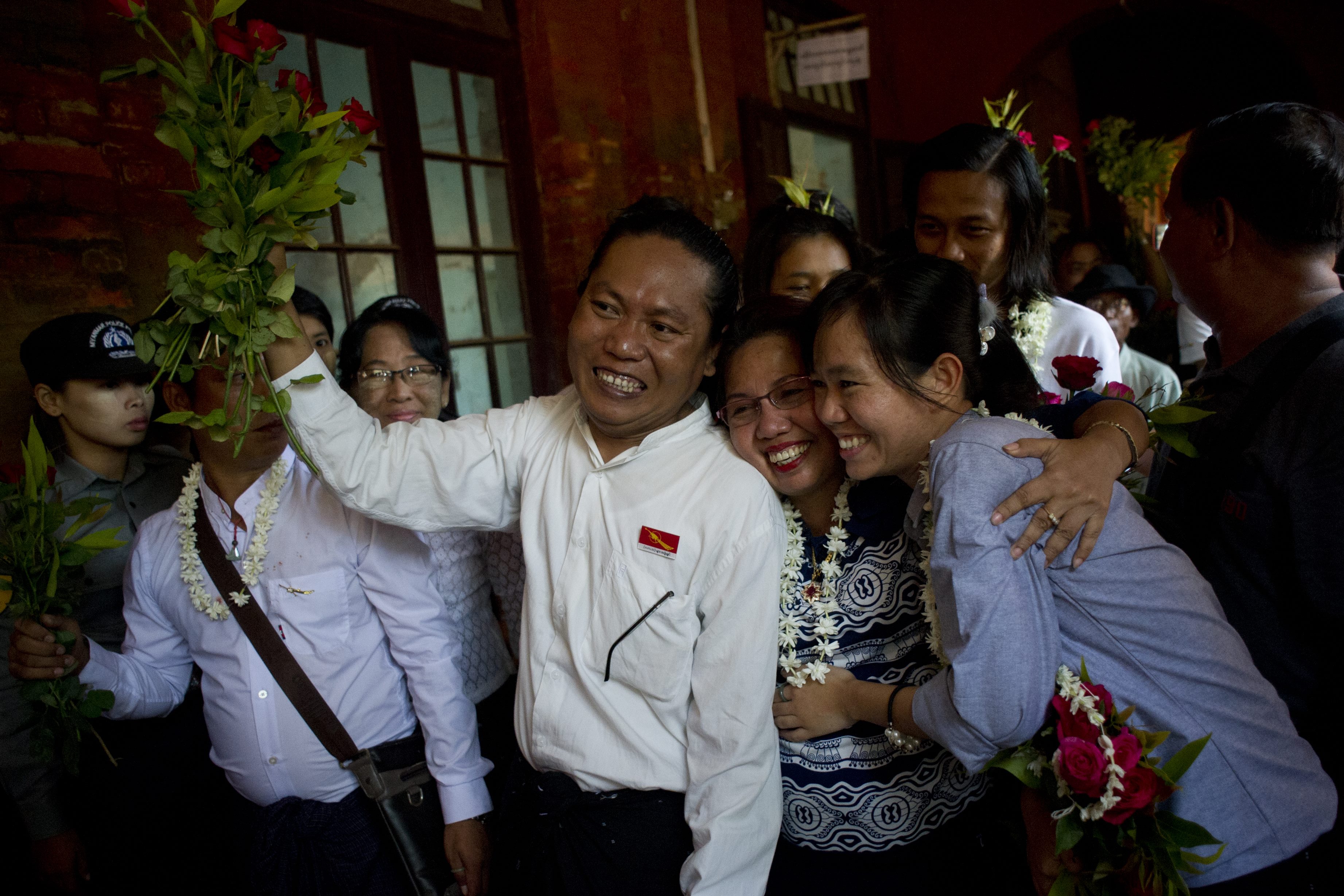
Arrested by military troops in February 2011, Acosta was interrogated for 44 hours on 2 hours sleep and threatened with death. He was then charged with being a member of the once banned Communist Party and later, with the illegal possession of explosives. In August 2011, Amnesty International called for the release of Acosta as a Prisoner of Conscience. In his statement after being released, Acosta thanked his supporters, including Amnesty International, and called for the release of the rest of political prisoners in the Philippines.

SEE THE REST OF THIS POST

One Step Forward, Two Steps Back for Human Rights in Eastern India

Kartam Joga

Former prisoner of conscience and Adivasi rights activist Kartam Joga has been released in India.© Private

This week brought a rare bit of good news for human rights in the poor, rural, tribal districts of eastern India. After spending over two years in jail on false charges, human rights activist Kartam Joga was finally acquitted of all charges. Like Binayak Sen, TG Ajay, Kopa Kunjam, Ramesh Agrawal, and Harihar Patel before him, the government of Chhattisgarh tried to silence Kartam Joga for daring to demand that human rights and democratic principles be respected in Chhattisgarh. And once again, the courts found that the state had no case.

But that hasn’t stopped Chhattisgarh from continuing to imprison peaceful critics. Journalist Lingaram Kodopi and activist Soni Sori – both tortured by police – remain in custody after over a year in jail (Act here to demand their release).

SEE THE REST OF THIS POST

Not a Billion More

One Billion Rising

I was in Delhi on December 17 when tens of thousands marched in solidarity to support a young victim of rape.

On the evening of December 16, this young woman and her friend boarded a bus to return home after watching a movie. Her friend was attacked, while she was assaulted and raped by five men on the bus. Both were then left to die on the side of a busy street. Her injuries were so severe, that she succumbed to them a few weeks later.

Angered by her plight, thousands took to the streets to demand justice and accountability from a system that they think routinely ignores issues around women’s safety. Subsequently, the Indian government showed uncharacteristic speed in apprehending and trying the suspects. And now substantial efforts are under way to overhaul the country’s legal, social, and cultural response to violence against women.

SEE THE REST OF THIS POST

Thai Journalist and Human Rights Activist Sentenced to 10 Years for Defaming the King

A Thai activist wears a face mask carrying a message reading 'Free Somyot' as she joins a protest outside the Criminal Court in Bangkok on January 25, 2013.      (Photo credit:  CHRISTOPHE ARCHAMBAULT/AFP/Getty Images)

A Thai activist joins a protest against the sentencing of journalist and human rights defender Somyot Prueksakasemsuk outside the Criminal Court in Bangkok on January 25, 2013. (Photo credit: CHRISTOPHE ARCHAMBAULT/AFP/Getty Images)

Imagine sitting down in a theater to watch the latest blockbuster, only to be asked to stand up before the film starts. So revered is the King in Thailand that movie-goers must stand while the royal anthem plays prior to every movie screening there, as a reel pays homage to the king.

Playing on this reverence to the king is the lèse majesté  law,enacted in the country’s criminal code. Article 112 states that “whoever defames, insults or threatens the King, Queen, the Heir-apparent or the Regent, shall be punished (with) imprisonment of three to fifteen years.” The law is also used as a means to suppress freedom of speech in Thailand. Since the coup and military ouster of former Prime Minister Thaksin Shinawatra in 2006, authorities are using lèse majesté to prosecute an increasing number of anti-government activists.

SEE THE REST OF THIS POST

Kashmiris to the Foreground

Tension Heightens Between Indian And Pakistan On Kashmir Border

Indian soldiers patrol through about five feet snow in Churunda village on January 12, 2013. The village has been bearing the brunt of cross-fire between India and Pakistan. People living along the Line of Control have continually been at risk due to hostility between the armies of the two rival nations. (Photo by Yawar Nazir/Getty Images)

In recent weeks tensions have flared up between between India and Pakistan over recent killings of soldiers on the Line of Control dividing Kashmir. Historically, the neighboring countries have fought three wars over Kashmir (although recent years have seen a peace process).

Whenever there is a clash between the countries’ armed forces, Kashmiris themselves tend to be ignored while sabers rattle. So it’s a good time to tout some of the activists and ordinary people on the ground who are living their lives and seeking justice for the decades of brutal war in their homeland. In particular, what of Kashmiris economic, social and cultural rights?

For one perspective, I had a chance to talk with two Indian activists who are helping to bring the lives of Kashmiris to the foreground. For the filmmakers Madhuri Mohindar and Vaishali Sinha,

SEE THE REST OF THIS POST

7 Ways for Obama to REALLY Earn that Nobel Peace Prize

president obama

Photo: Tim Sloan/AFP/Getty Images

At the local level, Americans are demonstrating a strong commitment to advancing human rights. In recent elections, voters legalized marriage equality in nine states and passed the DREAM Act to expand educational opportunities for undocumented residents in Maryland. In addition, legislators in four states abolished the death penalty. The message to the nation’s leaders seems to be this: human rights still matter, and the task of “perfecting our union” remains incomplete.

As President Obama prepares to give his second inaugural address, he should embrace an ambitious rights agenda: enhancing our security without trampling on human rights; implementing a foreign policy that hold friends and foes alike accountable for human rights violations; and ensuring human rights for all in the United States without discrimination.

INCOMPLETE

Measured against international norms and his own aspirations, President Obama’s first term record on human rights merits an “incomplete.” While he made the bold move of issuing an executive order to close Guantánamo on his second day in office, he has yet to fulfill that promise. The U.S. government’s reliance on lethal drone strikes is growing steadily, but the administration has provided no clear legal justification for the program. Congress has abrogated its responsibility to exercise meaningful oversight of this most ubiquitous element of the “global war on terror,” a paradigm which is in and of itself problematic. Although President Obama has on occasion stood up for human rights defenders abroad — in China, Iran, Russia and Libya — his administration has often muted criticism when it comes to U.S. allies, in the Middle East, Africa and Europe.

SEE THE REST OF THIS POST

The Crackdown on Democracy Activists is “Trampling on the Eternal Good Morals of the Vietnamese Nation”

Activists accused of plotting to overthrow the communist regime stand listening to verdicts at a People's Court in Vinh city, in the north-central province of Nghe An on January 9, 2013.  Vietnam on January 13 jailed 13 activists convicted of plotting to overthrow the communist regime, in a new crackdown criticised by the US as part of a "disturbing" trend in the authoritarian state.  (Vietnam News Agency/AFP/Getty Images)

Activists accused of plotting to overthrow the communist regime stand listening to verdicts at a People’s Court in Vinh city, in the north-central province of Nghe An on January 9, 2013. Vietnam on January 13 jailed 13 activists convicted of plotting to overthrow the communist regime, in a new crackdown criticised by the US as part of a “disturbing” trend in the authoritarian state. (Vietnam News Agency/AFP/Getty Images)

I sit at my desk and write about human rights with ease, yet in Viet Nam, blogging can land you in prison. Last week, Vietnamese authorities convicted 14 activists for plotting to overthrow the government under article 79 of the criminal code. The sentences range from three to thirteen years. The activists were all linked to the US-based, pro-democracy group Viet Tan, which the Vietnamese government labels a terrorist organization. Five of the sentenced activists are bloggers who wrote about freedom of expression. Before the start of the trial, one of the bloggers, Dang Xuan Dieu, said, “I have done nothing contrary to my conscience” and that in punishing him, the government was “trampling on the eternal good morals of the Vietnamese nation.”

The defendants were all charged after attending a Viet Tan training course held in Bangkok in 2011. Viet Tan led a resistance movement in the 1980s, but has more recently called for democracy and peaceful change in Viet Nam. A spokesperson for the Office of UN High Commissioner for Human Rights said that none of the activists were alleged to have used violence.

SEE THE REST OF THIS POST

Will Anger Over Rape Spur Action?

Indian students of various organisations hold placards as they shout slogans during a demonstration in Hyderabad on January 3, 2013.

Indian students of various organisations hold placards as they shout slogans during a demonstration in Hyderabad on January 3, 2013. (Photo credit: NOAH SEELAM/AFP/Getty Images)

Every 21 minutes, a woman is raped in India. Most rapes go unreported and even those rapes that are reported often goes unpunished. However, one horrific rape in particular has galvanized activists and has the potential to change India’s attitude towards rape.

By now, many have heard of the horrific rape and murder of a young college student in the heart of India’s capital– New Delhi. She was attacked in a speeding private minibus with iron rods which punctured her intestines. She and her friend were then tossed from the minibus. And despite being dumped on a crowded street, it took 40 minutes for a passerby to contact the police. The lack of intervention by passers-by was likely due to the poor police treatment of Good Samaritans. The victim later died after being airlifted to Singapore for further treatment. The alleged attackers have been charged with murder.

SEE THE REST OF THIS POST