The editors of the Human Rights Now blog include members of the Amnesty International USA Web Team including Kyra Stoddart, Jennifer Gmerek, and Chip Hossfeld.
Iran has not seen a public demonstration of this size in 3 decades. After the results of Friday’s contested election, hundreds of thousands of protestors took to the streets in an act of defiance.
According to reports, as many as five students at Tehran University were shot dead over the weekend and another person was wounded when security agents opened fire on a demonstration. Motorcycle-mounted riot police have severely beaten large numbers of protesters with clubs and night sticks.
Authorities have done all they can to make sure this story doesn’t get out including blocking cell phones, text messaging, email and Web sites.
This major victory just proves that when you speak up for human rights, the people in power do listen. It may have taken us a lot of effort to seal the deal, but today, the fight seems well worth it. The doors are now opened for major advancements in combating violence against women and improving women’s health care, education, and economic stability.
The bill still needs to move on to the Senate before finally landing on President Obama’s desk. We’ll keep you updated on the blog. Thanks to those who took action!
A vote in Congress tomorrow (6/10) will decide the fate of a new Office of Global Women’s Issues, a key provision of the International Violence Against Women Act (IVAWA).
The creation of this office would mean major advancements in healthcare, poverty reduction and U.S. foreign policies aiming to empower and improve the lives of women worldwide. But opposition groups are trying to de-rail this piece of legislation by spreading misinformation about what this office would really do. They claim that this legislation would hurt women’s rights. Nothing could be further from the truth.
This new office is about:
helping the U.S. meet its foreign policy goals of economic stability and poverty reduction
advancing the global fight against the HIV/AIDS epidemic and other health crises, and
pushing the United States to finally take a leadership role in the fight to end violence against women and girls globally
This week, Amnesty International kicked off a high level research mission to Kenya to launch our first Demand Dignity campaign action. Irene Khan, Amnesty’s Secretary General, visited to two informal settlements in Nairobi – where almost two million people live in slums – asking residents to tell the Kenyan government what dignity mean to them via a free SMS service. The responses have been inspiring, take a look at a few:
For me, living with dignity means “setting principles to your ways and standard of living and be true to them.”
“Dignity is having three meals a day. Clean water. shelter. Good roads. justice for all but not for the few corrupt.”
“Dignity refers to carrying humanity with respect and honour.”
Community members from Korogocho and Kibera slums told the Amnesty delegation stories, sang songs and used street theatre performances to illustrate the human rights violations they face everyday as slum residents. Irene Khan noted:
“The development of slums in urban areas has become the iconic symbol of the forgotten, marginalized people – excluded not only from basic services like sanitation, but also from the decision making that takes place even in their own lives.”
In the settlements, children play in muddy streams which run through narrow passageways, while pathways are littered with garbage, animal and human waste. Overcrowding in Kibera – Africa’s largest slum – is a huge problem with more than 800,000 people living on 250 hectares
Many of the informal settlement residents described the insecurity associated with slum-life. In Korogocho, Irene Khan met with Mama Franco, a mother of three, who recently lost her few personal possessions in a house fire started by the paraffin lamp she uses as she has no electricity supply. Mama Franco is one of an estimated 127,000 poor Kenyans who face losing their homes in a planned river clean up program.
Amnesty International’s Demand Dignity campaign seeks to empower people living in poverty and take their voices to the highest level of government. The voices collected in Kenya’s informal settlements through the SMS action and website will be collected and presented to the Kenya government on World Habitat Day.
The news has been buzzing with reports of the two U.S. journalists who were sentenced to 12 years imprisonment with hard labor in North Korea. Laura Ling and Euna Lee were convicted of an unspecified “grave crime” after they were arrested in March while investigating human rights abuses of North Korean women.
Amnesty's T. Kumar on CNN's American Morning
The conviction is outrageous and Amnesty International is calling for the pair’s immediate release. The U.S. government is also scrambling to negotiate their release.
But in the mean time, what do Lee and Ling face in a North Korean labor camp? Amnesty’s own T. Kumar was asked just that by John Roberts on CNN this morning. His responses show the horrifying fate in store for anyone sent to one of these camps. Here is an excerpt from Kumar’s interview:
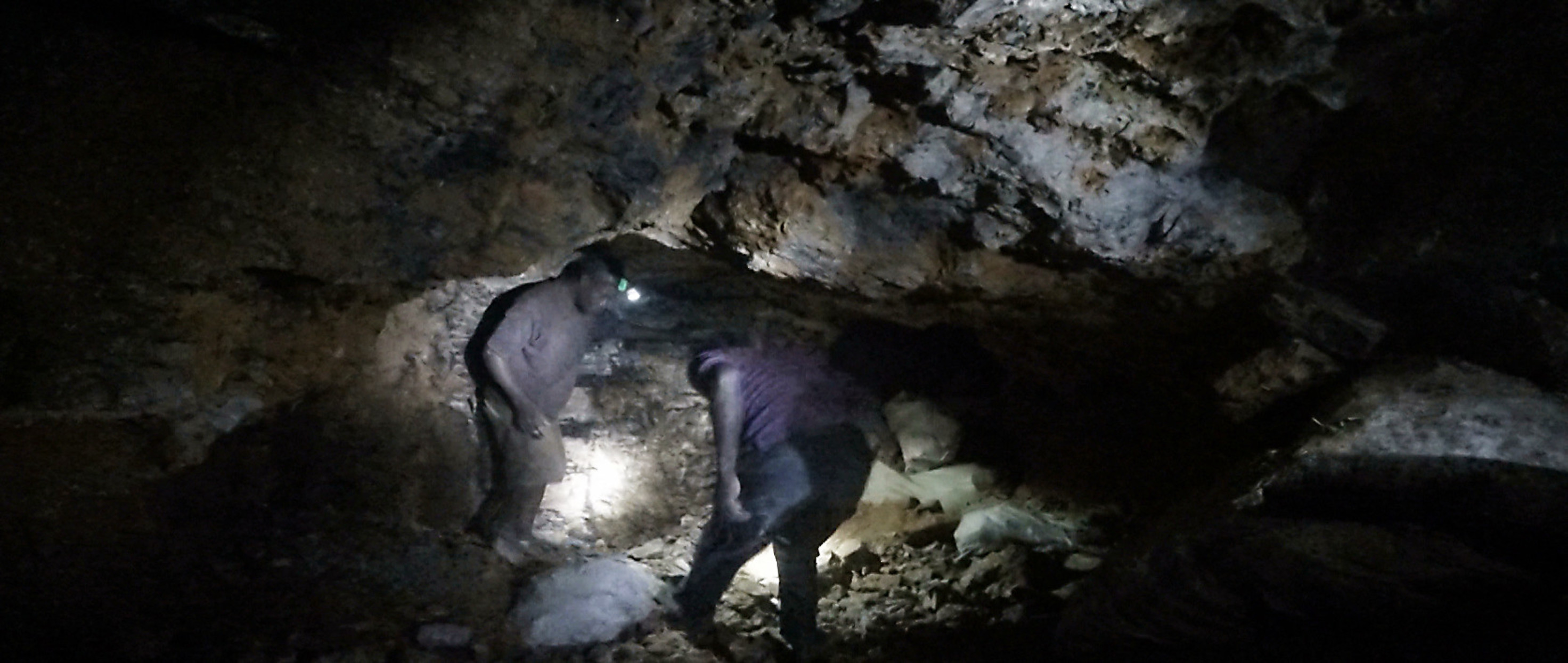
John Roberts: If they were sent to one of these prison camps or hard labor camps, what kind of conditions would they encounter based on the studies you’ve done? T. Kumar: We have to divide the situation into two categories. First is about the living conditions. The living conditions are extremely harsh. It’s overcrowded, very little food and very little, if any, medical attention. Then every day they have to work for more than ten hours. Very hard labor starting from breaking stones to working in the mines. And very little food again during the day. Roberts: Very high rates of death in detention among these prisoners? Kumar: Yes. It’s a combination of facts why the deaths are occurring. Number one, it’s hard and forced labor. Second, it’s lack of food. And unhygienic environment…There is no medical attention at all in many cases. So combined of all of these issues, [there is a] very large number of people who die in these prison camps.
Do you remember when Pinochet was arrested in London? The news flew around the world. The Chilean dictator is now dead, but the victims of torture and their families and friends are still asking the government and the judiciary for the truth about what happened after the military coup in 1973.
At least 110 people were tortured on the training ship Esmeralda that arrived in Boston yesterday. One of them was my brother, Michael Woodward, a catholic priest who had dual nationality (Chilean and British), and who lived and worked with the poor in Valparaiso.
He was driven from his home by a naval patrol to a University which had been taken by the Navy and used as a detention and torture center. He was then fiercely tortured at the Naval War Academy. In a very critical state of health, Michael Woodward was taken to the Esmeralda, anchored in the port. He may well have died on the ship, or on the way to hospital or they might have shot him before leaving the Esmeralda. Information has recently come to light due to the efforts of judge Eliana Quezada who is investigating the law suit presented in 2002. To date 19 retired members of the Navy have been indicted.
The Esmeralda is the Chilean Navy’s four-masted training ship. It goes on a cruise every year to teach the young cadets the law of the sea. At every port it is greeted by the Chilean ambassador and naval and local authorities, before embarking on social, cultural, and sightseeing activities. The Chilean government openly considers it an “ambassador of all Chileans”. President Bachelet emphasized this when she said
farewell to the ship in Valparaiso on 15 March.
Those of us who are still struggling to see justice applied do not feel that the Esmeralda is our ambassador. The attitude of the Chilean Navy clashes with our ideals of human rights. The Navy, as an Institution, needs to take responsibility for the violations of human rights perpetrated.
- By Patricia Woodward, sister to Michael Woodward and Human Rights Activist
Amnesty International researchers just completed a mission to Chad to investigate the growing number of Darfuri refugees there. Alex Neve, Secretary General of Amnesty Canada, has been documenting the mission:
Amnesty International delegation with Marie Larlem, Coordinator of the Association for the Promotion of Fundamental Liberties in Chad.
We left Chad [on Tuesday], with heavy hearts, a sense of regret that much of our work was curtailed because of insecurity, and a determination to intensify our efforts to bring safety back to eastern Chad. And as always — after spending time at the frontlines of human rights struggle — we have also left with the inspiration of this country’s many courageous and ingenious human rights defenders well lodged in our hearts and minds.
When I was last in eastern Chad with an Amnesty team, in late 2006, safety and security was the overwhelming concern. In the face of relentless Janjawid attacks from Darfur, people throughout the east were left to fend for themselves. The Chadian military and police did not care enough to help. Their only preoccupation was fending off the efforts of armed opposition groups to topple the government. There was no international force on the ground. There was nothing. And the cost was immense: thousands killed and injured, untold number of women raped, and hundreds of villages razed to the ground.
We called on the international community to respond. And they did. But more than a year later, with several thousand European and UN soldiers having passed through the region and with hundreds of international and Chadian police tasked with providing protection to refugees, displaced Chadians and humanitarian workers, eastern Chad is still a very dangerous place to be. It is especially dangerous for women and girls who take major risks every day when they head far outside refugee camps and displacement sites in search of firewood, hay and water.
In 2006 we called on the international community to go to eastern Chad. Now we will call on the international community to strengthen and improve the mission they have established. And we will insist that the Chadian government itself play a more central role in protecting human rights in the region, including by finally ensuring that the lawlessness and impunity that plagues this country comes to an end. There must be a concerted effort to bring to justice the people who are responsible for widespread human rights violations throughout eastern Chad and the rest of the country, including beating and raping women, killing and attacking humanitarian workers, and recruiting child soldiers.
We began that work towards the end of our mission. We had meetings with senior French and US diplomats in N’Djamena, two countries whose influence here is considerable. We began laying out recommendations for action: steps the international community needs to take, and steps that the government of Chad must be pressed to take. We will refine our recommendations over the coming days as we pull together the findings of our research over the past two weeks. No doubt there will be more work with members of the UN Security Council in New York. And we will certainly want to make sure that governments hear the powerful worldwide voices of Amnesty International’s members, insisting that insecurity give way to justice in eastern Chad.
As we leave, yes, my heart is heavy.
But the heaviness is made much lighter by the great work underway here. I had a chance to reconnect with several remarkable human rights defenders I had met and worked with during our May 2008 mission to N’Djamena.
Blaise, the tenacious journalist whose independent radio station, FM Liberté, had been forced to close last year, is back on the air covering issues that matter, issues of justice, fairness and equality.
Celine, whose irrepressible energy in working with marginalized women was matched only by the power of the motorcycle with which she roared into neighbourhoods across the city, is still at it even though she has had some worrying anonymous death threats.
And Marie, the head of the Association for the Promotion of Fundamental Liberties in Chad, who we had to meet in exile across the border in Cameroon last year because of threats she had received, is once again at her desk, overseeing a growing nationwide independent human rights organization.
And this trip has introduced us to so many more.
I will of course long recall Houada, the brave journalist taking to the airwaves to discuss violence against women.
And remember Isaak, the Darfuri refugee and schoolteacher who has once been abducted from his classroom by armed opposition groups but goes on because he knows how important it is to “feed the minds” of young refugee children.
And be humbled when I think of our driver, Ibrahim, whose first concern, after being held captive by armed bandits for 6 or 7 hours was to ask about the safety of the Amnesty team.
Alongside these men and women, and the many others working for change in Chad, we will push on. There is no other option.
- Alex Neve, Secretary General of Amnesty International Canada
Myanmar’s (Burma) pro-democracy leader Aung San Suu Kyi was charged today with violating the terms of her house arrest after an American man allegedly snuck into her home last week. She now faces a prison term of up to five years – just weeks before her house arrest was set to expire on May 27th.
With general elections coming up next year many have questioned the timing of the arrest as pretext to prevent Suu Kyi’s involvement. Is it merely a convenient coincidence? You decide.
Suu Kyi’s female companion, Khin Khin Win, and Khin Khin Win’s daughter were also arrested at the same time. Amnesty International is demanding that the U.N. Security Council, notably China and Japan, and ASEAN countries, urgently intervene to secure their release. They are best placed to bring the necessary pressure to bear on the Myanmar government.
Aung San Suu Kyi, Khin Khin Win and her daughter are now among the more than 2,100 political prisoners currently being held in prison in Myanmar. Conditions in Myanmar prisons are extremely bad and jeopardize the health of prisoners. Take action now to demand Suu Kyi’s and other political prisoners’ immediate release from prison!
Last week, 18 human rights defenders and political activists in Zimbabwe had their bail revoked, sent to prison and then bail granted again the following day after Zimbabwe civil society and the international community responded with outrage. These persons were part of a group of individuals forcibly disappeared late last year by suspected state agents.
Following the re-arrest and then re-release debacle, a story was published in the Zimbabwe Independent newspaper listing the names of police officials and intelligence agents suspected of being involved in the forcible disappearances. The names were drawn directly from court documents filed by the attorney general’s office. However, on Monday, the editor of the Zimbabwe Independent, Vincent Kahiya, and the news editor Constantine Chimakure were arrested for publishing falsehoods.
Which begs the obvious question: Did the attorney general “lie” in the court documents, or did the editors “lie” by publishing publically available information that embarrassed the State while it’s seeking to regain the goodwill of international donors? Hmmm.
Amnesty International works to protect human rights worldwide. We have more than 2.2 million supporters, activists and volunteers in over 150 countries, and are completely independent from government, corporate or national interests.
Learn more about us at AmnestyUSA.org »
Kate Vandermade is the Central America Co-Group Chair and RAN Coordinator in AIUSA's Country Specialist Program. She works with local and student groups to organize events about Central America and Mexico human rights abuses. See all »