As the World Celebrates IDAHO, Homophobia in Russia is on the Rise

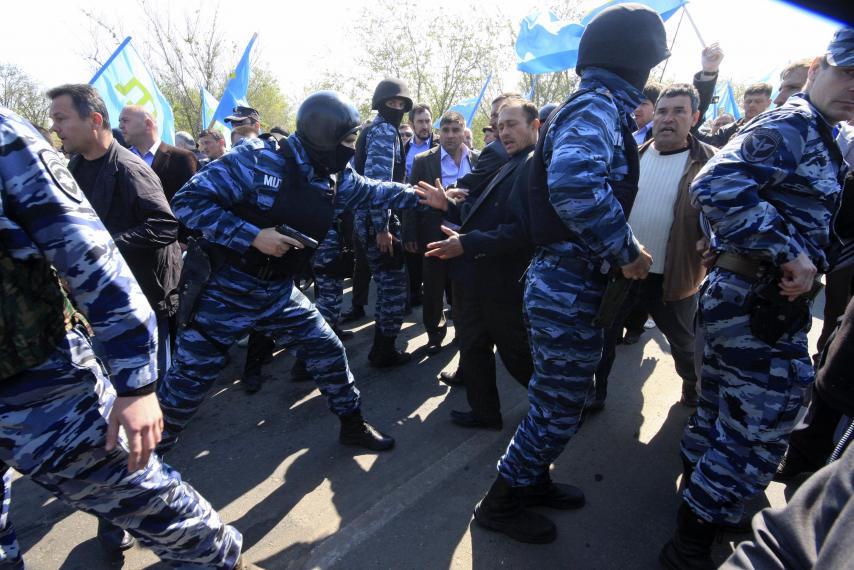
Russian LGBTI activists. The LGBT community faces increasingly repressive legislation in Russia (Photo Credit: Charles Meacham/Demotix).

Russian LGBTI activists. The LGBT community faces increasingly repressive legislation in Russia (Photo Credit: Charles Meacham/Demotix).

By Jasmine Heiss, Amnesty International USA’s Individuals & Communities at Risk Campaigner

Today, lesbian, gay, bisexual, transgender and intersex (LGBTI) individuals and activists around the world will recognize the International Day against Homophobia and Transphobia (IDAHO). Exactly twenty-three years after the World Health Organization’s landmark decision to declassify ‘homosexuality’ as a mental disorder, LGBTI people and allies continue their work to ensure that the full spectrum of their human rights is respected and upheld.

Just last week, news out of the Russian Federation served as a tragic reminder of just how critical that work is.

SEE THE REST OF THIS POST

HAPPENING NOW: White House Vigil to Mark 100 Days of Hunger Strike

To mark the 100th day of the Guantanamo hunger strike, Amnesty International USA is holding a vigil outside the White House today with several other groups (Photo Credit: Mladen Antonov/AFP/Getty Images).

To mark the 100th day of the Guantanamo hunger strike, Amnesty International USA is holding a vigil outside the White House today with several other groups (Photo Credit: Mladen Antonov/AFP/Getty Images).

By Carrie Neff Maley, Human Rights Campaigner, Amnesty International USA

Today marks the 100th consecutive day that detainees at Guantanamo have been refusing food as part of a hunger strike that began in Camp 6 at the facility. According to a letter addressed to Secretary of Defense Chuck Hagel and signed by 50 attorneys representing detainees, the hunger strike which began on February 6, 2013, was initiated in response to,

“[W]idespread searches of detainees’ Qur’ans—perceived as religious desecration — as well as searches and confiscation of other personal items, including family letters and photographs, and legal mail, seemingly without provocation or cause.”

Both the hunger strike and the brutal practice of force feeding have become a symbol of the deprivation of human rights taking place at Guantanamo. Virtually every personal freedom has been stripped from the detainees, most of whom have not been charged with any crime and are not facing trial.

Guantanamo Bay has been the site of indefinite detention and numerous other violations of human rights since 2002. It is also, as Rolling Stone’s John Knefel calls it, “the site of a unique legal experiment that has no direct precedent in U.S. history.”

SEE THE REST OF THIS POST

Turning Away From Celebrating Death

Despite the recent filibuster in Nebraska, support for death penalty abolition is once again on the rise (Photo Credit: Allen Hailey).

Despite the recent filibuster in Nebraska, support for death penalty abolition is once again on the rise (Photo Credit: Allen Hailey).

LB 543, Nebraska’s death penalty repeal bill, was successfully filibustered this week by a minority of the state’s senators. During the course of two days of debate and occasional voting, it became clear that the votes to pass the bill might have been there, but the two-thirds majority needed to break a filibuster was not.

Nebraska’s death penalty, like capital punishment elsewhere, suffers from arbitrariness, unfairness, and general uselessness, facts that are dawning on a lot of legislators in a lot of states. The defense of the death penalty in the Nebraska debate was not passionate, and relied on the citing of discredited deterrence studies and a vague sense the executions somehow equal justice.

Nebraska’s embarrassing attempts to acquire lethal injection drugs may have been partially responsible for the sheepishness with which the pro-death penalty arguments seemed to be infused. But more likely it’s just that the days of cheering for executions and celebrating the death penalty are over.

SEE THE REST OF THIS POST

How To Use Social Media In Human Rights Campaigning

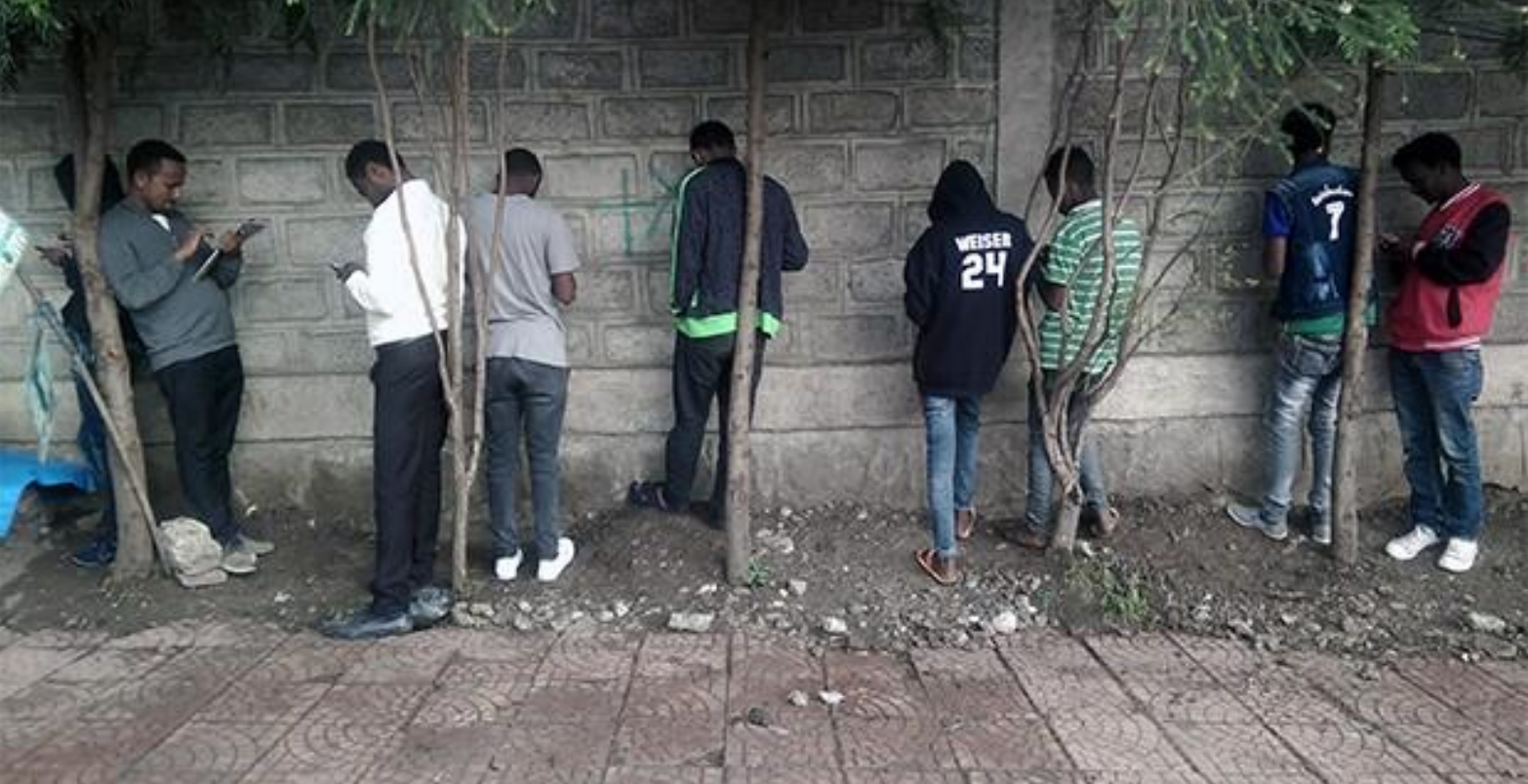
Social media and digital technologies are increasingly changing the way we document and report on human rights abuses (Photo Credit: Indranil Mukherjee/AFP/GettyImages).

Social media and digital technologies are increasingly changing the way we document and report on human rights abuses (Photo Credit: Indranil Mukherjee/AFP/GettyImages).

I have previously discussed the many opportunities and pitfalls of social media for human rights research and advocacy, or if social media content could potentially document war crimes in Syria. This week I was invited to participate in a fascinating online discussion on how to incorporate social media into human rights campaigning. The conversation is organized by New Tactics for Human Rights and The Engine Room and is still open until the end of the week. We are off to a great start with around 35 comments, and visitors to the website this week came from more than 100 countries! If you are interested in this topic, I encourage you to share your experience and thoughts.

The conversation provides several examples of how social media has been used as a tactic by various human rights organizations and other NGOs. Examples from Amnesty International include our Bahrain Twitter action or Eyes on Syria campaign and use of a YouTube playlist in our campaign to establish a Commission of Inquiry on human rights violations in North Korea. Other case studies come from Greenpeace and El Salvador, among others. A current case study – which is still unfolding – is the #SaveBeatriz campaign.

SEE THE REST OF THIS POST

Escalating Attacks on Religious Minorities in Indonesia

A man looks on at a temporary shelter after being driven from his village following a deadly clash with Sunnis (Photo Credit: Adek Berry/AFP/Getty Images).

A man looks on at a temporary shelter after being driven from his village following a deadly clash with Sunnis (Photo Credit: Adek Berry/AFP/Getty Images).

Imagine a mob of 500 people with sickles and stones descending on your neighborhood, setting fire to houses, and driving you away from your jobs and community. This occurred in August 2012 in East Java, Indonesia, leaving one member of a Shi’a community dead and injuring dozens. At this time 168 people, including 51 children, are living in a temporary shelter. In the last two weeks, they have been denied clean drinking water and food supplies.

Some of the villagers had previously been harassed by local government officials who told them to convert to Sunni Islam if they wanted to return to their homes.  Now, after eight months, the Sampang district administration has agreed to the demands from anti-Shi’a groups to forcibly evict the Shi’a community from their shelter in a sports complex and remove them from Madura Island in East Java.

SEE THE REST OF THIS POST
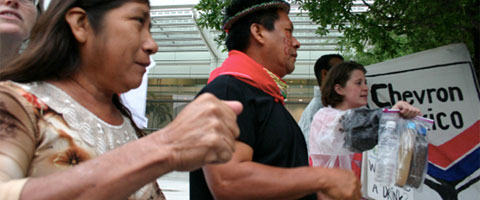
Eyes on El Salvador: will officials act to #SaveBeatriz?

There has been an overwhelming amount of global support over the past few weeks for Beatriz and those in El Salvador working tirelessly on her behalf to save her life. Much of this support has emerged online via Twitter, Facebook, blogs and other outlets. Because of these digital tools, countless people are closely following events unfold in El Salvador and calling on the authorities to uphold their international human rights obligations by immediately granting Beatriz authorization for an abortion.

Will Salvadoran authorities listen to Beatriz’s plea and take action to save her life in accordance with her wishes and at the advice of the medical professionals caring for her?

SEE THE REST OF THIS POST

Armenia, Azerbaijan, and Turkey: Odd Men Out on Conscientious Objection

Halil Savda at a Write for Rights event in France on Human Rights Day, December 10, 2011 (Photo Credit: Michael Sawyer for Amnesty International).

Halil Savda at a Write for Rights event in France on Human Rights Day, December 10, 2011 (Photo Credit: Michael Sawyer for Amnesty International).

This May 15, International Conscientious Objectors Day, is an opportunity to both celebrate the steady acceptance of this fundamental right and to highlight those countries who have not taken the basic steps to protect it.

In Europe for example, the European Court of Human Rights (ECHR) recognized conscientious objection as a protected right in 2011 when, in Bayatyan v Armenia, it ruled that conscientious objection was subject to Article 9 of the European Convention on Human Rights, which protects freedom of thought, conscience, and religion.  Unfortunately, as an Amnesty statement released today highlights, three European countries, Armenia, Azerbaijan, and Turkey, still refuse to accept this basic obligation under international law.

Amnesty’s position on conscientious objection is clear:

The right to conscientious objection to military service is not a marginal concern outside the mainstream of international human rights protection and promotion. The right to conscientious objection is a basic component of the right to freedom of thought, conscience and religion – as articulated in the Universal Declaration on Human Rights, the International Covenant on Civil and Political Rights and the European Convention for the Protection of Human Rights and Fundamental Freedoms.

SEE THE REST OF THIS POST

This Mother’s Day, It Was Motherhood, Not Rape, That Made Congo the Worst Place to Be a Woman

Save the Children's "State of the World's Mothers" report has named the Democratic Republic of Congo as the world's worst place to be a mother (Photo Credit: Leon Sadiki/City Press/Gallo Images/Getty Images).

Save the Children’s “State of the World’s Mothers” report has named the Democratic Republic of Congo as the world’s worst place to be a mother (Photo Credit: Leon Sadiki/City Press/Gallo Images/Getty Images).

In honor of Mother’s Day, Save the Children released its annual “State of the World’s Mothers” report. I was saddened, but not surprised to see the Democratic Republic of Congo is the worst place to be a mother.

Severe violations of women’s human rights in Congo are, unfortunately, a perennial subject of attention for me and numerous other rights activists. Typically those violations are associated with the long and bloody conflict that has spanned the country and concentrated in its most recent stages in the East.

Indeed, DRC has been plagued by almost two decades of conflict resulting in the suffering and death of millions of men, women and children. Most chillingly, the Congo conflict has become synonymous with rape and other forms of sexual violence, which are committed with impunity by security forces, including the armed forces of the DRC (Forces Armées de la République Démocratique du Congo, FARDC), and other armed groups. For this reason, it was ranked the worst place to be a woman by the United Nations just last year.

SEE THE REST OF THIS POST

A Mother Speaks: “I Don’t Want To Lose My Son to the Death Penalty”

Vera Thomas

Vera Thomas

By Vera Thomas, Reggie Clemons’ Mother

When my son was young, he would say, “When I grow up I want to invent things.” Reggie as a young boy was always a people person. Almost 30 years later, he sits on death row, and I’m waiting to see whether or not the state of Missouri will take my son’s life. This is a parent’s worst nightmare.

My son’s name is Reginald Clemons, but we call him Reggie. He has been on Missouri’s death row for 21 years. No mother can truly imagine that there may come a day where she may have to watch her son take his last breath, listen to his last words and watch him executed. Last year, Reggie was granted an opportunity where his case would be reviewed by a judge who would then recommend to the Missouri Supreme Court whether or not my son should live or die. As we await the judge’s recommendations – expected to be announced by June 1st – I want you to understand a few things about my son, his case and just how flawed the death penalty system is.

Then I hope you will take action to stop Reggie’s execution and join the movement to abolish the death penalty in the state of Missouri and beyond.

SEE THE REST OF THIS POST

What Would You Tell a Victim of Domestic Violence?

Women, girls, men and boys take to the streets in Nicaragua on the Day for the Decriminalization of Abortion in Latin America and the Caribbean (Photo Credit: Grace Gonzalez for Amnesty International).

Women, girls, men and boys take to the streets in Nicaragua on the Day for the Decriminalization of Abortion in Latin America and the Caribbean (Photo Credit: Grace Gonzalez for Amnesty International).

What if she was your mother, your sister, or your friend?  Would you tell her to press charges? Or would you tell her she should work things out with her husband in order to keep the family (including any children) together? In other words, would you want her to be safe, or remain in danger of further abuse and even death?  I hope you would tell her to get out of there and call the police.

In Nicaragua, however, pressing charges may no longer be an option. Last year, Nicaragua passed Law 779, the Integral Law against Violence Against Women. One of its key provisions is that it does not allow mediation to replace criminal punishment of abusers. Tracy Robinson, the Inter-American Commission on Human Rights Rapporteur for Women’s Rights, called the law “an important step forward.”

Now, Amnesty International is warning that opponents of Law 779 may overturn this key provision on the ground that it “breaks up families” - as if growing up in a climate of violence is good for children. They want to allow mediation as an alternative to punishment in cases involving less than five years of jail time. Doing so will only contribute to a climate of impunity that tells abusive partners that their behavior is acceptable.

SEE THE REST OF THIS POST